
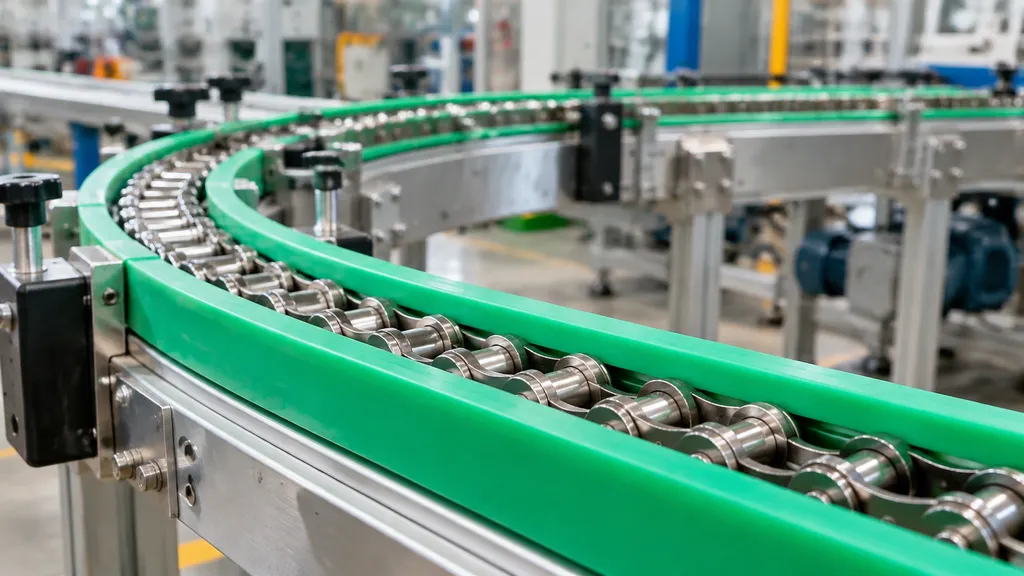
UHMW Chain Guide benefits and uses including wear resistance low friction custom profiles and industrial applications
What is a UHMW Chain Guide?
Understanding UHMWPE Material Properties
UHMW-PE is a robust engineering plastic characterized by an extremely long molecular chain. This unique structure provides the material with a superior combination of physical and mechanical properties, including:
-
- Exceptional Impact Strength: Highly resistant to mechanical shocks and breakage.
- Low Coefficient of Friction: Ensures smooth movement of parts across the surface.
- High Wear Resistance: Outperforms many metals and other plastics in abrasive environments.
- Chemical Inertness: Resistant to most corrosive chemicals, acids, and moisture.
Why UHMW is Ideal for Chain Guidance
For material handling and conveying systems, UHMW-PE is the industry-standard material for chain guides. Because UHMW-PE possesses self-lubricating characteristics, it significantly reduces the drag and energy consumption of industrial conveyors. Unlike metal guides, which require constant lubrication and are prone to noise, UHMW-PE components provide a quiet, efficient, and long-lasting solution that protects both the chain and the conveyor structure from premature degradation. Through precision manufacturing, these guides ensure consistent tracking and operational reliability in even the most demanding production settings.
Key Benefits of Using UHMW Chain Guides
When integrating components into high-speed conveyor support systems, selecting the right material is essential for long-term reliability. At Jincheng Plastic, we prioritize UHMW-PE for its superior mechanical advantages in demanding industrial environments.
Exceptional Wear Resistance and Durability
UHMW-PE is renowned for its outstanding abrasion resistance, often outperforming industrial metals in sliding applications. This durability ensures that the chain guides maintain their structural integrity even under constant contact, significantly reducing downtime and replacement costs. For a deeper understanding of how these material qualities address common mechanical failure, refer to our guide on UHMWPE sheet wear issues, causes, solutions, and prevention.
Low Friction and Self-Lubricating Properties
One of the primary reasons our clients choose these guides is the material’s naturally low coefficient of friction. This self-lubricating property minimizes drag, allowing for smoother chain movement and reduced energy consumption across the entire production line.
Noise Reduction and Operational Efficiency
The unique molecular structure of UHMW-PE acts as an excellent dampener, effectively absorbing vibrations and reducing the harsh mechanical noise often associated with metal-on-metal conveyor systems. This creates a quieter, more efficient work environment.
Chemical and Corrosion Resistance
Our UHMW chain guides are engineered to withstand exposure to harsh chemicals, cleaning agents, and moisture without corroding. This makes them ideal for environments where sanitation is critical.
| Benefit | Impact on Performance |
|---|---|
| High Wear Resistance | Longer component lifespan |
| Low Friction | Smoother system operation |
| Noise Dampening | Quieter facility environment |
| Chemical Inertness | Consistent performance in |
| wet/sanitized areas |
Common Types and Shapes of UHMW Chain Guides
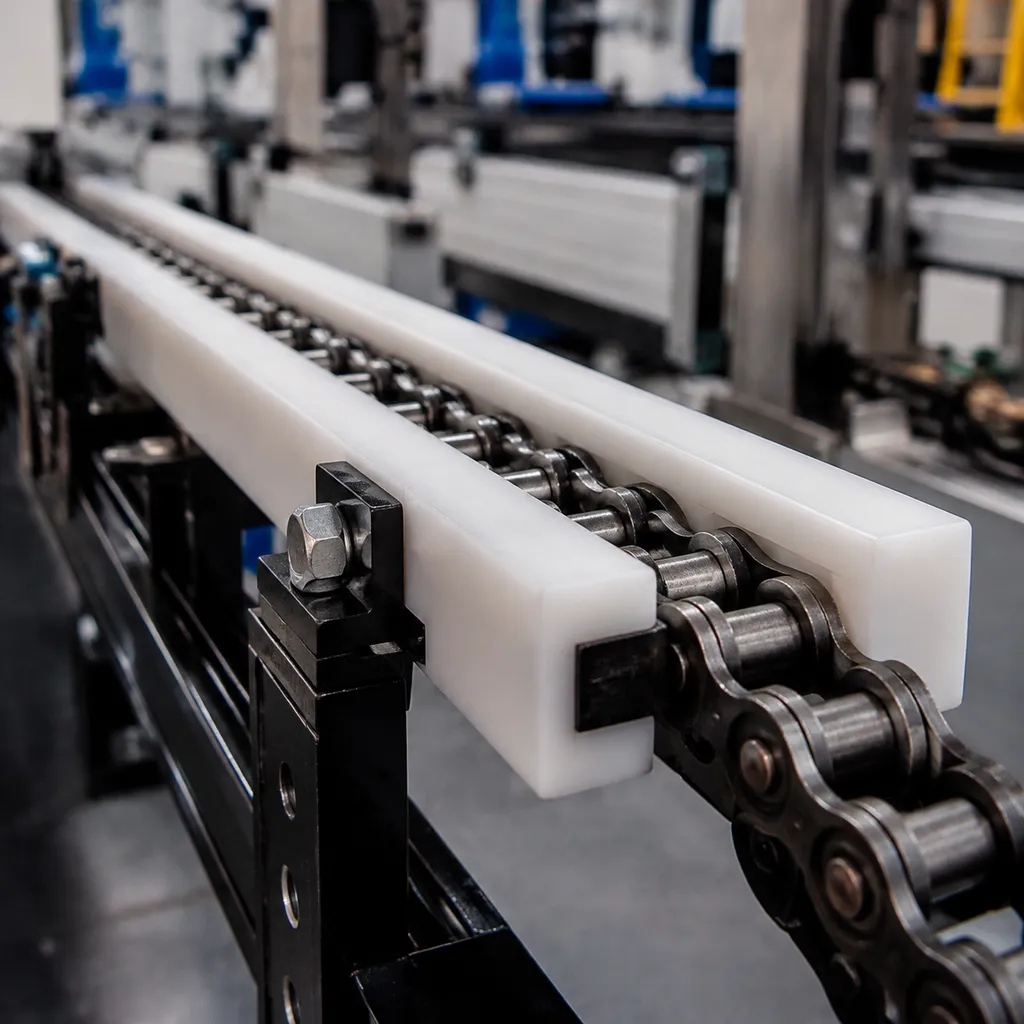
Standard Profiles: C-Channel and Flat Guides
We supply a wide range of standard UHMW-PE profiles designed for rapid deployment in conveyor systems. Our C-channel guides are specifically engineered to capture and secure chains, preventing lateral movement and ensuring smooth travel along the track. For applications requiring a simple base for chain movement, our flat UHMW guides offer a consistent, low-friction surface that minimizes drag. These standard shapes are staples in industrial settings where reliable, high-speed conveyor support is essential for maintaining consistent operational performance.
Custom Profile and Machined Guide Rails
Beyond standard offerings, we specialize in manufacturing custom-engineered plastic parts tailored to your unique conveying geometry. By utilizing advanced precision machining—including milling, turning, and drilling—we produce complex guide rail profiles that off-the-shelf components simply cannot match. If you are dealing with specific space constraints or non-standard chain designs, we create custom solutions based on your technical drawings or physical samples. Understanding how UHMWPE sheet thickness impacts wear and load needs allows us to machine components that provide the perfect fit and long-term durability for your specific equipment.
Applications for UHMW Chain Guides in Industry
UHMW chain guides are essential components for maintaining high-speed conveyor support across various demanding industrial environments. By integrating these guides, facilities can significantly improve the operational performance of their mechanical systems.
Conveyor Systems and Production Lines
In modern production environments, conveyor systems rely on consistent movement. Our precision-machined UHMW guides ensure chains move smoothly, reducing drag and minimizing the wear typically caused by constant metal-on-metal contact. For those managing extensive material transport, incorporating wear-resistant scrapers for conveyors can further protect your infrastructure from debris accumulation and surface degradation.
Heavy-Duty Industrial Machinery
Heavy-duty machinery benefits from the high impact strength and durability of UHMW-PE. These guides effectively absorb mechanical shocks and distribute loads evenly, protecting both the chain and the machinery frame. Because they are self-lubricating, they allow for free operation even under heavy load conditions, extending the interval between maintenance cycles.
Food Processing and Bottling Lines
The food and bottling sectors require components that are both durable and resistant to harsh cleaning agents. UHMW chain guides are ideal for these lines because they do not corrode and remain chemically stable. When used in conjunction with specialized tools like a bottle dividing screw, these guides help maintain the precise alignment and high throughput necessary for efficient, sanitary bottling operations.
How to Select the Right UHMW Chain Guide
Selecting the optimal chain guide for your industrial system requires a clear understanding of the mechanical and environmental variables at play. At Jincheng Plastic, we focus on engineering components that provide reliable performance, but the effectiveness of the guide depends on your specific operational parameters. For a deeper technical comparison against other common materials, refer to our guide on choosing the right chain guide rail material.
Assessing Load, Speed, and Environment
Before finalizing a design, evaluate the demands placed on the conveyor system: Load Dynamics: High-load applications require UHMW-PE for its superior impact strength and ability to absorb mechanical shocks. Operational Speed: Higher chain speeds necessitate materials with a lower coefficient of friction to minimize heat buildup and maximize wear life. Environmental Factors: Consider operating temperatures and potential exposure to moisture, chemicals, or abrasive debris, which may influence the longevity of the guide.
Choosing the Appropriate UHMW Grade
Not all UHMW-PE is created equal. Depending on your needs, we offer variations in material grades to better suit your industrial environment. Standard grades are typically sufficient for general conveying, but specialized formulations can be utilized to improve performance under extreme conditions, such as high-temperature settings or applications requiring anti-static properties.
Ensuring Proper Fit and Tolerance
Precision is the foundation of a long-lasting conveying system. Because we specialize in custom manufacturing, we work closely with your technical drawings to ensure that each guide meets your exact dimensional requirements. Tight Tolerances: Our CNC machining capabilities allow for high-precision components that prevent premature chain jumping or misalignment. Geometry: Whether your system requires C-channel profiles or custom-machined guide rails, ensuring the guide matches the chain pitch and width exactly is vital for reducing drag and ensuring smooth movement.
By prioritizing these factors during the selection process, you ensure that your industrial conveyor systems benefit from maximum efficiency and reduced downtime.
Maintenance and Longevity
Best Practices for Extending Service Life
Proper care of your UHMW chain guides ensures long-term operational performance and reduces downtime. To extend the service life of these components, we recommend: Regular Cleaning: Remove debris and contaminants from the guide tracks to prevent abrasive wear. Alignment Checks: Periodically inspect the alignment of the conveying system to ensure the chain travels smoothly without exerting uneven pressure on the guide. Environment Control: While UHMW-PE is resistant to many chemicals, avoid exposing the guides to solvents or high temperatures that exceed material specifications. Load Balancing: Ensure the system operates within design limits to prevent excessive stress on the plastic surface.
Identifying Signs of Wear and Replacement
Even with the high durability of UHMW-PE, components eventually show signs of fatigue. We advise monitoring your equipment for these common indicators: Surface Grooving: Deep tracks or irregular grooves indicate significant wear, which can negatively impact chain travel. Increased Noise: A rise in operational volume often suggests that the self-lubricating properties are compromised or the guide surface has become excessively rough. Dimensional Changes: Visible thinning or warping of the guide profile indicates it is time to source precision-machined replacements. Chain Instability: If the chain shows signs of jumping or shifting, the guide may have lost its required tolerance and support capabilities.
When these signs appear, replacing the worn components with precision-engineered parts maintains the efficiency of your high-speed conveyor support systems.
Frequently Asked Questions
What makes UHMWPE superior to metal guides?
UHMW-PE outperforms metal in conveying applications primarily due to its self-lubricating properties and significant noise reduction. While metal components often require external lubrication and generate friction, UHMW-PE maintains smooth, free operation while preventing galling or damage to expensive chains. Its light weight also reduces the overall load on high-speed conveyor support systems. For those evaluating material suitability, our UHMWPE vs. Nylon comparison highlights why this plastic is the preferred choice for minimizing drag.
Can UHMW chain guides be customized for specific needs?
Yes, customization is a core part of our manufacturing capability. We specialize in producing non-standard components tailored to precise client specifications. By utilizing advanced machining—including turning, milling, and drilling—we can manufacture custom profiles that match unique equipment designs. Whether you provide technical drawings or physical samples, our engineering team ensures that the final guide rail meets the exact geometry and tolerance requirements of your system.
How long do UHMW chain guides typically last?
The service life of a UHMW chain guide depends on environmental factors, load, and speed. Because UHMW-PE possesses exceptional wear resistance and impact strength, these guides typically outlast traditional materials in high-abrasion environments. To maximize longevity, it is essential to monitor operational performance regularly for signs of thinning or uneven wear. For a deeper understanding of material life cycles, our comprehensive buyer’s guide for industrial use covers the durability expectations you can anticipate when implementing high-quality UHMW components .
Pingback: Conveyor Wear Strips Materials Profiles and Selection Guide - UHMWPE Sheet Manufacturer & Custom Plastic Machining -Jincheng
Pingback: Conveyor Guide Selection and UHMW Chain Guide Benefits - UHMWPE Sheet Manufacturer & Custom Plastic Machining -Jincheng