
PTFE Sheets & Rods
Source PTFE sheet, PTFE rod and machined components for chemical-contact, low-friction and electrical applications. Define the grade, dimensions and service conditions before choosing your supply form.
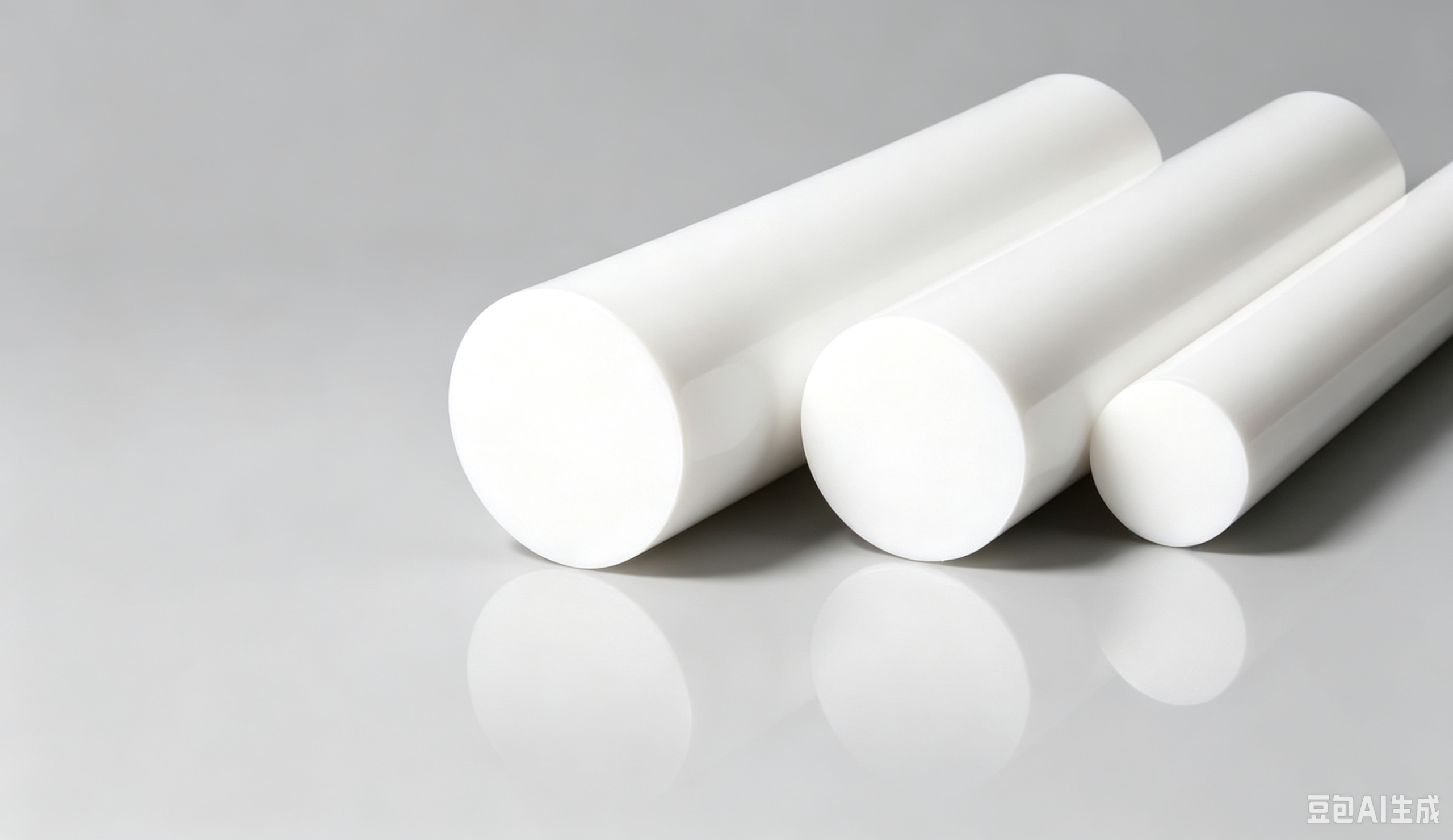
PTFE sheet, rod and custom components
PTFE Sheets
Sheet stock and cut blanks for machined plates, washers, gaskets and other flat components, subject to application review.
Specify length × width × thickness and the required manufacturing form.
Request PTFE Sheet Pricing →PTFE Rods
Round stock and cut lengths for turned sleeves, spacers, rings and other cylindrical parts.
Specify diameter × length, grade and machining allowance.
Request PTFE Rod Pricing →Machined PTFE Parts
Cutting, drilling, milling and turning to approved drawings. Sealing geometry and critical dimensions require process review.
Explore Processing Services →Specify the material and size together.
Request the current stock list for your selected PTFE grade. Available dimensions, production route and tolerances are confirmed as a combination in the quotation.
| Specification | PTFE sheet | PTFE rod |
|---|---|---|
| Dimension format | Length × width × thickness, mm | Diameter × length, mm |
| Standard sizes | Confirm available full-sheet sizes and thicknesses | Confirm available diameters and stock lengths |
| Manufacturing form | State molded or skived sheet requirements where applicable; supply feasibility reviewed | Confirm manufacturing route for the proposed stock |
| Grade | Specify virgin/unfilled PTFE or the exact filled formulation required. Grade availability must be confirmed before order. | |
| Custom size | Cut panels, strips and blanks; machined features to drawing | Cut lengths, turned diameters and profiles to drawing |
| Tolerances | Agree thickness, length, width, flatness and surface requirements | Agree diameter, length, roundness and straightness requirements |
| Inspection conditions | Agree measurement temperature, stabilization, handling and acceptance criteria for critical dimensions. | |
| Order details | Provide quantity and destination. MOQ, lead time, sample feasibility, packing and document availability confirmed in the offer. | |
Virgin PTFE or a filled formulation?
The categories below explain selection considerations, not a confirmed inventory list. Request written supply confirmation and data for the actual grade before ordering.
Virgin / Unfilled PTFE
Consider where broad chemical resistance, low friction or electrical insulation are priorities.
Review deformation under load, wear and dimensional requirements. Unfilled does not automatically mean food-contact approved.
Filled PTFE — By Review
Glass, carbon, graphite, bronze and other fillers can change wear, creep, conductivity and mechanical behavior.
Specify filler type and percentage. Chemical compatibility must include the filler, not just the PTFE base polymer.
Documented Special Requirements
Food contact, electrical performance, purity, traceability and other requirements must be linked to the supplied formulation.
Color or a generic PTFE description does not establish compliance.
Broad resistance requires a specific compatibility check.
PTFE is a candidate for many demanding chemical environments. Compatibility must be checked for the exact medium, concentration, temperature, pressure, exposure time and material formulation.
Gaskets & Sealing Parts
Review chemical contact together with flange geometry, compression, bolt load, pressure and thermal cycling.
Gasket performance depends on the design and installation, not chemical resistance alone.
Valve & Pump Components
Consider seats, rings, sleeves and other machined parts where media contact and sliding behavior matter.
Provide pressure, movement, mating surfaces and permissible deformation.
Sliding & Insulating Components
Review PTFE for low-friction guides or insulating parts using the exact mechanical and electrical requirements.
Fillers can change conductivity and counterface wear.
Include chemical names, mixtures, concentration, contaminants, cleaning agents, normal/peak temperature, pressure and contact duration. Do not approve a material from pH alone or from a generic “chemical resistant” label.
What to check before specifying PTFE
| Limit or behavior | Effect on the application | Specification action |
|---|---|---|
| Creep / cold flow | Sustained stress can cause progressive deformation and loss of fit or sealing force. | Define load, duration, support, compression and permissible deformation. |
| Relatively low stiffness | Unfilled PTFE may deform more than a stiffer engineering plastic under the same load. | Review geometry and support; compare grades and alternatives where necessary. |
| Thermal movement | Dimensions change with temperature, affecting fits and clearance. | Specify inspection temperature and the complete service temperature range. |
| Temperature under load | A generic material temperature range does not establish a working limit for a loaded component. | Confirm grade data against load, pressure, time and the actual environment. |
| Wear & frictional heat | Low friction alone does not guarantee long wear life. | Provide speed, contact pressure, lubrication, duty cycle and mating surface. |
| Chemical exceptions | Broad resistance is not universal; aggressive media and fillers require separate review. | Check a grade-specific compatibility reference and validate critical service conditions. |
| Bonding & joining | The low surface energy makes conventional adhesion difficult. | Discuss mechanical retention or a qualified surface-treatment and bonding process. |
The accepted design must cover temperature, chemical exposure, pressure, speed and load together. Request grade-specific data; validate critical parts in the intended assembly.
Custom cutting & PTFE machining
Send an approved drawing with critical dimensions, finish and measurement conditions. We review the blank, machining route and inspection approach before confirming the scope.
Grade
Confirm formulation and chemical conditions.
Blank
Select sheet or rod with suitable allowance.
Machine
Cut, drill, mill or turn to drawing.
Inspect
Check dimensions under agreed conditions.
Pack
Agree protection against damage and deformation.
PTFE Sheets & Rods FAQ
What PTFE sheet sizes and rod diameters can I order?
Request the current stock list for your grade. Sheet dimensions, rod diameters, lengths and custom-size feasibility are confirmed in the quotation.
Is virgin PTFE better than filled PTFE?
It depends on the application. Fillers can improve selected wear or deformation characteristics but also change chemical, electrical and mating-surface behavior. Compare the exact formulations.
Is PTFE resistant to every chemical?
No universal compatibility claim should be assumed. Review the exact chemical or mixture, concentration, temperature and exposure conditions, including the resistance of any fillers.
Can PTFE be used for load-bearing parts?
It can be evaluated for selected applications, but creep, stiffness, pressure, speed and heat generation must be reviewed. A generic strength value is not a continuous-load rating.
What is the maximum working temperature?
Use the selected grade datasheet and application assessment. A polymer's headline temperature range is not an approved limit for a part under combined load, pressure and chemical exposure.
Can you machine PTFE seals and other custom parts?
Drawing-based cutting, drilling, milling and turning can be reviewed. Provide dimensions, tolerances, surface requirements, quantity and service conditions.
General material reference: Ensinger — PTFE material. Family-level guidance is not certification or a guaranteed specification for Jincheng-supplied material.
Send your material and service requirements.
Request PTFE sheet, PTFE rod or a machined component. A complete specification helps us review the grade, dimensions and processing route.
Request a PTFE Quote
Include dimensions, quantity, grade and service conditions in your message.