
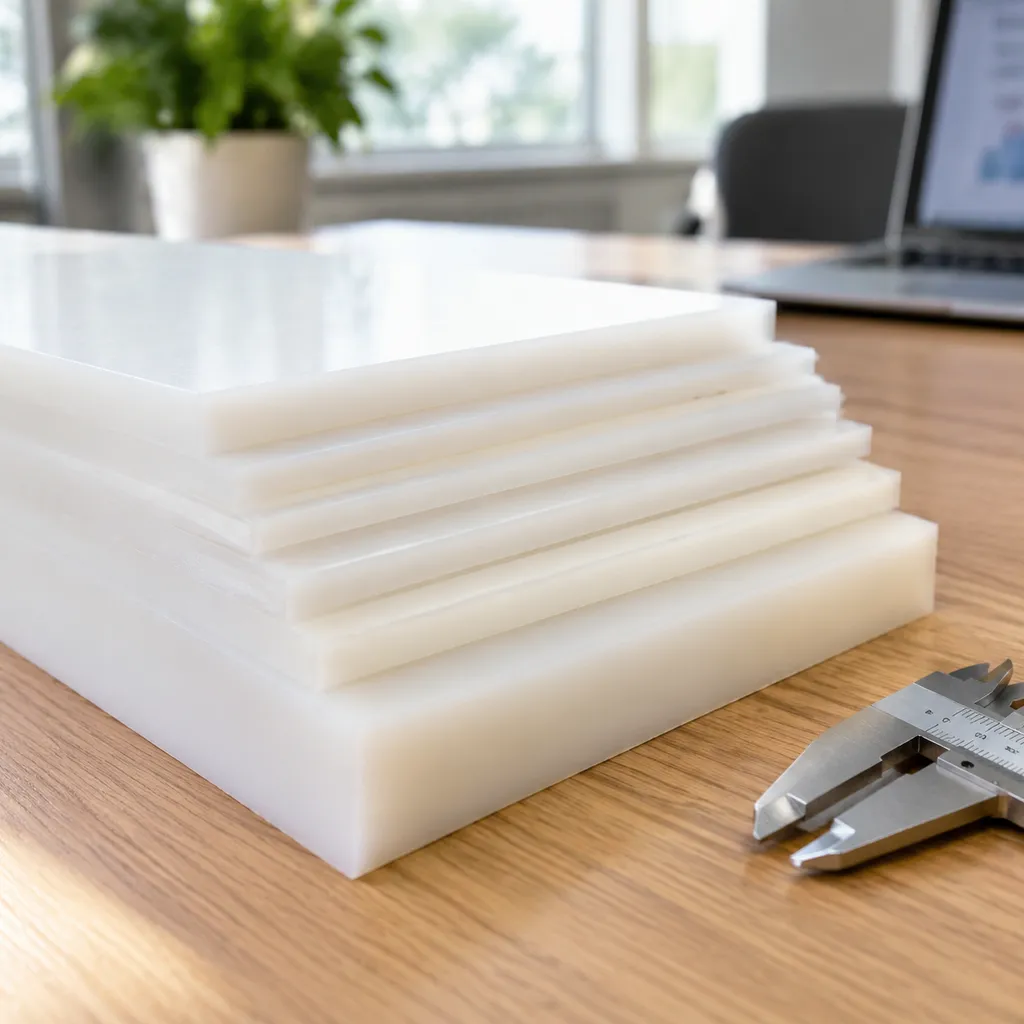
What Is UHMWPE and Why Does Sheet Thickness Matter?
Ultra-High-Molecular-Weight Polyethylene (UHMWPE) is an engineering thermoplastic renowned for extreme toughness, self-lubricating qualities, and superior chemical resistance. With an exceptionally high molecular weight ranging from 3.5 to over 9 million g/mol, the polymer chains transfer stress more effectively than standard high-density polyethylene (HDPE).
Selecting the correct UHMWPE sheet thickness is a critical engineering decision. Thickness dictates mechanical rigidity, impact dampening, mechanical fastener depth, and continuous service lifespan. Choosing an inadequate thickness risks structural buckling, fastener pull-through, and rapid wear-through. Conversely, over-specifying thickness unnecessarily escalates material expenses, machining cycle times, and structural payload weight.
Key Properties Influencing Thickness Performance
The behavior of an industrial UHMWPE liner or component relies heavily on how its intrinsic physical characteristics interact with sheet thickness:
- Impact Strength: Thicker gauges disperse dynamic energy across a broader volume, dampening shock from heavy bulk solids without cracking or permanent deformation.
- Abrasion Resistance: High molecular density provides unmatched resistance to sliding friction and slurry scouring, where thicker profiles yield a deeper sacrificial wear layer.
- Flexural Modulus and Deflection: Thin sheets remain flexible for curved surface lining, while heavy gauges provide load-bearing stiffness across unsupported spans.
- Thermal Stability: UHMWPE has a high thermal expansion coefficient. Adequate gauge thickness prevents warping and wave deformation during temperature cycling.
The Role of Thickness in Wear Life and Durability
Wear life is directly proportional to the usable thickness of the UHMWPE sheet above the mounting hardware. In industrial installations, material loss occurs via mechanical gouging, sliding abrasion, and impingement wear.
| Gauge Range | Primary Wear Mechanism Handled | Expected Service Impact |
|---|---|---|
| Thin (1mm – 5mm) | Light surface friction, fine particulates | Rapid surface renewal, minimum impact protection |
| Medium (6mm – 25mm) | Continuous sliding abrasion, moderate impact | Extended life cycles, protects underlying steel or concrete |
| Heavy-Duty (30mm – 100mm+) | High-velocity drops, severe gouging, bulk rocks | Maximum longevity under harsh conditions |
A thicker sheet creates a larger sacrificial buffer. Because wear strips, guide rails, and sliding plates degrade over continuous production runs, matching thickness to process intensity avoids premature replacement, unscheduled downtime, and underlying substrate damage.
Balancing Thickness with Weight and Material Cost
Optimizing thickness means achieving dependable operational performance without inflating total cost of ownership. Key economic and practical considerations include:
- Raw Material Efficiency: Resin prices are based on weight. Doubling sheet thickness doubles material costs and increases logistics and freight expenses.
- Structural Deadweight: Thicker liners add dead weight to mobile equipment like dump truck beds and mobile hoppers, which directly reduces payload capacity and fuel economy.
- Machining and Fabrication Costs: Thicker plates require specialized equipment, longer CNC cycle times, and optimized tooling speeds to prevent melting or edge deformation during cutting.
- Fastener Integrity: Sufficient gauge depth is required to counterbore bolt heads below the sliding surface, preventing rapid fastener head wear and material flow disruption.
Standard UHMWPE Sheet Thickness Ranges
When selecting the right gauge for your facility, understanding standard manufacturing dimensions saves both fabrication time and material costs. In our manufacturing facilities, we categorize UHMWPE sheet thickness into three primary operating classes based on load capacity, flexural rigidity, and wear life.
| Thickness Category | Standard Range | Primary Applications | Key Benefit |
|---|---|---|---|
| Thin Gauges | 1mm – 5mm | Guide rails, wear strips, packaging lines | High flexibility, easy die-cutting |
| Medium Gauges | 6mm – 25mm | Chute lining, hopper liners, sliding plates | Optimal balance of impact strength and cost |
| Heavy-Duty Gauges | 30mm – 100mm+ | Marine fenders, outrigger pads, heavy mining liners | Maximum load-bearing and energy absorption |
Thin UHMWPE Sheets (1mm – 5mm)
Thin UHMWPE sheets excel in low-clearance environments where you need an aggressive drop in friction without adding bulk or dead weight. Because of their flexibility, we often supply these gauges in continuous rolls or flat strips that wrap smoothly around curved conveyor tracks.
- Common uses: High-speed conveyor components, protective wear tape, slider beds, low-friction chute sleeves, and die-cut mechanical shims.
- Key advantage: Easy to punch, cut with simple tooling, or cold-form onto existing metal structures.
- Limitation: Minimal structural stiffness; these gauges require a continuous, rigid substrate behind them to prevent buckling under direct point impact.
Medium-Thickness UHMWPE Sheets (6mm – 25mm)
The 6mm to 25mm range represents the workhorse category across bulk material handling and heavy manufacturing. Gauges like 10mm, 12mm, and 20mm provide enough structural integrity to bridge small spans while delivering superior abrasion resistance under continuous material flow. If you are comparing material options for high-wear processing zones, our UHMWPE sheet buying guide outlines how these medium gauges stack up against standard liners.
- Common uses: Aggregate chute lining, grain elevators, coal bin liners, hopper liners, and fabricated chain guide rails.
- Key advantage: Deep enough to accommodate counterbored mechanical fasteners without compromising sheet integrity.
- Performance balance: Resists severe sliding wear while absorbing moderate direct hits from falling rock, coal, or scrap metal.
Heavy-Duty UHMWPE Sheets (30mm – 100mm+)
When operations face massive shock loads, severe gouging, or extreme static weight, heavy-duty UHMWPE sheets are the industry standard. These massive blocks retain their high molecular weight performance and dimensional stability under continuous industrial abuse, making them impossible to crack even in sub-zero working conditions.
- Common uses: Port and dock marine fender panels, crane outrigger pads, heavy haul truck beds, and robust commercial sliding plates.
- Key advantage: Exceptional impact strength that absorbs massive dynamic energy without permanent deformation or brittle failure.
- Fabrication profile: Ideal for precision CNC profiling, deep threading, counterboring, and custom milling into thick structural wear parts.
Key Factors When Choosing UHMWPE Sheet Thickness
Selecting the right gauge requires evaluating how mechanical loads, physical wear, and operating conditions interact on the plant floor. Skimping on gauge causes early failure, while over-specifying wastes budget and adds unnecessary weight. We evaluate four core engineering factors to pinpoint the ideal thickness for any installation.
Impact Energy and Load-Bearing Requirements
Impact force dictates minimum thickness. When heavy aggregate, sharp scrap, or bulk materials drop onto a surface, the energy must dissipate across the sheet without cracking the backing structure or denting the plastic permanently.
- Drop Height and Mass: Higher drop zones require heavier gauges (20mm to 50mm+) to absorb repetitive shock loads.
- Continuous Load: Thin sheets under 6mm cold-flow or deform when placed under static, heavy equipment loads.
- Substrate Support: A thick sheet can bridge slight gaps in worn steel frames, whereas thin sheets mirror every imperfection beneath them.
| Drop Height / Load Profile | Particle Size | Suggested UHMWPE Thickness |
|---|---|---|
| Low impact (< 1 meter) | Fine powders, grains, pellets | 6mm – 10mm |
| Medium impact (1 – 3 meters) | Crushed stone, coal (< 50mm) | 12mm – 20mm |
| High impact (> 3 meters) | Heavy ore, scrap metal, rock (> 100mm) | 25mm – 50mm+ |
Abrasion Severity and Material Flow Conditions
Abrasive sliding wear strips material away over time. To ensure planned maintenance cycles match shutdown schedules, sheet thickness must provide an adequate sacrificial wear layer.
Fine particles like sand or fly ash under high velocity scour surfaces through micro-cutting. Coarse lumps gouge and scrape. Choosing a gauge with extra wear margin prevents abrasive fines from reaching the fasteners or steel substrate ahead of your overhaul schedule.
Operating Temperature and Thermal Expansion
UHMWPE expands and contracts significantly more than steel. Its linear thermal expansion coefficient sits around 1.5–2.0 × 10⁻⁴ K⁻¹, roughly ten to fifteen times higher than carbon steel.
Temperature swings cause dimensional movement. Thicker panels (15mm and up) resist buckling, warping, and oil-canning between fastener points when ambient temperatures climb. In outdoor chutes or unheated silos, pairing proper gauge with oversized bolt holes is essential for preventing stress cracks and plate failure caused by thermal restraint.
Installation Method and Fastener Depth
The way you secure the sheet dictates the minimum allowable thickness:
- Counterboring Limits: Mechanical fastening using elevator bolts, weld studs, or countersunk fasteners requires drilling recessed holes. The counterbore depth usually takes up 30% to 50% of the sheet. Installing countersunk bolts in sheets under 10mm leaves too little material under the bolt head, causing fastener pull-through under tension.
- Capping and Weld Washers: For 12mm to 25mm sheets, steel weld washers seated inside deep counterbores secure the liner flush with the surface, keeping flow lines clear.
- Adhesive Backing: If bolting is impossible and rubber-backed bonding is required, thinner gauges (3mm to 6mm) are preferred to ensure flexibility and reliable surface adhesion.
Recommended UHMWPE Sheet Thickness by Application
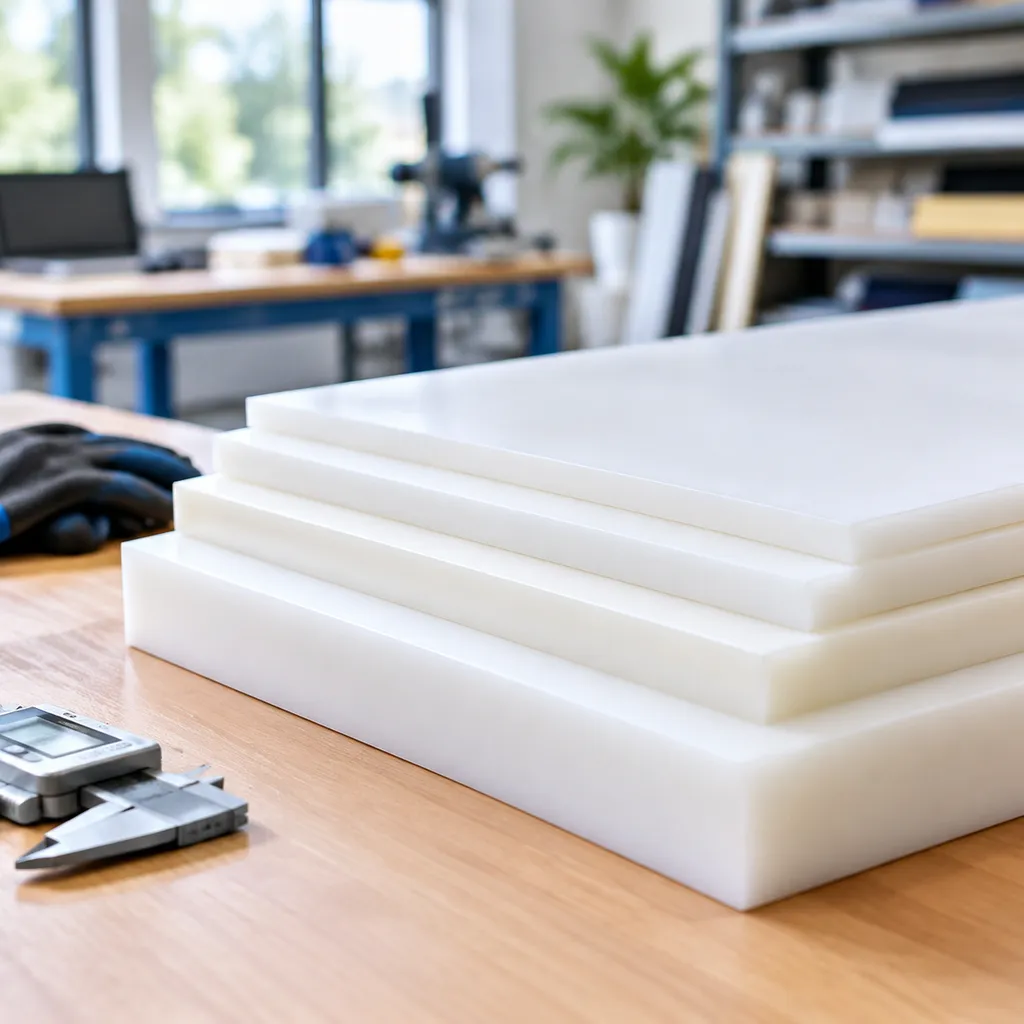
Selecting the right UHMWPE sheet thickness comes down to balancing impact energy, sliding friction, and your fastening method. Specifying a sheet that is too thin leads to premature wear-through or warping between bolts, while over-specifying adds unnecessary weight and expense. Based on our real-world fabrication experience, here is how we break down the ideal gauges across critical industrial applications.
Chute, Hopper, and Truck Bed Liners
In bulk handling systems, material velocity, drop height, and particle abrasiveness dictate the minimum gauge needed to protect structural steel.
- Fine powders and grain (Light Duty): 6mm to 8mm provides a slick, non-stick surface that eliminates bridging in hopper liners and chutes without adding dead weight.
- Sand, gravel, and coal (Medium Duty): 10mm to 12mm offers the optimal balance of impact resistance and abrasion resistance for continuous sliding plates.
- Quarry rock, ore, and demolition debris (Heavy Duty): 15mm to 25mm is necessary to absorb direct drop impact. This gauge provides the required depth to deeply countersink weld studs or bolts below the wear plane.
- Dump truck beds: Standard asphalt and dirt hauling performs best with 10mm to 12mm, whereas rock and aggregate hauling requires 15mm to 20mm liners to prevent floor bucking.
For complex geometries and bin installations, reviewing UHMWPE plate uses and specifications ensures you match fastener spacing to thermal movement and sheet thickness.
Conveyor Components and Chain Wear Strips
Conveyor systems rely on UHMWPE to reduce motor drag, eliminate noise, and protect metal chains from metal-on-metal friction.
- Snap-on guide rails and side guides: 3mm to 6mm gives enough flexibility for cold-forming along curves while maintaining a low coefficient of friction.
- Standard wear strips and slider beds: 8mm to 12mm provides a rigid base capable of handling continuous belt tension and thermal friction.
- Heavy chain tracks and sprockets: 15mm to 25mm allows deep machining of guide channels to keep drive chains seated without cutting through the structural base.
- Material scraper blades: Matching heavy sheets with UHMWPE wear-resistant scrapers for conveyors in the 12mm to 20mm range cleans belts cleanly without grooving the rubber surface.
Marine Fender Panels and Dock Bumpers
Marine environments subject plastics to crushing compressive forces, shear stress from mooring ships, and relentless UV exposure.
- Small craft marinas and tugboat push pads: 30mm to 40mm sheet faces absorb low-velocity vessel contacts and resist surface gouging.
- Commercial container berths and bulk terminals: 50mm to 70mm panels are standard for facing steel fender bodies. This thickness handles the immense shear load generated as ships pivot along the dock.
- Extreme duty pilings and ice-breaker channels: 80mm to 100mm+ solid facing panels distribute high-tonnage impacts while providing ample material depth for heavy counterbored retention bolts.
Outrigger Pads and Heavy Equipment Mats
To prevent hydraulic outriggers from puncturing soft asphalt, sand, or turf, outrigger pads rely on sheer thickness to spread point loads over a wide footprint.
- Boom trucks and small utility cranes (Up to 20 tons): 25mm to 40mm provides sufficient stiffness without excess weight, making pads easy for single operators to carry.
- Mid-sized mobile cranes and concrete pumps (20 to 50 tons): 50mm to 60mm cut-to-size slabs resist permanent bending deflections under cyclic point loads.
- Heavy all-terrain cranes and oilfield equipment (50 to 100+ tons): 75mm to 100mm solid engineered pads provide absolute shear stability and prevent the pad from dishing under concentrated hydraulic ram pressures.
Machining and Fabrication Considerations by Thickness
Working with UHMWPE requires a clear understanding of how sheet thickness impacts tool behavior, heat dissipation, and mechanical deflection. Thinner gauges behave completely differently under a spindle than heavy industrial slabs, making thickness a primary variable in your fabrication strategy.
Cutting and CNC Machining Tolerances
Tool deflection and workholding vary drastically depending on the gauge of the sheet:
- Thin Sheets (1mm to 5mm): Thin stock tends to lift, flutter, or warp under router pressure. We always use high-vacuum tables or sacrificial double-sided tape backing to maintain flatness. Single-flute upcut spiral carbide bits run at high feed rates to prevent chip re-welding.
- Medium to Heavy Gauges (6mm to 50mm+): Heavier material provides solid structural rigidity, resisting chatter. However, deep cuts trap friction heat inside the cut channel. We utilize high-chip-load tooling, rapid feeds, and clean air blasts to clear swarf rapidly.
To choose the right tooling and speeds for your specific stock gauge, review our complete guide to cutting UHMW sheets.
Because UHMWPE has a high thermal expansion rate, we let thick plates normalize to room temperature (20°C / 68°F) for at least 24 hours before precision CNC machining to achieve reliable tolerances within ±0.2 mm.
| Thickness Range | Primary Machining Challenge | Recommended Workholding / Tooling |
|---|---|---|
| 1mm – 5mm | Sheet lifting, edge flutter, burrs | Vacuum table, double-edge compression bits |
| 6mm – 25mm | Thermal expansion, chip buildup | Standard mechanical clamping, 2-flute carbide |
| 30mm – 100mm+ | Heat trapping, cut-depth resistance | Heavy-duty vise/toe clamps, single-flute roughing end mills |
Forming, Bending, and Thermal Management
Because UHMWPE does not melt into a liquid state due to its high molecular weight, standard thermoforming does not apply. Shaping depends directly on the thickness of your material:
- Cold Bending: We routinely cold-bend thin strips and sheets up to 4mm on a conventional sheet metal press brake. To avoid stress cracking along the crease, maintain an inside bend radius of at least 2.5 to 3 times the sheet thickness and allow for 10° to 15° of springback.
- Hot Bending: Sheets 6mm and thicker require uniform heat. We heat the bend line to roughly 135°C–140°C (275°F–285°F) using dual-sided strip heaters. Once bent, the part must stay clamped in a cooling fixture until it drops below 60°C to lock the shape.
- Thermal Expansion Gaps: UHMWPE moves significantly with ambient temperature changes—roughly 2mm per meter for every 10°C swing. For thick conveyor components, sliding plates, and long wear strips, always drill slotted or oversized mounting holes to prevent the panels from buckling under thermal cycling.
Custom Cut-to-Size vs. Standard Gauge Sheets
Deciding whether to order full-format sheets (such as 4×8 ft or 1×2 m) or factory cut-to-size parts comes down to sheet thickness and workshop capabilities:
- Standard Gauge Sheets: Ordering raw sheets is ideal if you have high-capacity CNC routers and produce varied profiles in-house. It offers maximum flexibility for prototype development, custom guide rails, or unpredictable job-shop demands.
- Custom Cut-to-Size: For heavy gauges (above 20mm), purchasing pre-cut profiles saves freight costs and eliminates expensive material scrap. Heavy-duty liners, chain wear strips, and bevel-edged sliding plates come pre-machined with countersunk holes and edge chamfers, allowing immediate installation on-site without burning down tooling in your own shop.
Frequently Asked Questions About UHMWPE Sheet Thickness
Does a thicker UHMWPE sheet always provide better wear resistance?
No, thickness alone does not improve the inherent sliding wear properties of the material. The abrasion resistance of an engineered polymer comes primarily from its resin quality and high molecular weight. A thicker sheet simply provides more sacrificial material before wear-through occurs, giving you a longer service life under continuous abrasion. However, if your application experiences high drop impacts, a thicker gauge is essential because it absorbs dynamic shock without puncturing or cracking the sub-structure.
How do I determine the minimum thickness for a chute liner?
To choose the correct gauge for effective chute lining, we calculate three core variables:
- Drop height: Falls exceeding 2 meters require at least 15mm to 25mm thickness to withstand impact energy.
- Lump size and sharpness: Crushed stone or metal scrap over 50mm demands heavy-duty panels (20mm or thicker) to resist gouging.
- Fastener countersinking: You must ensure the sheet is thick enough to deeply countersink bolt heads below the sliding line. If a bolt head is exposed, material flow catches and rips the liner out.
For fine sands, low drops, or light sliding, an 8mm to 10mm UHMWPE sheet provides reliable protection while keeping overall structure weight low.
What is the standard tolerance for UHMWPE sheet thickness?
Because UHMWPE is manufactured through compression molding or ram extrusion, thermal expansion causes natural gauge variations across large surface areas. Standard production tolerances typically range as follows:
- Thin sheets (3mm – 10mm): ±0.3mm to ±0.5mm
- Medium sheets (12mm – 30mm): ±0.5mm to ±1.0mm
- Heavy-duty sheets (35mm – 100mm): ±1.0mm to ±2.5mm
When tight-tolerance engineering parts like machined wear strips or precision guide rails are required, we plane or CNC skim the panels to your exact specified dimensions.
Can multiple thin UHMWPE sheets be bonded together?
No, we strongly advise against stacking and gluing thin sheets together. Due to UHMWPE’s non-polar molecular structure and non-stick surface energy, traditional adhesives and epoxies do not form structural bonds. Mechanical fastening is the only reliable installation method. If an application requires a 30mm structural barrier, selecting a single solid UHMWPE sheet or rod profile is far safer and more cost-effective than attempting to laminate thinner gauges together.
Related Sources
- https://www.emcoplastics.com/uhmw/
- https://www.interstateplastics.com/UHMW-Natural-Sheet-UHM-SH-NA.php
- https://www.roechling.com/industrial/products/thermoplastics/polyethylene-pe/polystone-m-uhmw-pe
- https://www.m-chem.com/en/products/tivar-1000
- https://www.boedeker.com/Technical-Resources/Technical-Library/Plastic-Machining-Guidelines