
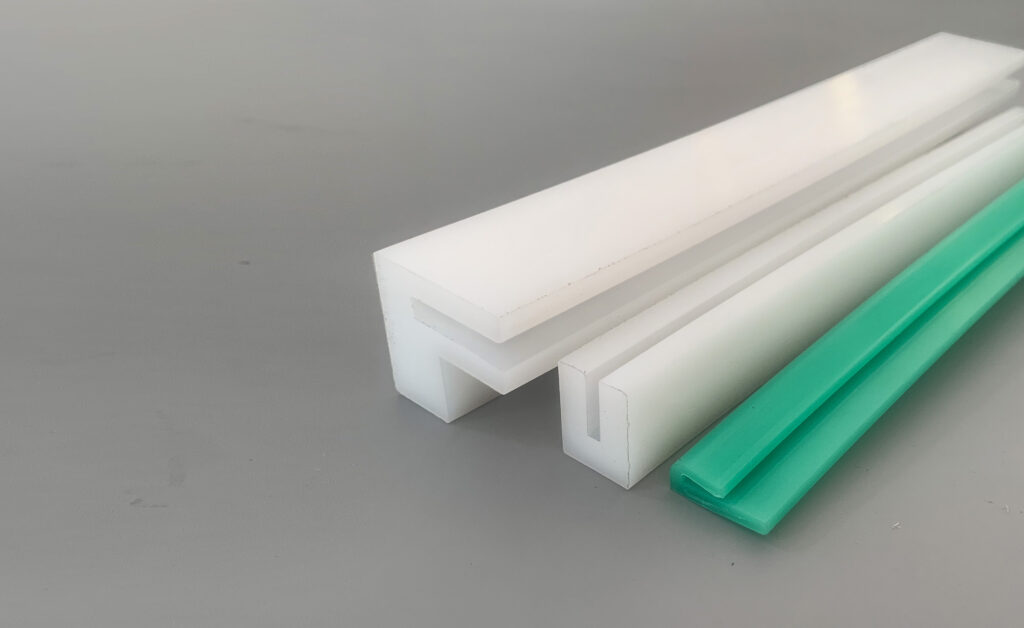
What Are Conveyor Wear Strips and Why Are They Essential?
Conveyor wear strips are precision-engineered components designed to act as the primary contact surface between conveyor chains or belts and the conveyor frame. By creating a dedicated sacrificial layer, these strips absorb the friction and mechanical stress of moving parts, preventing direct metal-on-metal contact and significantly extending the operational life of the entire material handling system.
Core Functions of Conveyor Wear Strips and Chain Guides
The primary role of these components is to provide a smooth, stable track for conveyor chains. They facilitate high-speed movement while maintaining precise alignment.
- Load Distribution: Distributes the weight of the conveyed products across the conveyor frame.
- Guidance: Maintains the lateral position of the chain, ensuring it remains on the track during operation.
- Interface Stability: Creates a consistent, low-friction pathway for heavy-duty industrial chains and modular belts.
Key Benefits: Friction Reduction, Noise Control, and Chain Protection
Utilizing high-performance engineering plastics, wear strips offer distinct advantages for industrial efficiency:
| Benefit | Impact on Operation |
|---|---|
| Friction Reduction | Decreases power consumption and motor strain. |
| Noise Control | Dampens the sound of moving metal parts, creating a quieter work environment. |
| Chain Protection | Prevents premature wear and abrasion of expensive conveyor chains. |
| Chemical Resistance | Withstands exposure to cleaning agents and industrial lubricants. |
By integrating high-quality, self-lubricating wear strips, facilities can effectively reduce downtime, minimize maintenance intervals, and ensure reliable performance in high-speed, continuous-duty applications.
Common Conveyor Wear Strip Materials
UHMWPE (Ultra-High Molecular Weight Polyethylene)
UHMWPE is the industry standard for conveyor wear strips due to its exceptional combination of low friction and high abrasion resistance. It acts as a self-lubricating barrier that significantly extends the lifespan of both chains and belts. Because ultra-high molecular weight polyethylene is chemically inert and impact-resistant, it remains the go-to material for high-speed bottling and packaging environments.
PTFE, Nylon, and Specialty High-Temperature Plastics
When applications exceed the standard thermal or load limits of UHMWPE, we turn to engineered plastics like Nylon or PTFE.
Nylon (PA6/PA66): Preferred for high-load applications where mechanical strength and rigidity are critical. It offers excellent wear resistance under heavier pressures.
PTFE (Teflon): Chosen specifically for high-temperature resistance and chemical environments where non-stick properties are required.
Specialty Blends: Often used for specialized conveying tasks that require enhanced thermal stability or static dissipation.
Material Performance Comparison: Friction, Wear Resistance, and Load
Selecting the right material depends on balancing environmental demands with the mechanical requirements of your system.
| Material | Friction Coefficient | Wear Resistance | Load Capacity | Temp Resistance |
|---|---|---|---|---|
| UHMWPE | Very Low | Excellent | Moderate | Low to Medium |
| Nylon | Moderate | Good | High | High |
| PTFE | Extremely Low | Moderate | Low | Very High |
Understanding how UHMWPE sheet wear issues occur helps in selecting the most durable component for your specific conveyor profiles. By matching the material properties to your line speed and load, you ensure maximum operational efficiency and reduced maintenance downtime.
Standard and Custom Conveyor Wear Strip Profiles
Flat and Rectangular Wear Strips
Flat wear strips serve as the foundation for linear material handling. These versatile components provide a sacrificial contact surface that protects both the conveyor frame and the moving chain or belt. Precision-machined to exact dimensions, our flat strips minimize friction and are commonly utilized in high-volume accumulation tables where consistent, smooth motion is mandatory.
T-Shape and C-Shape Chain Guide Profiles
For systems requiring precise chain alignment, T-shape and C-shape profiles offer superior lateral support. These profiles capture the conveyor chain, preventing side-to-side drift during high-speed operation. By utilizing UHMW chain guide designs, we ensure the chain remains centered, significantly reducing the mechanical stress on drive motors and sprockets. The C-shape geometry is particularly effective for managing heavy-duty applications where chain stability is critical for uptime.
Extruded Bend Rails and Custom-Machined Profiles
Navigating complex conveyor layouts requires more than off-the-shelf solutions. We specialize in extruded bend rails that maintain uniform contact through curves and corners. When standard components cannot meet specific system geometry, we provide custom-machined plastic profiles based on your technical drawings or physical samples. Whether you require specific Nylon conveyor chain guide geometries for high-load environments or modified track profiles, our CNC capabilities ensure an exact fit, reducing installation time and ensuring optimal system performance.
Typical Industrial Applications for Conveyor Wear Strips
Bottling, Beverage, and Food Processing Lines
In hygiene-sensitive environments like bottling and food processing, conveyor wear strips must provide reliable performance while maintaining strict sanitation standards. Our components are designed to withstand frequent washdowns and exposure to moisture, ensuring that conveyor chains glide smoothly without contaminating the production flow. The use of high-grade, self-lubricating plastics helps maintain consistent speeds on high-volume lines where even minor friction can lead to jams or product tipping.
Packaging, Material Handling, and Accumulation Conveyors
Effective material handling relies on the seamless movement of goods through packaging and accumulation zones. We provide wear-resistant guide rails and tracks that facilitate smooth transitions and buffer zones. By choosing the right profile for your setup, you ensure reduced belt vibration and noise, even when items accumulate or change direction. This level of precision is critical for maintaining throughput in automated sorting and packaging facilities where uptime is a primary operational objective.
Heavy-Duty and High-Speed Automated Systems
For high-speed automated systems, the demand for low-friction conveyor components is paramount to prevent premature chain wear and overheating. Our custom-machined plastic tracks are engineered to endure heavy loads and continuous operation, offering superior abrasion resistance compared to standard materials. Whether you are managing complex curves or long straight runs, our precision-manufactured parts provide the structural integrity required to keep heavy-duty production lines running at maximum capacity with minimal maintenance.
How to Choose the Right Conveyor Wear Strip
Selecting the optimal conveyor wear strips requires balancing environmental factors with mechanical demands. Your choice dictates the longevity of both the conveyor chain and the track itself.
Matching Strip Material to Conveyor Speed, Load, and Temperature
Performance depends on the material’s inherent properties. Refer to this general guide to determine which chain guide rail material best fits your operational environment:
| Material | Friction Coefficient | Load Capacity | Temp Resistance |
|---|---|---|---|
| UHMWPE | Extremely Low | Moderate | Standard |
| Nylon | Moderate | High | Excellent |
| HDPE | Low | Low-Moderate | Standard |
| PTFE | Lowest | Low | High |
Selecting the Correct Profile for Chain and Belt Compatibility
Precision is vital for smooth operation. You must match the wear strip profile to the specific geometry of your chain or belt. Common profiles include:
C-Channel: Ideal for capturing the chain and preventing lateral movement.
T-Slot: Used for secure, snap-in installation.
Flat Bar: Best for simple sliding surfaces and accumulation tables.
Corner Tracks: Machined specifically for smooth direction changes in curved systems.
Mounting Methods and Track Fitment Considerations
Proper installation prevents premature wear and system vibration. When designing your assembly:
Allow for Thermal Expansion: Plastics like UHMW-PE expand and contract with temperature shifts; ensure mountings provide necessary clearance.
Ensure Flush Transitions: Abrupt edges between segments will damage the chain link.
Prioritize Custom Machining: For unique systems, rely on custom-engineered plastic solutions derived from your original drawings or physical samples to guarantee an exact fit that minimizes installation labor and downtime.
Conveyor Wear Strip Maintenance and Replacement Guide
Regular maintenance of your conveyor system is critical to prevent unplanned downtime. By monitoring the condition of your conveyor chain guides, you can ensure smooth operation and extended equipment life.
Signs Your Conveyor Wear Strips Need Replacing
You should inspect your system regularly for specific signs of degradation:
Visible Grooving: Deep indentations or channels worn into the plastic surface by the chain or belt.
Increased System Noise: A sudden rise in friction-induced squealing indicates the self-lubricating properties of the material have diminished.
Irregular Chain Movement: Surging or vibration in the conveyor line often points to uneven wear strips causing inconsistent tracking.
Material Splintering: Cracks or delamination along the edges of the strip.
Why Wear Strips and Conveyor Chains Should Be Replaced Together
Replacing a worn-out chain while keeping an old, grooved wear strip is a common mistake. An existing groove acts as a track that forces the new chain into an incorrect alignment, leading to rapid, uneven wear on the new components. To maximize the longevity of your investment, it is standard practice to install new conveyor wear strips whenever you perform a full chain or belt replacement. This ensures a uniform surface that minimizes friction and reduces the load on your drive motors.
Spare Parts Inventory: What Wear Strips and Guide Kits to Keep on Hand
To minimize downtime, keep a proactive inventory of essential components. Essential items include:
High-Wear Segments: Keep extra lengths of the specific profiles used in high-friction zones, such as curve tracks or transition points.
Fastening Hardware: Ensure you have enough mounting clips and hardware to secure new strips immediately.
Pre-Machined Kits: For critical production lines, maintain a set of custom chain guide rails that match your system’s geometry. Having these on hand allows for quick, drop-in repairs rather than waiting for custom machining during an emergency.
Frequently Asked Questions About Conveyor Wear Strips
How do I identify which wear strip profile my conveyor uses?
To identify the correct profile, examine the cross-section of your existing track or the conveyor chain’s underside. Common indicators include the width of the chain track, the depth of the groove, and how the strip secures into the mounting frame (e.g., snap-in, bolt-on, or sliding). If your current system uses worn-out components, providing a physical sample or a technical drawing to our engineering team ensures an exact match for your conveyor parts.
How long do conveyor wear strips typically last?
Service life depends on operating speed, load weight, the presence of abrasive contaminants, and the chosen material. High-quality UHMW-PE parts are designed for longevity, but maintenance managers should monitor for thinning or surface grooving. Systems operating 24/7 in high-speed environments will naturally experience faster wear than low-speed accumulation lines.
What is included in a standard conveyor guide kit?
A standard kit typically includes the primary wear strips, necessary fastening hardware, and compatible transition pieces for curves or inclines. We focus on providing precision-engineered components that integrate seamlessly with your existing metal framework to minimize installation downtime.
What specifications are needed to order custom wear strips?
When ordering custom conveyor wear strips, providing clear documentation allows us to maintain high manufacturing precision.
| Requirement | Details Needed |
|---|---|
| Drawing/CAD | Detailed cross-section dimensions and tolerances |
| Sample | A physical segment of the old strip for profile matching |
| Material | Specification (e.g., UHMW-PE, HDPE, or Nylon) |
| Application | Speed, temperature, and chemical exposure levels |
| Quantity | Total length or number of individual sections needed |