
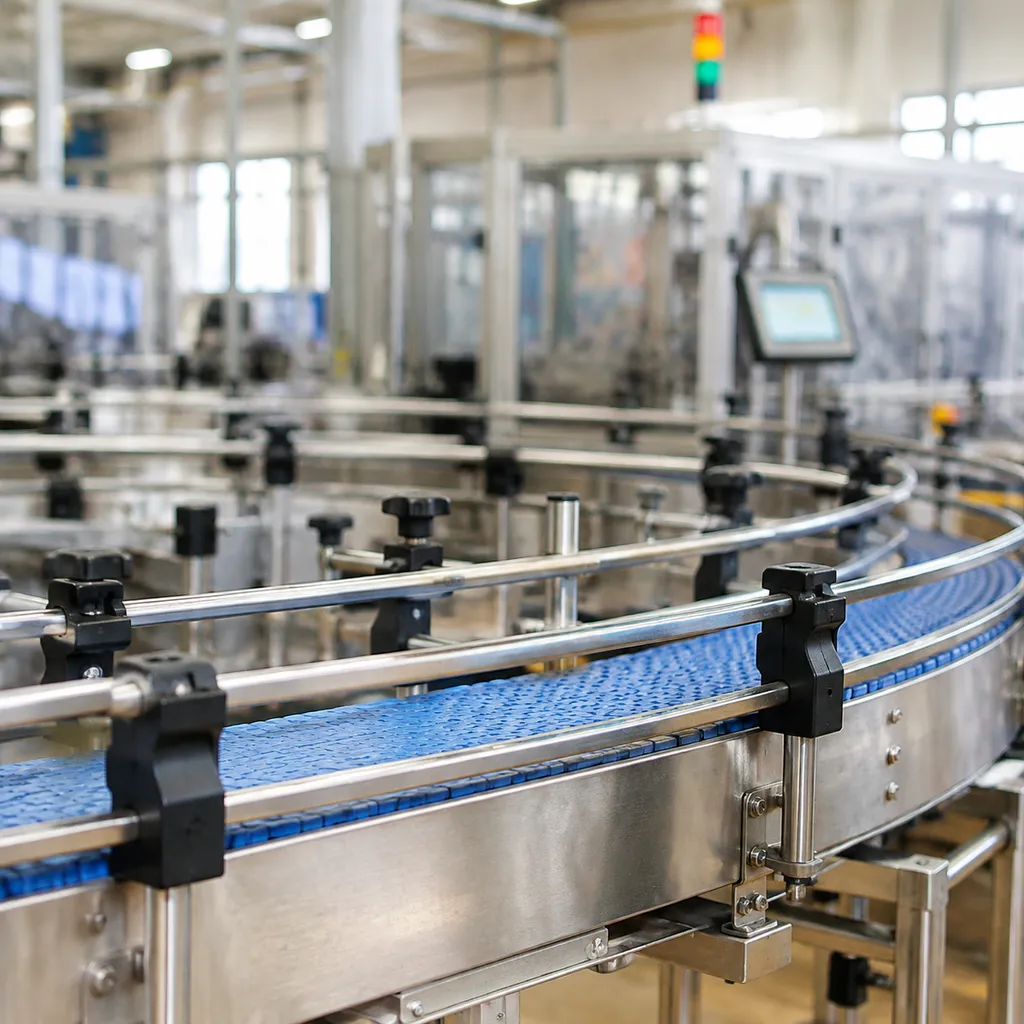
Is unexpected downtime or screeching chain wear silently killing your warehouse throughput?
The truth is, keeping high-speed sorting and heavy pallet lines running smoothly often boils down to one critical, overlooked component: your conveyor guide.
Get it wrong, and you are constantly replacing stretched chains and bleeding maintenance budgets. But choose the right high-durability UHMW conveyor chain guide, and you instantly eliminate friction, slash operating noise, and dramatically extend equipment lifespan.
In this guide, you will learn how to select the ideal guide profiles, choose the best wear-resistant materials, and implement rock-solid mounting solutions to keep your warehouse operating at peak efficiency.
Let’s dive right in.
What Are Warehouse Conveyor Chain Guides and How Do They Work?
A conveyor guide is an essential mechanical component engineered to support, route, and stabilize moving chains, belts, and unit loads across material handling setups. Mounted directly to the conveyor framework, these profiles act as a dedicated track that channels power transmission chains along precise paths while separating moving metal parts from stationary steel structures.
By providing a continuous, low-friction interface, industrial chain guides control chain trajectory through horizontal runs, incline sections, and corner tracks, preventing side-to-side deflection and preserving overall drive system alignment.
Core Functions of Chain Guides in Conveyor Systems
Integrating precision-machined UHMW chain guides into industrial conveyor networks delivers several critical functions:
- Precision Path Tracking: Holds roller chains and conveyor belts in strict alignment, preventing track jump, lateral wandering, and sprocket disengagement.
- Friction and Wear Mitigation: Acts as a durable, self-lubricating barrier between moving chains and the conveyor bed, eliminating destructive metal-to-metal contact.
- Vibration and Noise Dampening: Absorbs mechanical chatter, chain slap, and operational harmonics across continuous-run distribution lines.
- Chain Sag Support: Carries the weight of the return and drive strands over extended spans, maintaining uniform chain tension and preventing binding.
- Load Stabilization: Ensures smooth product transit across sorting lines by eliminating uneven chain surge and product tipping.
Why Chain Guides Are Essential for Warehouse Efficiency
Modern high-speed distribution centers and automated fulfillment hubs rely on uninterrupted material flow. Missing or worn guides directly cause operational bottlenecks, component fatigue, and costly downtime.
| Operational Challenge | Impact Without Guides | Performance With UHMW Wear Strips |
|---|---|---|
| Drive Friction | High motor drag and power draw | Minimal sliding resistance and lower power consumption |
| Acoustic Levels | Loud metal-on-metal clatter | Significant noise reduction for compliant work environments |
| Component Lifespan | Rapid chain wear and rail grooving | Extended service intervals for chains, sprockets, and frames |
| System Reliability | Frequent line jams and unplanned stops | Continuous tracking under high-speed, heavy-load cycles |
Implementing dedicated conveyor chain wear strips preserves structural equipment investments, maintains continuous line speed, and guarantees that warehouse transport systems operate at peak throughput.
Key Advantages of High-Durability UHMW Chain Guides
In high-load warehouse systems, continuous metal-on-metal contact quickly destroys conveyor chains and structural tracks. We machine our conveyor guide profiles from virgin ultra-high-molecular-weight polyethylene (UHMWPE / PE1000) to eliminate this friction point entirely. By switching to high-performance polymer tracks, conveyor lines operate smoother, run quieter, and handle constant cycles without surface galling.
Friction Reduction and Noise Control with PE1000 (UHMW1000)
PE1000 provides an exceptionally low dynamic coefficient of friction, outperforming traditional steel, nylon, and POM wear surfaces. Our UHMW chain guides create a slick, self-lubricating interface that keeps roller chains gliding seamlessly under heavy drive loads.
- Acoustic dampening: The elastic molecular structure absorbs chain slap and vibration, drastically lowering decibel levels on high-speed sorting floors.
- Zero moisture absorption: With water absorption below 0.01%, our guides do not swell, warp, or bind in humid logistics hubs or frequent washdown environments.
- Reduced drive motor strain: Lower surface drag minimizes torque resistance, cutting power draw across extended conveyor runs.
Extending Chain Lifespan and Lowering Maintenance Costs
UHMWPE delivers superior abrasion resistance, lasting up to 4 to 7 times longer than carbon steel in abrasive sliding setups. Because the plastic serves as the sacrificial, wear-resistant track, it prevents the chain links, rollers, and pins from wearing prematurely.
- Minimal chain stretch: Eliminating excessive drag stops drive chains from elongating under tension.
- No external lubrication needed: Built-in dry lubricity keeps lines free of grease contamination and eliminates constant oiling routines.
- Predictable maintenance: Tough, shatter-proof profiles resist cracking under shock loads from -200°C to +80°C, preventing unexpected emergency shutdowns.
Available UHMW Grades for Heavy-Duty Warehouse Environments
Different facilities face unique operational hazards, which is why we produce a complete range of tailored material formulations to match specific system requirements:
- Standard Virgin PE1000: The industry baseline for pure wear resistance, impact strength, and low surface drag (molecular weights from 3.0 to 9.0+ million g/mol).
- Anti-Static (ESD) UHMW: Dissipates static electricity generated by rapid chain movement, protecting sensitive electronics and preventing airborne dust accumulation.
- Self-Lubricating / Low-Friction Grade: Formulated with integrated additives to further minimize friction on high-speed packaging and sorting systems.
- Flame-Retardant Grade: Meets strict industrial fire safety compliance without compromising impact or slide performance.
Common Types and Profiles of Conveyor Chain Guides
In our manufacturing facility, we produce precision-machined UHMWPE conveyor guide profiles engineered to support different track layouts and chain types. Selecting the correct geometry eliminates lateral drift, reduces drive-motor strain, and prevents premature track wear across high-speed packaging and distribution lines. We configure these wear tracks into standard shapes or custom CNC cross-sections based on exact line requirements.
Channel Style, Raised Track, and Combined Guide Profiles
Different conveyor geometries demand specific profile shapes to hold chain pathways securely under tension:
- Channel Style (C-Profile): Features a recessed center track that encloses the chain roller, containing lateral play and preventing side-slip during continuous operation.
- Raised Track (T-Guide): Elevates the chain assembly, providing direct support under the inner roller links while side plates clear the profile edges to avoid binding.
- Combined Profiles: Integrates side-guide walls and multi-channel base tracks into a single continuous strip, ideal for automated accumulation zones.
To see how these profiles fit broader transport systems, review our durable conveyor chain guides designed for direct factory integration.
Single, Duplex, and Triplex Roller Chain Guides
We machine wear components specifically configured to the number of chain strands carrying your product loads:
- Single Strand Guides: Built for standard light-to-medium payload conveyors, running single-row roller chains with tight lateral guidance.
- Duplex Track Guides: Designed with parallel dual slots to balance twin-strand drive setups, distributing heavier pallet or carton loads evenly.
- Triplex Track Guides: Heavy-duty, wide-surface UHMW profiles engineered for triple-strand chains operating under substantial continuous torque.
For a detailed breakdown of industrial profile configurations, check our technical guide on chain guide rail benefits and types.
ANSI Standard vs. Extended Pitch Chain Guides
Roller chain spacing determines pocket dimensions and contact surface area on the guide bed:
- ANSI Standard Pitch: Accommodates standard drive chains (such as ANSI 40, 50, 60, and 80). These guides focus on tight tolerances and short link spacing for rapid, continuous power transmission and sorting.
- Extended Pitch (Double Pitch): Machined with wider support landings tailored for extended pitch chains (such as C2040, C2050, or C2060). These setups are standard in long-distance material handling conveyors, reducing total component weight while relying on the low dynamic friction of UHMW wear strips to prevent long-run sag.
Mounting Systems and Hardware Accessories
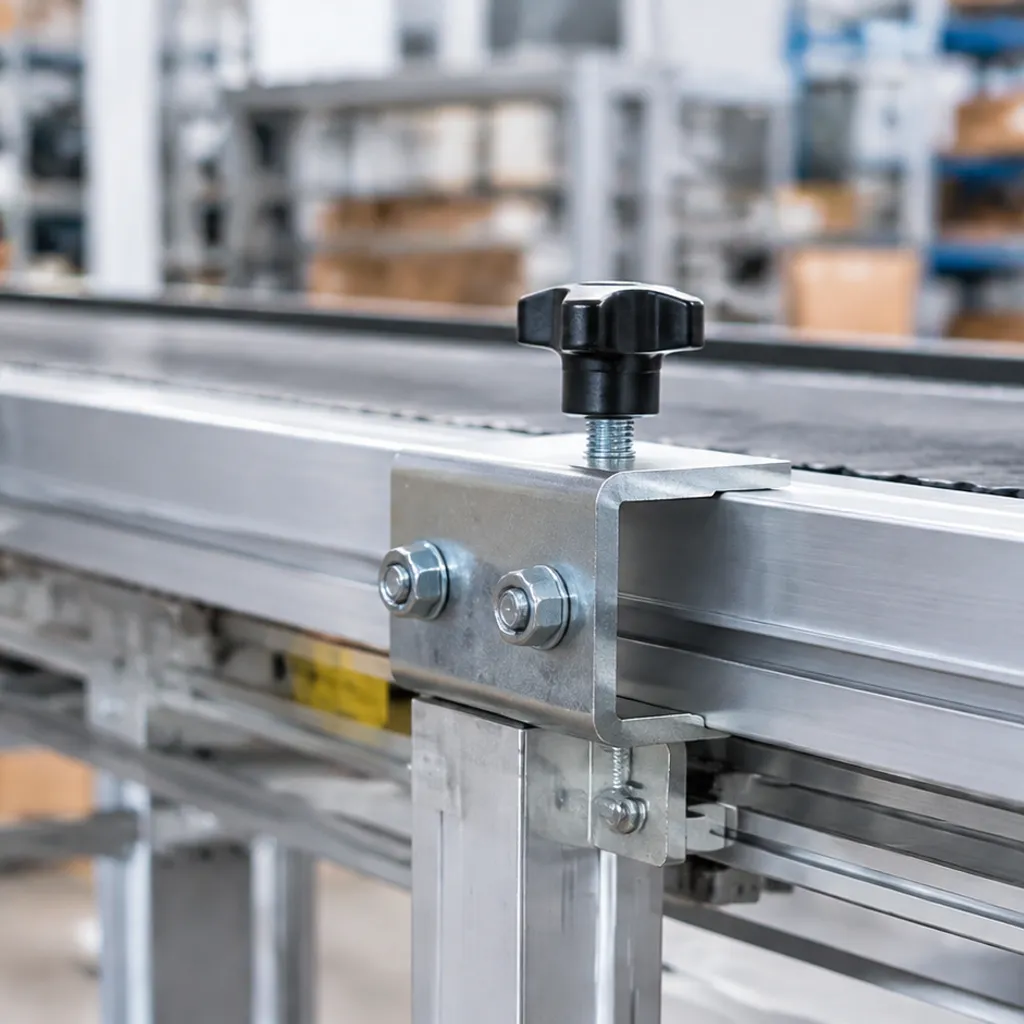
A reliable conveyor guide system depends on a rigid, secure mounting framework. Because UHMW polyethylene profiles expand and contract with temperature fluctuations, rigid bolting directly through the plastic can cause buckling or track deformation. We supply complete mounting systems and hardware accessories designed to support smooth chain travel, maintain structural alignment under heavy loads, and simplify routine maintenance.
Steel Mounting Channels and C-Channel Profiles
To secure wear tracks across long conveyor sections, we manufacture precision-matched metal backing channels. These metal profiles hold the plastic guide firmly in place while allowing it to float longitudinally during thermal changes.
- Rigid Foundation: Roll-formed metal channels prevent plastic tracks from sagging between frame cross-members, providing straight alignment for high-load chains.
- Rapid Replacement: Worn plastic inserts slide out of the channel quickly during servicing, eliminating the need to disassemble conveyor side frames.
- Material Selection: We supply zinc-plated carbon steel channels for dry warehouse settings and recommend our corrosion-resistant options for washdown lines; review our guide on stainless steel chain guide benefits and applications for harsh processing zones.
- Profile Compatibility: Standard C-channel shapes match our C-profile, T-guide, and custom CNC-machined conveyor guide rails without requiring field modification.
For specialized industrial systems running high mechanical loads, understanding steel chain guide rail key features and selection helps ensure proper sizing between the metal casing and the UHMW insert.
| Channel Type | Common Material | Mounting Method | Typical Conveyor Setup |
|---|---|---|---|
| C-Channel (Standard) | Galvanized Steel / SS304 | Weld-on or Bolted | Unit handling, general warehousing |
| Deep-Well Channel | Heavy-Gauge Steel | Direct frame bolting | Heavy-duty pallet accumulation |
| Low-Profile Channel | Stainless Steel SS316 | Pre-drilled slots | Compact sorting lines, packaging |
T-Head Bolts and Fasteners for Secure Installation
Fastening conveyor rail systems requires specialized hardware to avoid interference with moving chains and products. Standard bolt heads often protrude and catch roller chain side plates or conveyor attachments, leading to equipment jams.
- Low-Profile T-Head Design: T-bolts slide directly into the under-track slot of the metal C-profile, locking firmly against the channel shoulders when torqued from underneath.
- Recessed Countersunk Fasteners: For direct-mount applications where channels are not used, we pre-machine counterbored slots into our custom UHMW guides. This keeps bolt heads flush or below the sliding surface.
- Thermal Expansion Clearance: Our fastener slots are oblong rather than round, giving the UHMW material the necessary room to expand under high operational friction without pinching the chain track.
- Vibration Resistance: We provide vibration-resistant locking nuts and hardware to prevent loosening in high-speed, continuous-run distribution centers.
Warehouse and Distribution Application Scenarios
In modern material handling facilities, continuous operation leaves no room for unexpected chain derailment or premature track wear. We manufacture every conveyor guide to meet the rigorous demands of 24/7 fulfillment centers, automated storage and retrieval systems (AS/RS), and distribution hubs. By maintaining a stable, low-friction channel for moving assemblies, our wear components keep logistics lines running at peak capacity while protecting expensive drive components.
High-Throughput Sorting and Packaging Lines
E-commerce fulfillment and parcel distribution centers run sorting systems at high linear speeds where heat build-up and acoustic noise quickly become critical issues.
- Friction and Heat Dissipation: Rapid package transfers generate friction between the drive links and the bed. Our virgin UHMWPE profiles eliminate heat-induced drag, ensuring packages glide seamlessly across cross-belt sorters and pop-up diverters.
- Acoustic Dampening: Metal-on-metal sliding generates deafening factory noise. Installing our engineered wear strips significantly reduces decibel levels across high-speed packaging zones.
- Jam Prevention: Precision-milled channel entries and tight-tolerance tracks prevent parcels and tote carriers from snagging during directional shifts.
Heavy Pallet Handling and Accumulation Conveyors
Moving unit loads weighing thousands of pounds across pallet transfer cars, chain-driven live roller (CDLR) beds, and zero-pressure accumulation zones requires extreme load-bearing integrity.
When heavy pallets sit idle on moving chains during accumulation, the downward force creates massive friction points. We machine our heavy-duty chain tracks from high-density polymers specifically formulated to eliminate localized crushing and gouging under extreme point loads. Utilizing proper component designs helps facilities avoid chronic UHMWPE sheet wear issues and operational breakdowns, allowing the chain to slide smoothly beneath paused pallets without overheating or warping the track bed.
| Operational Factor | Standard Steel Bed | Our Machined UHMW Conveyor Guide |
|---|---|---|
| Coefficient of Friction | High (~0.5 – 0.8) | Extremely Low (~0.10 – 0.15) |
| Wear Behavior | Rapid chain link thinning | Sacrificial, self-lubricating surface |
| Lubrication Needs | Constant greasing required | Run completely dry and clean |
| Impact Absorption | Rigid; transmits shock to drive | Absorbs impact without cracking |
Compatibility with Roller, Attachment, and Mat-Top Chains
Modern distribution layouts rely on diverse mechanical drive configurations to transfer diverse product packaging formats. We configure each conveyor guide to interface accurately with industry-standard drive assemblies:
- Precision Roller Chains: We supply single, duplex, and triplex profile beds milled to seat standard ANSI and ISO roller chains, supporting the side plates while allowing free rotation of the center rollers.
- Extended and Side-Bow Chains: Specially radiused curves and flexible tracks accommodate side-flexing chains on serpentine lines without pinching the side attachments.
- Attachment Chains: Custom top channels feature relief grooves designed for chains equipped with extended pins, vertical lugs, or rubber-cushioned top grippers.
- Modular Plastic and Mat-Top Belts: Straight run and corner wear tracks are machined to standard slot dimensions, holding the underside tracking ribs firmly in place through transfer transitions.
How to Select the Right Conveyor Chain Guide for Your Warehouse
Choosing the correct conveyor guide components prevents unexpected line stops, reduces motor drag, and protects your mechanical drive elements. In modern warehousing, matching the plastic profile directly to operational loads and operating environments ensures reliable, round-the-clock throughput.
Matching Guide Profiles to Chain Size and Load Capacity
A proper match requires reviewing your chain type, total package weight, and operating speed. Selecting the right fit balances contact area and chain stability:
| Parameter | Key Consideration | Best Fit |
|---|---|---|
| Chain Type | Roller, double pitch, or side-flexing | Pre-machined single or duplex UHMW tracks |
| Load Intensity | Light sorting vs. heavy pallet staging | Standard low-friction wear profiles vs. heavy-duty reinforced C-channel inserts |
| Line Speed | Continuous high-speed parcel transfer | Self-lubricating, high-molecular-weight virgin UHMWPE profiles |
| Environment | Wet washdown, chemical, or dry logistics | Inert polymers with near-zero (<0.01%) moisture absorption |
Selecting the right material compound is essential. Review our guide on how to choose the right chain guide rail material to evaluate molecular weights and property trade-offs across different plastics.
Evaluating Quality Standards and Custom Fabrication Options
Standard catalog tracks do not fit every custom automation layout. We engineer custom conveyor guide rails and components through direct multi-axis CNC machining and precision profile extrusion.
- Dimensional Accuracy: Tight tolerances prevent chain snagging, edge burrs, and lateral track wandering.
- Specialized Formulations: Options for anti-static (ESD) protection in high-speed sorting, flame-retardant grades, and self-lubricating blends.
- Custom Geometries: CNC routing from CAD or STEP files for corner tracks, curves, split transfers, and tailored snap-on profiles.
Installation and Replacement Best Practices
Proper installation keeps warehouse conveyor chain guides running smoothly without premature thermal warping or uneven wear:
- Allow for Thermal Expansion: Polyethylene expands and contracts more than steel. Slotted mounting holes and thermal expansion gaps between segments prevent buckling during ambient temperature swings.
- Use Proper Fasteners: Secure guides using low-profile, countersunk screws or matching steel C-channels with T-bolts. Fastener heads must sit below the contact surface to prevent metal-on-metal contact.
- Ensure Smooth Transitions: Chamfer all entry edges where chains feed into the guide to avoid snagging, especially around transfer points and drives.
- Establish Wear Limits: Inspect conveyor chain wear strips periodically. Replace profiles before the chain cuts deep enough to contact the underlying steel frame or mounting hardware.