
What is a Stainless Steel Chain Guide?
A stainless steel chain guide is a rigid tracking and support system designed to align, channel, and stabilize conveyor and drive chains. Built to handle demanding processing conditions, it maintains chain positioning across complex conveying lines, vertical elevators, and continuous production systems. While rigid steel provides structural stability and high tensile strength, these systems are often paired with low-friction engineering plastic channels or inserts to balance structural load bearing with smooth, low-wear operation.
Core Function and Working Principle
The fundamental objective of a chain guide is uninterrupted drive efficiency and precise tracking under load. It restricts unwanted lateral sway, dampens operating vibration, and prevents costly chain derailment.
- Positive Chain Retention: Keeps roller and transport chains securely locked in line to eliminate jumping and twisting.
- Vibration Damping: Absorbs drive harmonics, chain slap, and mechanical chatter across high-speed runs.
- Load Distribution: Supports the deadweight of heavy chains and conveyed products to prevent sagging.
- Drive Protection: Reduces mechanical stress on drive sprockets, shafts, and motor gearboxes by maintaining low running resistance.
Common Material Grades: 304 vs. 316 Stainless Steel
Selecting the proper metallic grade determines how well the guide assembly holds up against mechanical stress and chemical exposure.
| Feature | Grade 304 Stainless Steel | Grade 316 Stainless Steel |
|---|---|---|
| Primary Composition | 18% Chromium, 8% Nickel | 16% Chromium, 10% Nickel, 2% Molybdenum |
| Tensile Strength | High tensile strength for structural duty | High tensile strength with enhanced chemical tolerance |
| Corrosion Resistance | Excellent for general industrial & dry use | Superior resistance to chlorides, acids, and washdown chemicals |
| Best-Fit Environments | Standard packaging lines, dry material handling | Harsh chemical processing, marine exposure, CIP washdowns |
- Grade 304: The standard industrial specification for general conveyor framework, offering solid mechanical durability and clean operation at an economical cost.
- Grade 316: The premium choice for aggressive environments where exposure to salt, acidic sanitizers, or continuous industrial washdowns demands maximum corrosion resistance.
Key Benefits of Stainless Steel Chain Guides
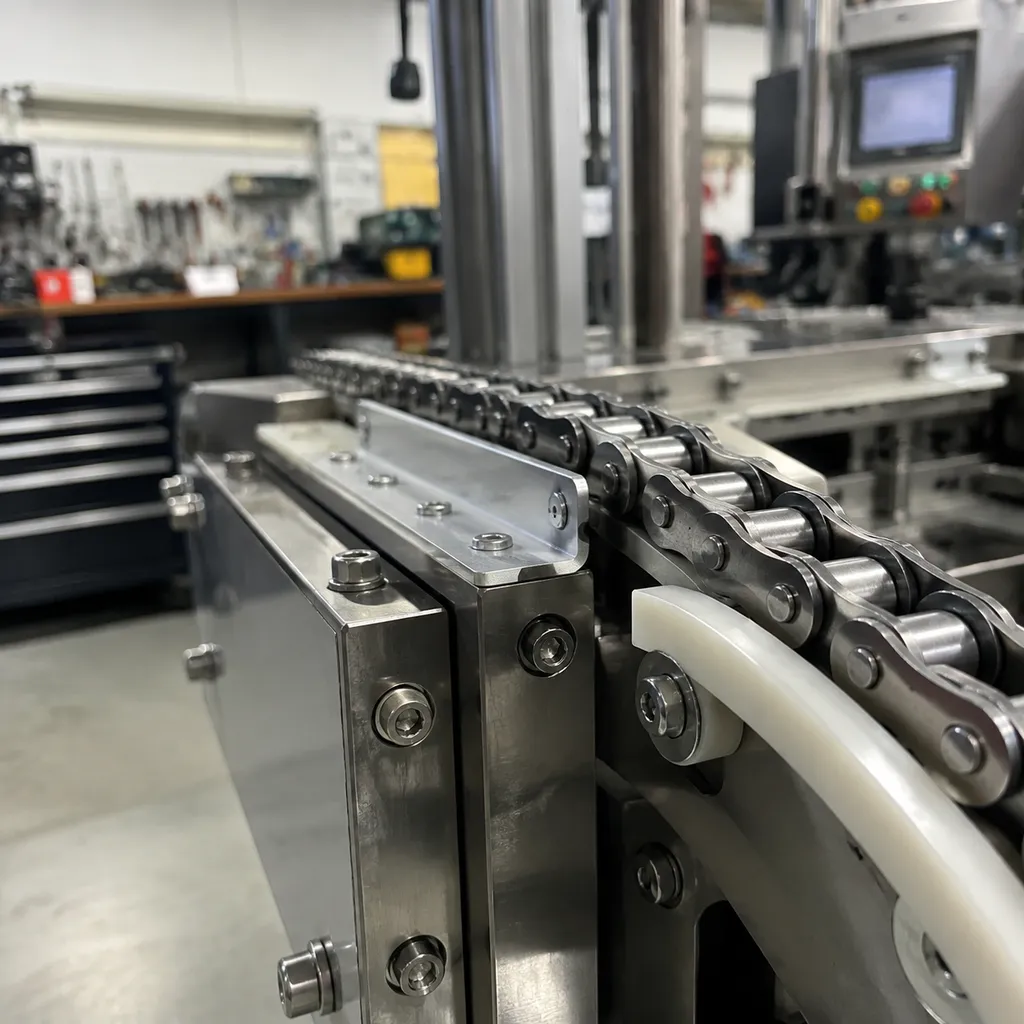
Stainless steel chain guides are widely recognized for their structural integrity, particularly in demanding industrial environments. While they provide significant strength, it is essential to consider their operational trade-offs, such as higher friction and noise levels compared to high-performance engineering plastics.
Exceptional Corrosion and Chemical Resistance
Stainless steel offers robust protection against oxidative environments. Grade 304 provides reliable general-purpose corrosion resistance, while Grade 316 is often preferred in environments with high chloride exposure. This durability ensures the guide maintains its shape and surface integrity when exposed to moisture or cleaning agents.
High Wear Resistance and Extended Service Life
The inherent hardness of stainless steel provides high tensile strength, making it suitable for heavy-load conveyor systems where chain retention is a priority. However, the metal-on-metal contact between the chain and the guide often requires constant lubrication to prevent rapid surface degradation. For operations seeking to minimize friction and increase longevity, understanding the key features and selection criteria for steel chain guide rails is vital for balancing mechanical load with maintenance costs.
Superior Temperature Tolerance in Extreme Environments
Stainless steel maintains its dimensional stability across a wide temperature spectrum. It does not soften in high-heat industrial processes or become brittle in sub-zero cold storage facilities. This thermal reliability makes it a standard choice for extreme-temperature conveyor lines.
Hygienic Design for Sanitary Applications
The non-porous surface of stainless steel prevents the buildup of contaminants, which is critical for maintaining hygiene standards in food and beverage production.
| Feature | Stainless Steel Benefit |
|---|---|
| Durability | High impact and heat resistance |
| Maintenance | Requires consistent lubrication |
| Hygiene | Easy to clean and non-porous |
| Operational Note | Potential for high noise and friction |
When evaluating these benefits, many facility managers find that while stainless steel offers unmatched physical strength, transitioning to engineered polymers like UHMWPE can significantly reduce noise and lubrication requirements while maintaining sanitary standards.
Common Types of Stainless Steel Chain Guides
Stainless Steel Profiles with UHMW-PE Inserts
Many industrial systems utilize hybrid guides that pair the structural rigidity of steel with the high-performance surface characteristics of engineering plastics. By utilizing UHMWPE chain guides as an insert or liner, operators can leverage the steel’s mounting stability while benefiting from the low friction and noise-dampening properties of UHMW-PE. This combination is often the preferred choice for conveyor systems where load-bearing capacity is critical, but metal-on-metal contact must be avoided to prevent accelerated chain wear.
Solid Machined Stainless Steel Guides
Solid machined stainless steel guides are engineered for environments where extreme heat or heavy, abrasive loads prohibit the use of plastic-only components. These guides are precision-fabricated to provide maximum structural integrity and corrosion resistance. While they offer high tensile strength, they lack the self-lubricating advantages of synthetic materials, often necessitating consistent external lubrication to manage friction and prevent premature chain degradation.
Roller Chain and Conveyor Track Configurations
Stainless steel guides are frequently configured into specific tracks designed for standard roller chains and complex conveyor systems. These tracks ensure precise chain retention, preventing derailment under high-speed or high-tension operation. Whether utilized for straight-line movement or curved conveyor paths, these configurations must be matched with compatible wear-resistant conveyor chains and modular belts to maintain optimal efficiency across the production line.
Primary Industrial Applications
Food and Beverage Processing
In food and beverage production, efficiency and hygiene are non-negotiable. While metal components are traditional, many facilities are transitioning to high-performance UHMWPE chain guide solutions to eliminate metal-on-metal noise and the need for external lubricants. These plastic guides prevent contamination risks while maintaining structural integrity in high-speed bottling and packaging lines.
Pharmaceutical and Cleanroom Environments
Cleanroom standards demand materials that do not shed particles or corrode. Engineering plastics provide a superior alternative to stainless steel guides, as they are chemically inert and self-lubricating. By reducing friction and wear, these components help maintain a sterile, dust-free environment while ensuring consistent conveyor performance.
Chemical Processing and Wastewater Treatment
Exposure to aggressive chemicals often leads to premature failure in metallic guide rails. Engineering plastics, such as HDPE and UHMWPE, are preferred for their excellent corrosion resistance. These materials withstand harsh chemical splashes and submerged operating conditions that would otherwise cause stainless steel to degrade or seize, ensuring long-term operational reliability.
Marine and Harsh Outdoor Settings
In marine or outdoor conveyor systems, salt spray and varying weather conditions present extreme challenges. Plastic chain guides offer a rust-proof solution that remains functional regardless of moisture or humidity. Their inherent wear resistance ensures that heavy-duty conveyor tracks continue to operate smoothly, minimizing the maintenance overhead typically associated with exposed metal systems.
How to Choose the Right Stainless Steel Chain Guide
Selecting the right guide system ensures smooth conveyor flow, eliminates downtime, and cuts component wear. While a solid metal track provides structural integrity, pairing a stainless steel outer channel with an engineered plastic insert gives you the ultimate combination of structural rigidity and low surface friction. We help our clients evaluate three critical factors to find the ideal match for their production lines.
Assessing Operating Environment and Exposure
Operating conditions determine the metal grade and insert material you need:
- Chemical and Washdown Exposure: Standard food-grade conveyors run efficiently with 304 stainless steel, whereas high-saline, acidic, or aggressive cleaning environments require 316 stainless steel to ensure long-term corrosion resistance.
- Operating Temperatures: Solid steel handles extreme heat, but conveyor lines using hybrid plastic-insert designs need careful polymer selection. If you run lines exposed to thermal variance or harsh sanitizers, reviewing an UHMWPE vs PTFE selection guide ensures your wear tracks handle the thermal and friction load without degrading.
- Moisture and Hygiene: Enclosed or open-profile designs must allow easy drainage to eliminate bacterial harborage points during wash cycles.
Matching Chain Type, Pitch, and Load Capacity
A reliable guide must match your exact chain profile to secure stable chain retention and prevent derailment under load. We recommend cross-referencing your mechanical specs against these core metrics:
| Selection Metric | System Impact | Primary Consideration |
|---|---|---|
| Chain Pitch & Geometry | Track profile and groove depth | Prevents chain lateral play while eliminating binding. |
| Load Capacity | Structural track deflection | Demands high tensile strength steel backing for heavy conveying. |
| Linear Speed | Contact friction and heat buildup | Requires high wear resistance surfaces to protect metal chain links. |
Mounting Options and Profile Dimensions
Every conveyor frame presents unique physical constraints. We manufacture and customize profiles to match diverse installation requirements:
- C-Channel Weld-On Profiles: Permanent, heavy-duty mounting designed for structural conveyor side frames handling continuous heavy payloads.
- Pre-Drilled Bolt-Down Channels: Slotted or counterbored mounting holes allow rapid track replacement and field adjustments during line retooling.
- Custom Machined Profiles: We produce tailored channel dimensions and insert profiles directly from your CAD drawings to guarantee exact tolerances for specialized conveyor layouts.
Installation and Maintenance Best Practices
Maximizing your stainless steel chain guide benefits requires accurate installation and consistent maintenance routines. Even the most durable guide rail will fail early if misaligned or neglected, leading to chain chatter, rapid wear, and downtime. We emphasize precise setup standards to ensure peak system efficiency and extended operational life.
Proper Alignment and Tension Adjustment
Accurate positioning protects both your guide tracks and your drive system from unnecessary strain:
- Linear Alignment: We recommend using laser levels or precision straightedges along the entire conveyor track. Both the horizontal run and vertical track pitch must sit perfectly parallel to prevent lateral chain drag.
- Controlled Chain Tension: Never overtighten your conveyor chain. Excessive tension spikes contact pressure, rapidly degrading contact surfaces and compromising chain retention. Maintain just enough slack to allow smooth engagement through guide curves and sprockets.
- Thermal Clearance: When pairing stainless steel channels with polymer wear inserts, always factor in differential thermal expansion. Integrating specialized components like our UHMWPE plate uses and specifications for industry requires calculated expansion gaps at track joints to prevent profile buckling during temperature fluctuations.
- Torque Specifications: Fasten all mounting bolts evenly to prevent warping the channel profiles during installation.
Routine Cleaning and Inspection Guidelines
Consistent maintenance routines preserve system hygiene and prevent abrasive surface degradation:
- Surface Wear Checks: Inspect contact surfaces regularly for abnormal grooving, sharp burrs, or uneven wear tracks that signal misalignment.
- Washdown Procedures: Take full advantage of the alloy’s native corrosion resistance during high-pressure CIP washdowns. Thoroughly rinse away process debris, sticky residues, and abrasive grit that accelerate mechanical wear.
- Fastener Verification: Vibration can cause mounting hardware to back out over time. Check mounting brackets, weld seams, and track fasteners during scheduled maintenance shutdowns.
- Friction Assessment: Monitor sliding surfaces for thermal discoloration or heat build-up. Proper track setups maintain low friction, high wear resistance, and smooth, stable product transfer across demanding cycles.
Pingback: Conveyor Guide to Food Processing Systems and Safety - UHMWPE Sheet Manufacturer & Custom Plastic Machining -Jincheng