
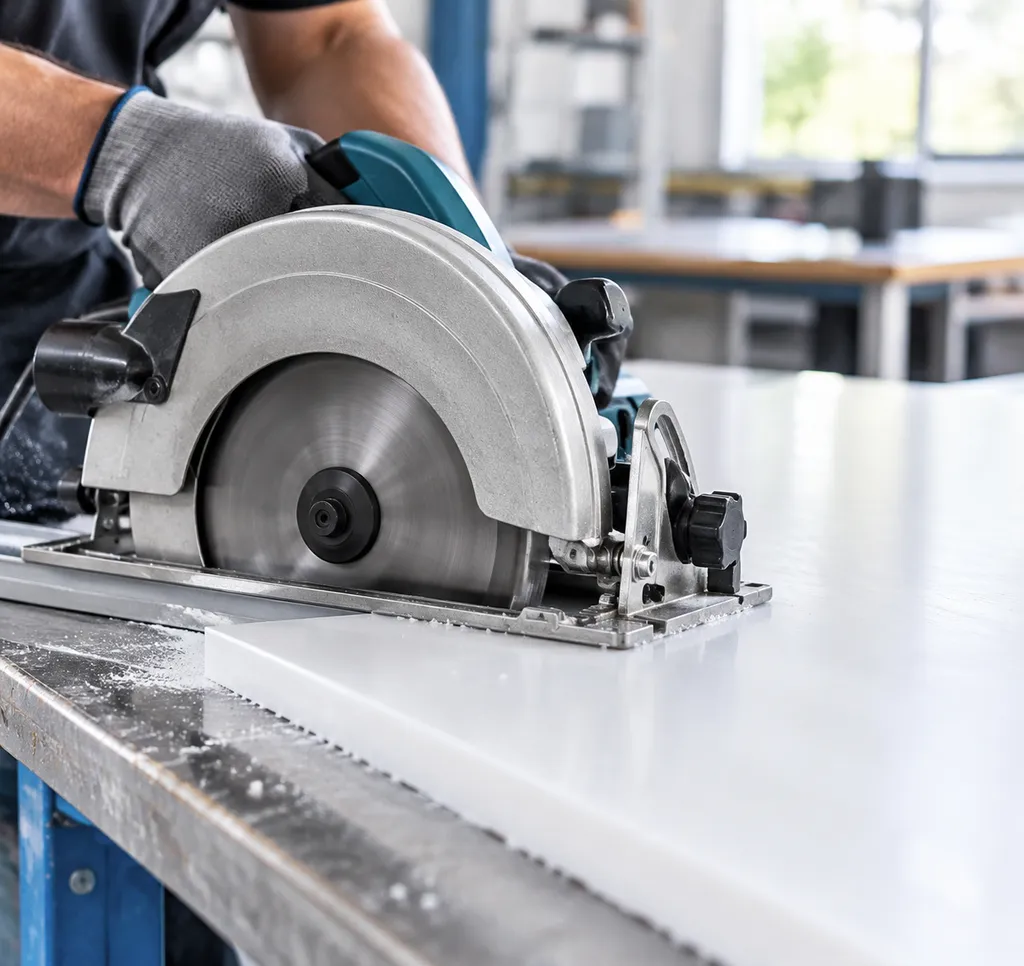
Learn how to cut HDPE sheet safely with the right blades saws and techniques for clean edges without melting warping or hazardous fumes
Understanding HDPE Material Properties Before You Cut
When you prepare to cut HDPE sheet, you are working with a material defined by its high-density crystalline structure. Unlike wood or metal, HDPE is highly sensitive to thermal friction. If you don’t account for its specific physical properties, you will quickly encounter melting, binding, and poor edge quality.
Heat Risks and Thermal Behavior
The primary challenge in HDPE fabrication is the material’s relatively low melting point. Friction generated by high-speed tools can cause the plastic to soften at the cut line. This creates several immediate issues:
Re-welding: Molten plastic may fuse back together behind the blade, pinning the saw and stalling your progress.
Thermal Expansion: As the material heats up, it expands, which can tighten the kerf and increase pressure on the blade.
Gummy Buildup: Residue accumulates on blade teeth, drastically reducing cutting efficiency and surface finish.
The Golden Rule: Cool Cutting Techniques
To achieve clean, professional results, prioritize heat management over raw cutting speed. Cool cutting techniques are non-negotiable for success. This involves selecting the right tool geometry to clear chips effectively and, in some cases, utilizing air blasts or liquid coolants to keep the surface temperature low. By preventing heat buildup from the start, you ensure the integrity of the HDPE remains intact, avoiding structural warping and
producing precise edges every time.
Preparation and Safety Gear for Cutting HDPE Sheets
When preparing to cut HDPE sheet materials, safety and stability are your first priorities to ensure high-quality results. HDPE is a durable industrial plastic, but it requires specific handling to prevent workplace accidents and material damage.
Essential Personal Protective Equipment (PPE)
Eye Protection: Always wear ANSI-rated safety glasses to shield your eyes from plastic chips and debris that can fly at high speeds during the cutting process.
Cut-Resistant Gloves: While HDPE is not inherently sharp like metal, power tools and jagged cut edges pose risks; wear proper gloves to maintain a firm grip and protect your hands.
Dust Masks: Fine plastic particles are generated during sawing; a standard dust mask prevents inhalation of airborne shavings, especially when working in enclosed areas.
Workpiece Stabilization and Surface Care
Properly securing your HDPE sheet types and benefits is the secret to a clean finish. If the material vibrates during the cut, you will experience “chatter,” which leads to uneven, jagged edges.
Clamping: Use heavy-duty clamps to secure the sheet to your workbench. A vibration-free setup is crucial for maintaining the straight, professional lines required for industrial plastic supply applications.
Surface Protection: HDPE surfaces can scratch easily during handling. Apply a thin masking film or lay down a clean piece of cardboard beneath the workpiece to protect the finish until the final installation.
By treating the setup phase as a professional fabrication step, you ensure that your high-density polyethylene machining is accurate, safe, and free from unnecessary surface defects.
How to Cut HDPE Sheet with Common Workshop Saws
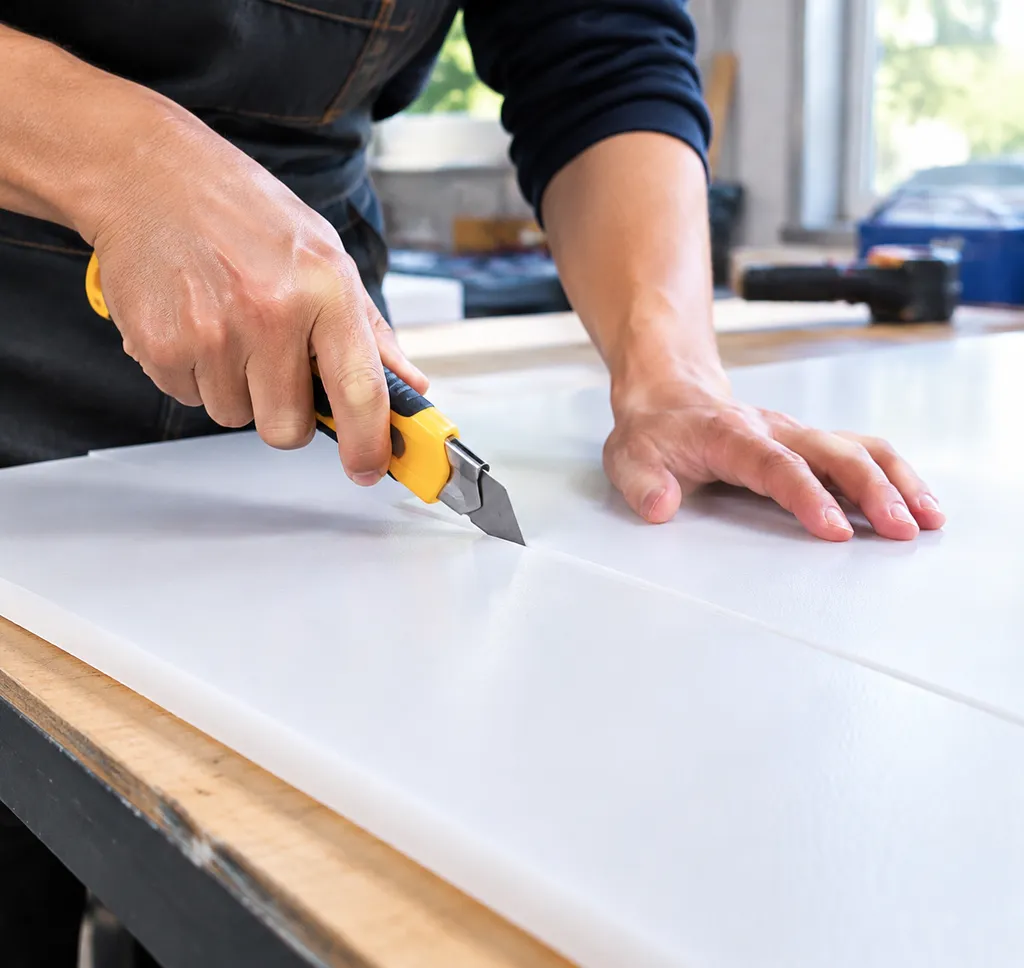
When you are ready to process your material, using the right setup is essential to avoid common issues like edge melting or blade binding. For table saw operations, we always recommend a fine-tooth, carbide-tipped blade. A triple-chip grind (TCG) configuration works best because it reduces the heat generated by the teeth and clears plastic chips efficiently. If you are comparing material choices before fabrication, it is helpful to understand how to choose UHMWPE vs HDPE for strength and wear to ensure the selected plastic is right for your specific application.
For straight cuts or complex profiles, you can utilize circular saws or jigsaws, provided you manage your heat output carefully:
-
- Blade Speed (RPM): High speeds are the enemy. Keep your blade speed moderate to prevent the friction heat from melting the HDPE back together behind the saw path.
- Feed Rate: Maintain a steady, smooth pass. If you move too slowly, the friction builds up and melts the plastic; if you move too fast, the blade will vibrate or chatter, leading to a jagged edge.
- Support: Keep the sheet fully supported near the cut line to prevent binding, which is a common hazard when working with softer industrial plastics.
Whether you are performing DIY cuts or looking for professional industrial plastic supply, consistent pressure and the correct blade geometry are the keys to a clean finish. Always test your settings on a scrap piece first to ensure the feed rate and
blade speed are perfectly balanced for the thickness of your sheet.
Edge Finishing: How to Deburr and Smooth Cut HDPE
Rough, jagged edges are more than just an aesthetic issue; they are a sign of improper finishing that can lead to premature material failure. When you cut HDPE sheet, residual burrs can act as stress points, potentially cracking or tearing under industrial loads. Ensuring your components have clean, smooth edges is critical to extending the lifespan of industrial wear parts.
-
- Rapid Burr Removal: For quick cleanup, we use specialized edge deburring tools or a simple cabinet scraper. These tools effectively shear off the curled plastic lips left behind by saw blades without damaging the surrounding surface.
- Achieving a Professional Finish: If your application requires a smoother, more polished edge, we recommend wet sanding. Start with a medium-grit sandpaper and progress to a fine-grit, keeping the surface wet throughout the process to prevent friction-induced melting.
- Performance Impact: Clean, radius-finished edges reduce friction and prevent the accumulation of debris or contaminants. In high-demand environments, this finishing work significantly lowers the risk of structural
stress, ensuring that your HDPE components maintain their integrity and chemical resistance over time.
When to Choose Custom Precision CNC Plastic Cutting
While workshop sawing works for basic projects, DIY methods often fall short when dealing with tight-tolerance industrial parts. Manual cutting frequently results in thermal stress, inconsistent edges, and sheet warping that can compromise the structural integrity of your components. When your application requires extreme accuracy, we recommend moving toward precision CNC plastic cutting.
Professional CNC routing eliminates the risks of manual fabrication by using computer-controlled systems that ensure uniform pressure and exact dimensions. This process is essential for complex geometries, repetitive production runs, and applications where even minor deviations can lead to mechanical failure.
Why Choose CNC Over Manual Cutting
| Feature | Manual Sawing | Precision CNC Routing |
|---|---|---|
| Tolerance | +/- 1.5mm to 3mm | +/- 0.1mm to 0.5mm |
| Thermal Impact | High risk of melting | Controlled/Zero stress |
| Complexity | Limited to straight lines | Any shape or slot |
| Consistency | Operator dependent | Uniform for all parts |
If your design involves intricate slots, counter-bored holes, or custom silhouettes, automated machining is the most cost-effective and reliable solution. We often help clients transition from manual fabrication to precision CNC plastic cutting to ensure their HDPE components meet the exact specifications required for high-performance industrial environments. By leveraging advanced CNC equipment, we achieve
a clean, professional finish that requires no additional deburring or secondary processing.
Frequently Asked Questions About Cutting HDPE Sheets
When performing DIY or industrial fabrication, common hurdles often arise due to the material’s thermal sensitivity. We have compiled the most frequent questions regarding cut HDPE sheet processes to help you achieve clean, professional results.
Common Troubleshooting and Best Practices
| FAQ | Practical Solution |
|---|---|
| Why does HDPE melt behind the blade? | Excessive friction or a dull blade generates heat. Increase feed rate or use a blade with more clearance. |
| Can I use liquid coolant? | Yes, compressed air or a light mist coolant helps clear chips and dissipate heat during deep cuts. |
| How to choose tooth count (TPI)? | Use fewer teeth (lower TPI) for thicker sheets to prevent clogging, and more teeth for thin sheets to avoid chipping. |
Technical Tips for Better Cuts
-
- Preventing Weld-Back: If the plastic fuses behind the blade, your feed rate is likely too slow. Increase your speed to “clear” the chips before the heat builds up.
- Coolant Usage: While water is effective for heat management, ensure your workspace is equipped for moisture. Often, a high-velocity air blast is sufficient for standard HDPE sheet and rod stock to keep the cut line clear of debris.
- Tooth Geometry: For clean results, a triple-chip grind (TCG) blade is your best option. It balances material removal with a smooth finish, reducing the need for secondary deburring.
For complex projects requiring specific tolerances, exploring custom HDPE sheet options can eliminate the risks of manual fabrication and ensure your industrial parts meet exact engineering standards.