
Bottle Grippers
Match a pneumatic bottle gripper to the container, gripping position and machine interface. Request a replacement head or custom bottle gripper with mounting dimensions and contact materials confirmed before order.
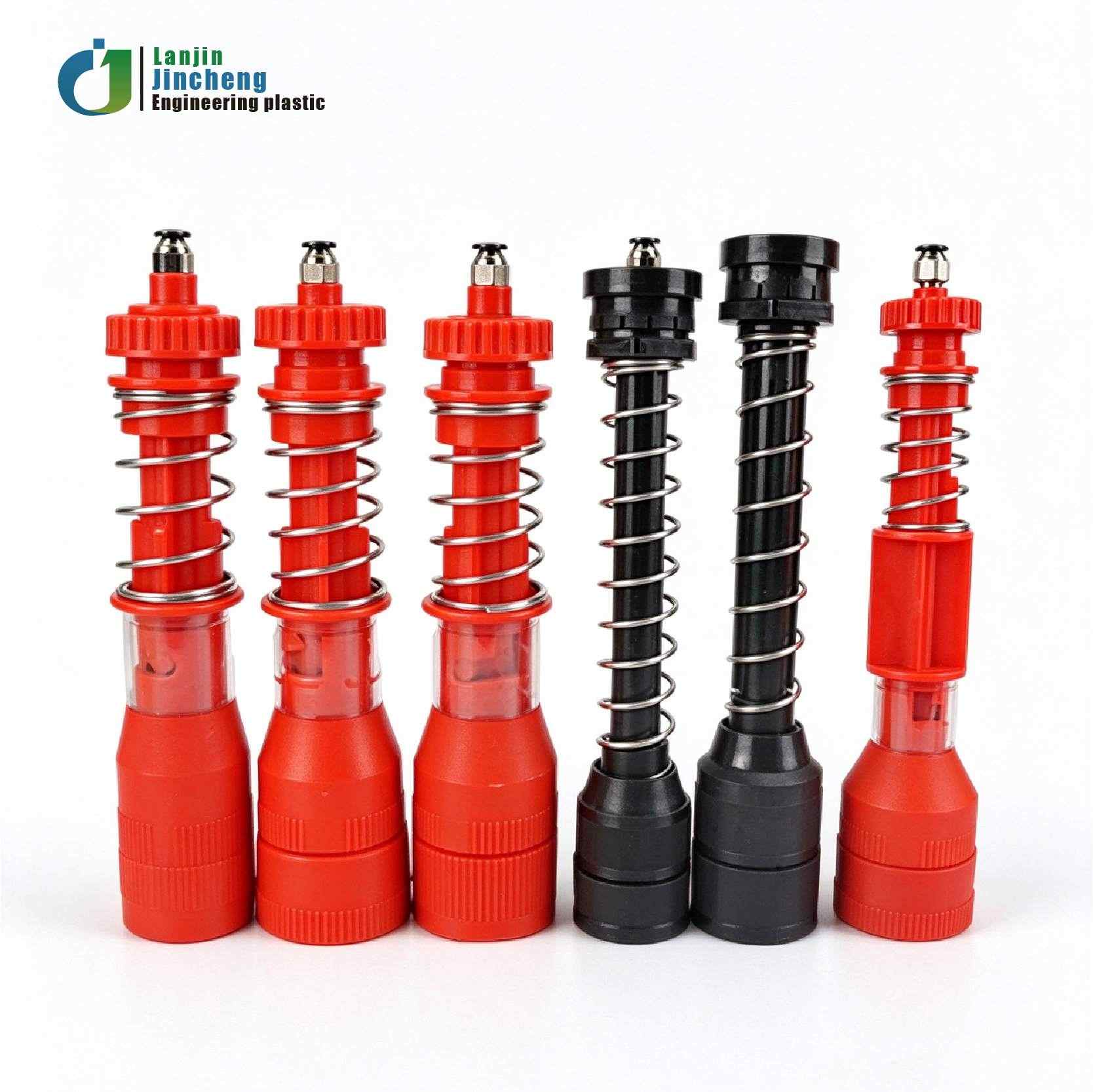
Specify the contact point and the machine interface.
| Purchase information | What to provide | What is confirmed in the offer |
|---|---|---|
| Gripping position | Neck/cap contact location, contact height, permitted pressure/contact zone and orientation | Approved engagement geometry and clearance |
| Bottle geometry | Bottle drawing or samples; cap/neck OD, body dimensions, height and filled/empty weight | Fit and handling feasibility for each bottle format |
| Mounting dimensions | Mounting diameter, overall/effective height, machine attachment, air connection and available envelope | Dimensioned interface and included parts |
| Contact materials | Container surface, marking limits, cleaning media and material/compliance requirements | Exact bladder/contact compound and supporting documentation |
Define the actual gripping zone.
Neck / Cap Area
Mark the contact diameter, usable contact height, cap/closure geometry and nearby shoulders or neck rings.
The existing pneumatic head range is described for neck gripping; a different contact position requires review.
Engagement & Release
Provide approach direction, insertion depth, available clearance and required release position.
Identify whether the container is lifted, transferred, inverted or otherwise reoriented.
Surface & Product Protection
Identify labels, threads, sealing surfaces, decorative coatings and areas where marking or deformation is unacceptable.
Agree the contact zone and test criteria before production.
Send the bottle drawing and handling condition.
Container Geometry
Provide cap outer diameter, neck profile, body diameter or width/depth, height, shoulder shape and dimensional tolerances. For shaped bottles, include orientation and a full profile drawing.
Photos support identification but do not replace critical dimensions. Representative samples help check fit.
Container & Operating State
State glass, PET or other material; filled/empty condition; weight; closure state; surface finish and temperature.
Include cycle rate, acceleration, transfer motion and the consequence of a grip loss so the application can be reviewed correctly.
List each bottle format and its dimensional limits. A shared gripper across different containers must be confirmed by fit and handling trials; it is not assumed from similar cap diameters.
Measure the gripper and machine connection.
| Interface feature | Required dimensions / information |
|---|---|
| Internal gripping envelope | Gripper inner diameter, contact height and bottle insertion clearance |
| Body envelope | Outer diameter, overall length and clearance to adjacent heads or guides |
| Mounting interface | Mounting diameter, locating shoulder, fixing pattern and any thread/adapter details |
| Effective height | Working height below the mounting plate and the reference face used for measurement |
| Pneumatic connection | Port size, thread standard, location, air supply and valve/control details |
| Assembly reference | Clear bottom/side photos, machine model, existing head drawing and mounting layout |
Supply normal/maximum available pressure in bar, MPa or another explicit unit. Operating pressure, air quality, grip capacity and cycle behavior must be confirmed for the selected head; no generic pressure or holding-load rating is assumed.
Confirm what touches the bottle.
Body & Internal Parts
The existing product description identifies a nylon body and stainless steel spring components. Confirm the supplied bill of materials and any special requirements.
Bladder / Contact Surface
Specify the exact contact compound, hardness where required, surface condition and replacement bladder dimensions.
Current generic descriptions do not establish one universal contact material for every model.
Cleaning & Compliance
Provide cleaning chemicals, concentration, temperature and contact duration. State whether food-contact or other documentation is required for the actual use.
Color alone does not establish the material or compliance status.
Model families & published size references
Ranges below are listed on our existing Bottle Gripper page. They do not mean every dimension combination is available. Confirm the drawing symbols and exact model before ordering.
| Family | Published d, mm | Published D, mm | Published D1, mm | Published L, mm |
|---|---|---|---|---|
| Red | 32–57 | 45–73 | 30 / 31 / 40 | 190–350 |
| Black A | 35–50 | 48–65 | 30 / 31 / 40 | 175–300 |
| Black B | 35–50 | 48–65 | 40 | 250–330 |
| Custom | Bottle, interface and operating requirements reviewed against an approved drawing | |||
d, D, D1 and L are the existing catalog symbols. Their interpretation and usable dimensions must be confirmed on the selected model drawing; do not substitute a catalog diameter for a bottle dimension without review.
New heads, custom bottle grippers and replacement bladders
Complete Gripper Head
Confirm bottle fit, mounting interface, contact material and pneumatic specification. State the included adapters and spare parts.
Replacement Bladder
Provide outer/inner diameters, overall height, small-hole dimensions, existing head reference and clear photos.
Agree compound, fit and inspection requirements; service life depends on the actual duty.
Sample & Machine Trial
Agree sample quantity, bottle formats, test conditions and acceptance criteria. Confirm MOQ, lead time, packing and document availability in the quotation.
Test representative containers across the agreed speed, pressure and handling range. Include surface marking, deformation, retention and reliable release in the acceptance criteria.
Bottle Grippers FAQ
What do you need for a custom bottle gripper?
Provide gripping position, bottle drawing or samples, mounting dimensions, air connection and contact material requirements. Add bottle weight, cycle rate, motion and working conditions.
Can one gripper handle several bottle formats?
It may be feasible, but each format and dimensional range requires review and testing. Similar neck or cap diameters alone do not prove compatibility.
What material is the bottle-contact bladder?
Request confirmation of the exact compound for the selected model. Match it to the container surface, cleaning conditions and any documentation requirements.
Can I order only a replacement air bladder?
Send bladder dimensions, head reference and photos. Confirm material, fit, quantity and current supply availability before ordering.
What pressure and load can the gripper handle?
These must be confirmed for the actual head, container and handling motion. Supply explicit pressure units and the intended operating envelope for review.
Send the bottle and mounting details.
Include gripping position, bottle geometry, installation dimensions and contact material requirements. Add quantity, cycle rate, air supply and destination.
Request a Bottle Gripper Quote
Gripping position · bottle · mounting · contact material