
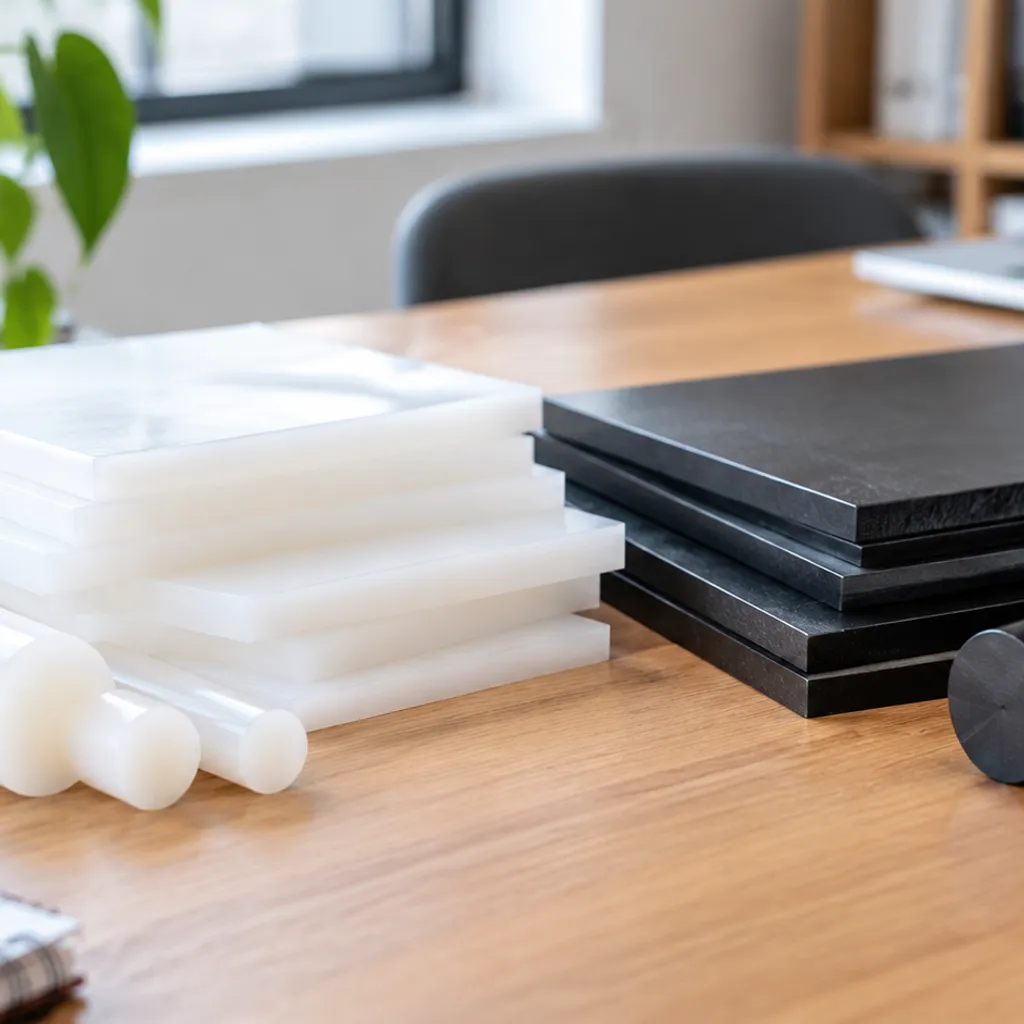
Understanding HDPE and UHMWPE
Selecting the right engineering plastic is critical for system longevity, structural integrity, and operational efficiency. Both High-Density Polyethylene (HDPE) and Ultra-High-Molecular-Weight Polyethylene (UHMWPE) belong to the polyolefin family, yet their structural builds dictate distinct performance profiles in industrial environments. Making an informed material selection begins with understanding the core capabilities of each thermoplastic.
What is High-Density Polyethylene (HDPE)?
High-density polyethylene (HDPE) is a cost-effective, semi-crystalline thermoplastic polymer produced from the monomer ethylene. Known for its high strength-to-density ratio, HDPE delivers dependable structural rigidity, light weight, and effortless processability.
Key attributes of HDPE include:
High Rigidity: Excellent stiffness for structural profiles, pipe systems, and sheet fabrication.
Easy Machinability: Readily thermoformed, welded, routed, and fabricated using standard industrial tooling.
Corrosion Resistance: Immune to rust, rot, and environmental stress cracking from standard chemicals.
What is Ultra-High-Molecular-Weight Polyethylene (UHMWPE)?
Ultra-High-Molecular-Weight Polyethylene (UHMWPE) is a premium grade of polyethylene characterized by exceptionally long polymer chains. With a molecular weight typically ranging from 3 to 9 million g/mol—roughly ten times that of standard HDPE—this material delivers unmatched mechanical toughness.
Key attributes of UHMWPE include:
Extreme Toughness: Long molecular chains transfer load more effectively, preventing fracturing under violent mechanical shocks.
Self-Lubrication: Inherently slick surface that dramatically cuts sliding friction and eliminates material buildup.
Severe Duty Reliability: Engineered specifically for severe sliding wear, aggressive slurry transport, and high-abrasion environments.
Key Similarities Between HDPE and UHMWPE
Because UHMWPE is fundamentally an advanced variant within the polyethylene family, both materials share vital baseline characteristics:
| Performance Trait | Shared Characteristics |
|---|---|
| Chemical Resistance | Both withstand strong acids, alkalis, and solvents without degrading. |
| Water Absorption | Near-zero moisture absorption ensures dimensional stability in wet environments. |
| Weight Advantage | Both possess low specific gravity (below 1.0 g/cm³), allowing them to float on water and cut system weight. |
| Electrical Insulation | Both serve as non-conductive, high dielectric insulators. |
| Hygienic Standards | Natural grades of both materials are non-toxic, odorless, and easily certified for direct food-contact handling. |
Key Material Differences: UHMWPE vs HDPE
While both plastics belong to the polyethylene family, their physical behavior under load, friction, and environmental stress differs significantly. When evaluating how to choose UHMWPE vs HDPE, understanding these core technical divergences ensures you select the right grade for your operational demands.
| Property / Feature | HDPE (High-Density Polyethylene) | UHMWPE (Ultra-High-Molecular-Weight) |
|---|---|---|
| Molecular Weight | 300,000 to 500,000 g/mol | 3,000,000 to 9,000,000+ g/mol |
| Abrasion Resistance | Moderate | Exceptional (highest among thermoplastics) |
| Impact Strength | Good (can crack under severe shock) | Extremely high (virtually non-breakable) |
| Coefficient of Friction | Low (~0.20 to 0.28) | Very low (~0.10 to 0.15, self-lubricating) |
| Weldability & Forming | Excellent (hot gas/extrusion welding) | Difficult (requires mechanical fastening) |
| Machinability | Standard tooling, easy chip clearing | Specialized tooling required to prevent burrs |
Molecular Weight and Structural Differences
The fundamental difference lies in chain length. HDPE consists of shorter polymer chains with a molecular weight typically ranging between 300,000 and 500,000 g/mol. This makes it easier to melt, extrude, and shape using conventional thermoforming methods.
UHMWPE features extremely long polymer chains with a molecular weight commonly exceeding 3 to 6 million g/mol. These entangled chains distribute mechanical energy across the entire polymer backbone. Discovering why ultra-high-molecular-weight polyethylene stands out comes down to this microscopic entanglement, which prevents tearing and deformation under extreme mechanical stress.
Wear, Abrasion, and Impact Resistance
In abrasive environments, UHMWPE outperforms HDPE by a wide margin. Its long-chain structure absorbs kinetic energy, making it resilient against continuous rubbing from gravel, coal, grain, or metal parts.
- HDPE: Works well for light contact, standard fluid handling, and general impact, but erodes quickly when exposed to sliding abrasive slurries.
- UHMWPE: Delivers up to 10 times the wear resistance of carbon steel in high-sliding abrasion setups, reducing premature failure. Understanding proper installation minimizes common UHMWPE sheet wear issues caused by uneven point loads or poor alignment.
Coefficient of Friction and Sliding Performance
UHMWPE provides a significantly lower coefficient of friction than standard HDPE, giving it distinct self-lubricating properties. Bulk materials slide off UHMWPE surfaces smoothly without sticking, cake buildup, or bridging.
HDPE offers a relatively smooth surface suitable for flat guide rails and light-duty chutes, but it generates higher drag and heat buildup under high-speed mechanical sliding.
Machinability and Fabrication Flexibility
Fabrication requirements often dictate the final selection between the two materials:
- HDPE Processing: Melts and flows predictably. It can be extruded into complex profiles, injection molded, thermoformed, and welded with standard plastic welding equipment. It cuts cleanly with conventional CNC tools.
- UHMWPE Processing: Does not melt into a liquid state due to extreme melt viscosity. It must be compression molded or ram extruded. Machining UHMWPE requires razor-sharp tooling, optimized feed rates, and effective chip removal to prevent flexible burrs and heat-induced expansion.
Cost and Processing Comparison
When you evaluate how to choose UHMWPE vs HDPE, balancing raw procurement costs against fabrication demands is essential. Both materials offer distinct economic profiles depending on how parts are shaped and installed.
Initial Material and Machining Costs
High density polyethylene remains the more economical option upfront. Raw resin is less expensive, standard manufacturing methods apply, and fabrication requires standard tooling. If you need straightforward shapes or want to know how to cut HDPE sheet safely, standard workshop equipment handles the job cleanly without rapid tool wear.
In contrast, the extremely high molecular weight of UHMWPE makes melt processing impossible, requiring specialized compression molding or ram extrusion. When turning or milling, reviewing a detailed UHMWPE rod machining guide helps manage heat buildup and chip clearance, as its tough structure demands sharp tooling and lower cutting speeds.
| Factor | HDPE | UHMWPE |
|---|---|---|
| Raw Material Cost | Lower | Moderate to High |
| Tooling & Machining Effort | Standard speeds, minimal tool wear | Specialized tooling, slower feed rates |
| Weldability & Forming | Excellent hot-gas and extrusion welding | Difficult to weld; mechanically fastened |
| Initial Project Outlay | Budget-friendly | Higher upfront investment |
Long-Term Maintenance and Wear Life Value
While HDPE lowers initial expenditure, UHMWPE pays for itself in demanding, aggressive environments. The exceptional wear resistance and low coefficient of friction of UHMWPE directly reduce mechanical downtime, cut lubrication needs, and eliminate frequent part replacements.
- Wear and Abrasion Resistance: UHMWPE lasts significantly longer when exposed to abrasive slurries, heavy sliding friction, or high-velocity material flows.
- Impact Strength Protection: UHMWPE absorbs massive dynamic shocks without cracking, protecting surrounding metal assemblies.
- Maintenance Intervals: Components made from UHMWPE run longer between service cycles, translating to lower overall lifecycle costs despite the higher initial buy price.
- Application Fit: For static tanks, non-abrasive fluid channels, or low-friction structural panels, HDPE provides complete chemical resistance and zero water absorption at a fraction of the cost.
Industrial Applications: Where Each Material Excels
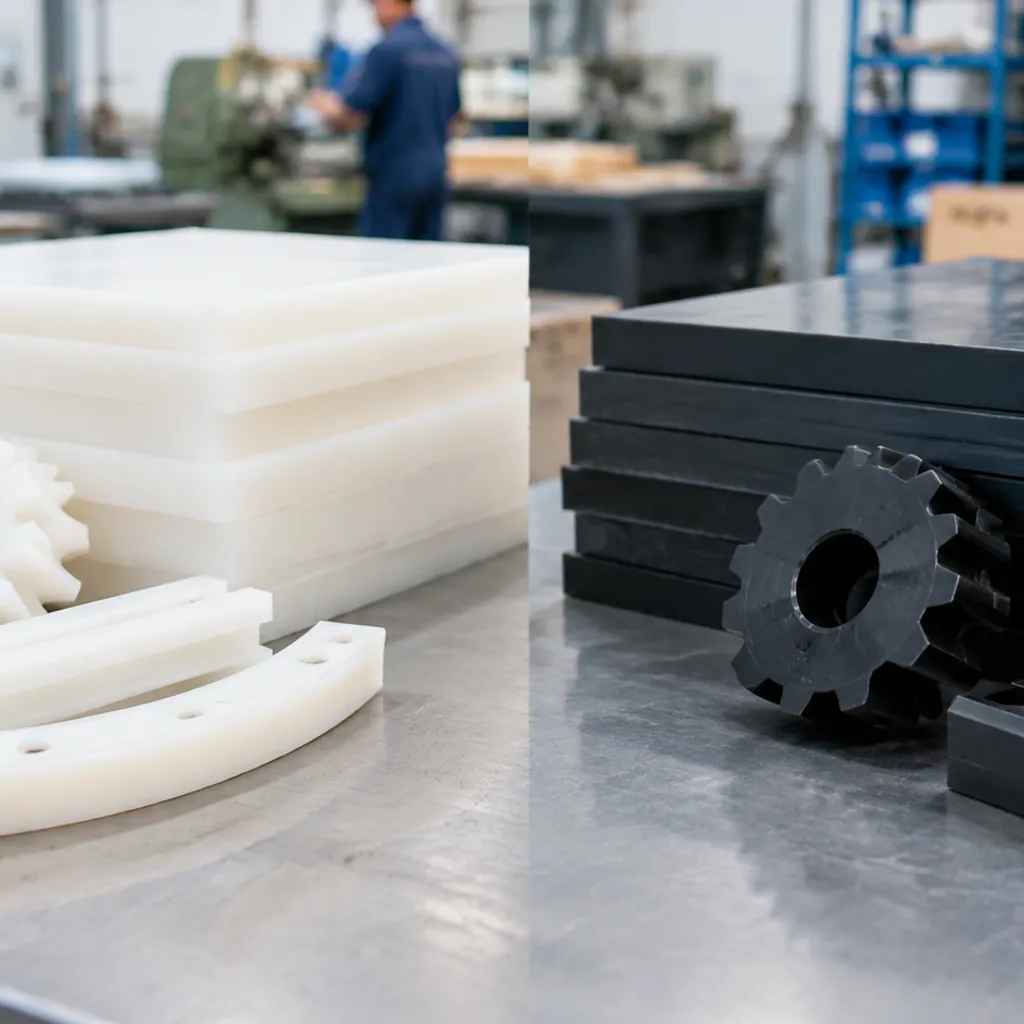
Material selection hinges on matching operational demands with the right physical properties. While both polymers originate from the same family, we deploy them in distinctly different industrial settings based on the mechanical stress, sliding contact, and environmental conditions involved.
Common Applications for HDPE
High density polyethylene serves as an exceptional structural polymer when resistance to corrosion and moisture matters more than extreme friction performance. Its high tensile strength, excellent chemical resistance, and near-zero water absorption make it a cost-effective standard for structural fabrication.
- Chemical Processing and Fluid Handling: Welded chemical tanks, industrial piping, valves, and containment vessels that demand broad acid and solvent resistance.
- Marine and Outdoor Infrastructure: Floating docks, seawall bumpers, and outdoor cabinetry, where resistance to rot and moisture prevents degradation.
- Food Production Surfaces: Commercial cutting boards, butcher blocks, and food-safe table surfaces that require easy sanitization and compliance with hygiene standards.
- Standard Conveyance Components: Light-duty wear tracks and guide channels. When evaluating line hardware, analyzing how to choose the right chain guide rail material demonstrates where HDPE handles moderate mechanical loads economically without over-engineering.
High-Stress Applications for UHMWPE
When operations involve destructive friction, heavy impact, and aggressive abrasion, UHMWPE is our go-to solution. Its massive molecular weight yields unmatched wear resistance and an exceptionally low coefficient of friction, ensuring that equipment withstands punishment that would destroy standard thermoplastics.
- Bulk Material Handling Liners: Chutes, hoppers, truck beds, and silos handling gravel, coal, or grain, where superior slickness prevents clogs and stops abrasive gouging.
- Conveyor and Belt Protection: Heavy-duty components like UHMWPE wear-resistant scrapers for conveyors, which clean continuous belts cleanly without causing premature surface damage.
- Marine Fender Facing Pads: Heavy harbor infrastructure where vessels dock with tremendous kinetic force, requiring exceptional impact strength that will not crack in sub-zero temperatures.
- Industrial Bushings and Wear Pads: Dry-running slide plates, guide rails, and high-load bushings that eliminate the need for external grease or continuous lubrication.
How to Choose Between UHMWPE and HDPE
Selecting the right polyethylene grade comes down to matching operational stress against lifetime operating costs. Both materials offer zero moisture absorption and reliable chemical resistance, but their performance profiles diverge significantly under heavy mechanical demands. If your project involves multiple polymer types, evaluating an engineering plastic sheet comparison can help define where each resin fits across your facility.
When to Choose HDPE for Your Project
High-density polyethylene is our go-to recommendation for structural, low-friction, and light-to-moderate wear applications where affordability and ease of fabrication are paramount.
- Fabrication and Welding Needs: HDPE is easy to weld, bend, and thermoform, making it ideal for custom tanks, drainage sumps, and fluid containment.
- Structural Rigidity: It provides excellent tensile strength and stiffness for flat panels and structural supports under steady loads.
- Cost-Sensitive Production: When the operating environment does not involve high-velocity abrasion or extreme mechanical shock, HDPE delivers reliable performance at a fraction of the raw material cost.
- Standard Industrial Uses: Ideal for piping, chemical storage containers, light conveyor rails, and general-purpose cutting boards.
When to Choose UHMWPE for Your Project
Ultra-high-molecular-weight polyethylene is engineered specifically for severe environments where standard plastics fail due to rapid wear, gouging, or surface friction.
- Extreme Abrasion and Impact: Its ultra-high molecular weight provides unmatched abrasion resistance and impact strength, absorbing repetitive shocks without cracking.
- Low-Friction Sliding: With an exceptionally low coefficient of friction, it creates a self-lubricating surface that prevents sticky materials from bridging or clogging.
- Cryogenic Reliability: It retains high impact resistance in sub-zero environments, making it suitable for cold-storage machinery and harsh outdoor installations.
- Demanding Components: Essential for heavy-duty truck bed liners, bulk material transfer chutes, marine fender pads, and high-speed chain guides.
Critical Factors: Load, Friction, and Budget Considerations
To streamline your material selection process, evaluate these operational variables before finalizing your specification:
| Decision Factor | HDPE | UHMWPE |
|---|---|---|
| Mechanical Impact | Handles moderate impact; can crack under repetitive shock loads. | Outstanding impact strength; absorbs severe dynamic loads without breaking. |
| Wear & Abrasion | Standard wear resistance; wears quickly in abrasive sliding conditions. | Maximum abrasion resistance; significantly outlasts steel and standard plastics in sliding wear. |
| Sliding Friction | Good sliding surface, but can experience heat buildup at high speeds. | Ultra-low coefficient of friction; self-lubricating and non-stick. |
| Fabrication | Readily machined, hot-gas welded, and thermoformed. | Difficult to weld or thermoform; requires sharp tooling and specialized machining techniques. |
| Cost Profile | Lower initial cost; ideal for budget-constrained, standard-duty parts. | Higher upfront material cost; delivers lower total cost of ownership by extending service life. |