
Understanding UHMWPE Sheets and Cracking Vulnerability
Ultra-High-Molecular-Weight Polyethylene (UHMWPE) is widely recognized across industrial sectors as a premier engineering plastic, celebrated for its superior toughness, low friction coefficient, and exceptional sliding characteristics. While UHMWPE sheets excel in demanding wear environments such as chutes, liners, and guides, they are not completely immune to mechanical or environmental failure. Mastering UHMWPE sheet cracking: prevention and repair begins with understanding the material’s structural limits under operating stresses.
Key Mechanical Properties and Stress Tolerance
The durability of UHMWPE stems from its extremely long molecular chains, which transfer load effectively across the polymer structure. This unique molecular architecture yields distinct performance advantages:
- Extreme Impact Strength: Outstanding resistance to high-energy dynamic shocks, even in sub-zero working conditions.
- Superior Shock Absorption: Efficient dissipation of repeated mechanical vibrations and bulk material impacts.
- Abrasive Wear Resistance: Extended service life in high-friction environments involving slurry, gravel, or grain.
- Chemical Inertness: Broad resistance to moisture, aggressive alkalis, and standard industrial chemicals.
Why Impact-Resistant UHMWPE Can Still Crack
Despite its high toughness, structural failure can still develop when internal or external forces exceed the material’s yield boundaries. Key mechanisms triggering cracks include:
- Localized Stress Concentration: Unradiused internal corners, rough cut edges, or sharp notches act as failure points under sustained loads.
- Thermal Fatigue: High thermal expansion coefficients cause severe compressive and tensile strains if the sheet is rigidly constrained.
- Dynamic vs. Static Loading Discrepancies: While UHMWPE absorbs heavy impacts effortlessly, continuous static point loading or severe cyclic fatigue can initiate micro-voids.
- Environmental Degradation: Exposure to incompatible chemical oxidizers, elevated operating temperatures, or prolonged ultraviolet radiation without UV stabilizers accelerates polymer chain scission.
Primary Causes of UHMWPE Sheet Cracking
Although ultra-high-molecular-weight polyethylene is celebrated for its toughness and high impact strength, specific mechanical, thermal, and chemical stressors can trigger premature material failure. In our manufacturing and field experience, cracking rarely occurs from direct blunt impact; instead, it develops from localized stress concentration and improper handling.
Thermal Expansion and Temperature Fluctuations
UHMWPE exhibits a high thermal expansion coefficient—roughly three to five times greater than steel. When sheets are mounted without adequate thermal expansion gaps, temperature cycles cause severe internal stresses:
Thermal Buckling: Unaccommodated expansion forces the sheet to bow upward, concentrating tensile strain along the center and edges.
Cyclic Fatigue: Continuous shifts between hot operating environments and cold shutdowns create thermal fatigue, eventually opening stress fractures around rigid anchors.
Incorrect Fastening and Over-Tightening
Improper mechanical attachment is the leading cause of structural cracking in industrial liners and wear plates:
Excessive Bolt Torque: Over-tightening fasteners crushes the polymer matrix locally, creating permanent compressive stress zones that turn into radial cracks.
Rigid Hole Design: Drilling tight, non-clearance holes prevents the material from expanding naturally across steel subframes.
Point-Loading Washers: Small-diameter or countersunk fasteners without wide, load-distributing backing washers bite directly into the sheet face.
Machining Stress and Improper Cutting Techniques
Poor fabrication practices introduce micro-defects that act as initiation sites for larger fractures under load. Much like managing routine UHMWPE sheet wear issues, preventing fabrication stress requires strict adherence to tooling standards:
Frictional Overheating: Dull cutting tools or excessive spindle speeds generate extreme localized heat, altering polymer alignment at the cut line.
Notched Edges: Rough saw cuts, jagged router passes, and burrs leave micro-notches that propagate into structural splits when exposed to dynamic shock.
Chemical Exposure and Environmental Stress Cracking
While UHMWPE resists most acids and alkalis, certain environments trigger environmental stress cracking (ESC):
Strong Oxidizers: Prolonged contact with high-concentration oxidizing agents and harsh organic solvents softens or degrades polymer chains.
Unshielded UV Radiation: Standard non-UV-stabilized sheets exposed to continuous outdoor sunlight experience surface degradation, turning the flexible outer layer brittle and susceptible to crazing under load.
Prevention Best Practices During Machining and Fabrication
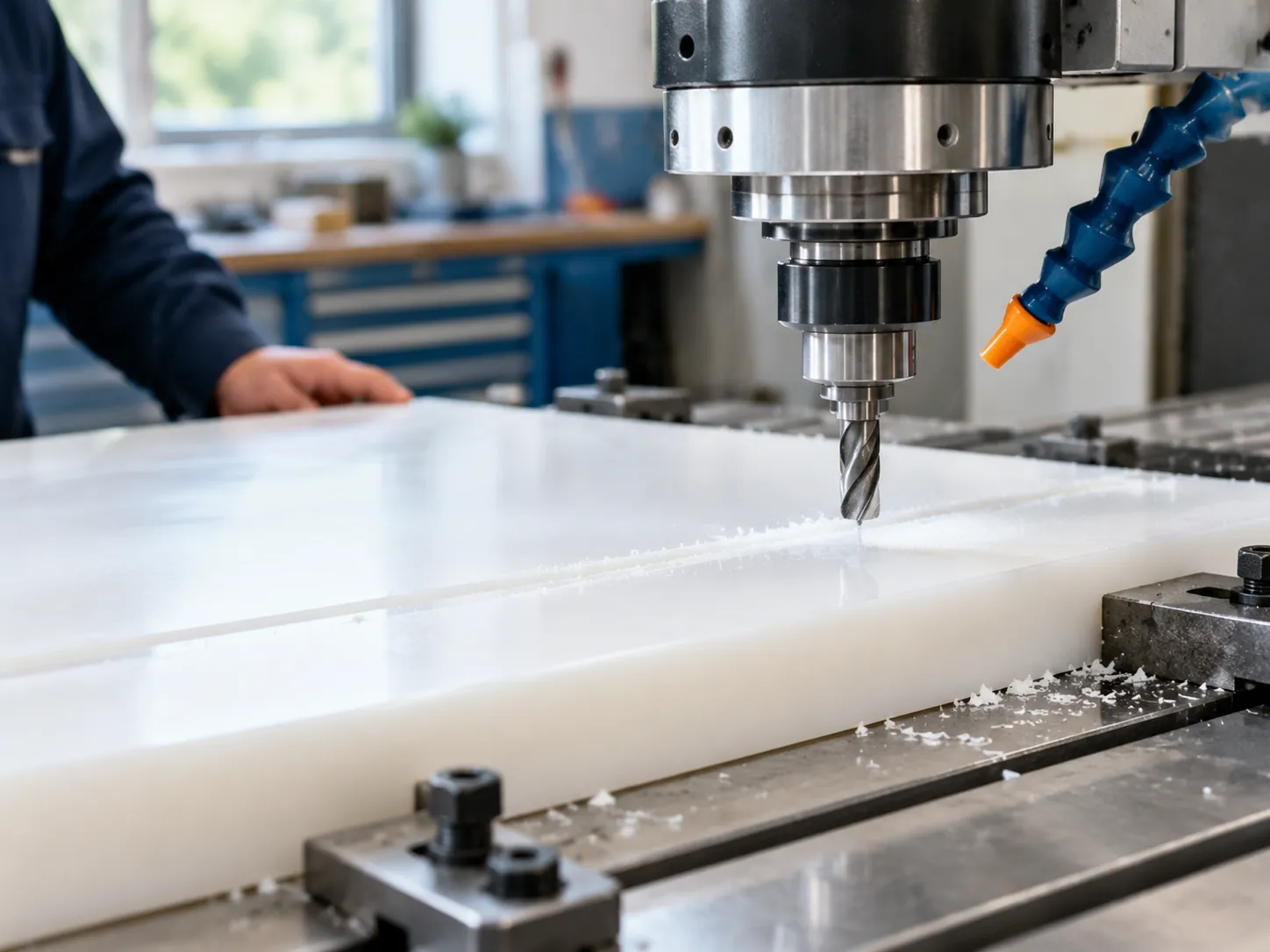
Machining engineering plastics requires specific techniques to avoid built-in stress that leads to premature material failure. When processing wear liners and structural components, following proven fabrication practices is the first line of defense against UHMWPE sheet cracking: prevention and repair issues later in the field.
Selecting Appropriate Cutting Tools and Speeds
Standard metalworking tooling can generate excessive friction, transferring thermal stress directly into the sheet edges. We use sharp, high-positive-rake tooling specifically designed for plastics to ensure clean slicing rather than tearing or melting the polymer chains.
- Tooling: Use razor-sharp high-speed steel (HSS) or polished carbide cutters with generous chip clearance.
- Feed Rates: Maintain a high, steady feed rate to allow chips to carry heat away from the workpiece.
- Cutting Speeds: Keep spindle speeds moderate; excessive surface speed generates localized heat that triggers stress concentration.
- Processing Rules: Follow the parameters outlined in our guide to cutting methods for UHMW sheets to ensure clean edge finishes without micro-fractures.
Effective Cooling and Heat Dissipation Strategies
Because UHMWPE has low thermal conductivity, heat stays localized at the cut line if not actively managed. Trapped heat expands the plastic during cutting; as it cools and shrinks unevenly, residual stress zones develop.
- Air Blast Cooling: Direct a continuous stream of dry, compressed air or a vortex tube directly at the tool-workpiece interface to eject chips instantly.
- Flood Coolants: Use water-soluble or mist coolants during heavy routing, milling, or deep pocketing operations.
- Friction Reduction: Never let tooling dwell or rub against the surface without actively cutting, as frictional heating will rapidly degrade the material surface.
Proper Drilling Techniques to Avoid Micro-Cracks
Fastener holes are the most common initiation sites for propagation cracks. Standard 118° metal twist drills tend to grab the material, creating jagged micro-fissures inside the hole walls.
- Drill Geometry: Regrind bits to a 60°–90° included point angle with a modified zero-to-slight-positive rake angle to shear cleanly through the plastic.
- Peck Cycle: Use frequent peck-drilling cycles to evacuate ribbons and chips, preventing frictional heat buildup inside deep holes.
- Backing Support: Clamp the sheet tightly against a solid sacrificial backing board to prevent breakthrough tearing and blowout micro-cracks at the exit point.
Installation Guidelines to Prevent Cracking and Warping
Improper installation creates localized stress points that compromise the durability of your panels. When mounting industrial sheets, following strict mechanical standards prevents premature failure, warping, and costly down-time.
Allowing Clearance for Thermal Expansion and Contraction
UHMWPE experiences a significantly higher coefficient of thermal expansion than steel, concrete, or aluminum. When ambient temperatures swing, the sheets naturally expand and contract.
- Design expansion gaps: Leave adequate thermal expansion gaps between adjacent panels and framing perimeters.
- Prevent binding: If you butt panels tightly against each other without clearance, temperature spikes force the material to buckle outward, inducing bending stresses that lead directly to cracking under impact.
Drilling Oversized Holes for Fasteners
Drilling standard-sized, tight clearance holes restricts natural thermal movement and concentrates shear forces directly on fastener shanks.
- Oversized clearance: Always drill mounting holes slightly larger than the bolt shank diameter or route slotted holes in the direction of primary expansion.
- Strategic fastener positioning: Maintain adequate edge distance—typically at least three to four times the bolt diameter from the edge—to prevent breakout and perimeter stress fractures.
Using Correct Torque and Load-Spreading Washers
Over-tightening mechanical fasteners crushes the polymer structure, creating micro-fissures around the mounting holes. For detailed load limits and material properties, review our UHMWPE board industrial guide.
- Load-spreading washers: Always fit wide-diameter flat washers or rubber-backed steel washers beneath every bolt head to distribute compressive force evenly across the surface.
- Torque control: Fasten bolts only to a snug, secure fit. Avoid countersinking thin sheets without reinforced backing collars, and never compress the sheet surface until it dishes or deforms.
Providing Full and Flat Structural Support
These high-performance engineering plastics rely on the rigidity of their backing structure to absorb dynamic impacts.
- Continuous backing: Ensure the underlying steel or concrete frame is completely flat, clean, and free of protruding weld beads, bolt heads, or uneven joints.
- Eliminate voids: Unsupported spans cause severe stress concentration when subjected to material flow or heavy impact, creating localized flex points that eventually crack the panel along the support boundary.
Effective Methods for Repairing Cracked UHMWPE Sheets
When a crack develops in a working liner or guide, immediate action prevents localized damage from turning into total component failure. While UHMWPE does not easily bond with conventional adhesives due to its non-polar, low-surface-energy nature, we use proven mechanical and thermal techniques to restore structural integrity and extend service life.
Stop-Drilling to Halt Crack Propagation
The first step in any crack repair is removing the localized stress concentration at the fracture tip. Left untreated, cyclic loads and vibrations force the crack to spread across the panel.
- Locate the exact crack tips: Clean the surface thoroughly and inspect under direct light to identify where the hairline fracture ends.
- Drill relief holes: Drill a small, round hole (typically 3 mm to 6 mm in diameter) directly at both terminal ends of the crack.
- De-burr the edges: Smooth the drilled hole edges to eliminate any micro-notches that could initiate new fractures.
Hot Air and Extrusion Plastic Welding
For non-structural seals, low-load wear faces, and material flow surfaces, plastic welding repair fills the void and re-establishes a smooth sliding surface.
- Joint Preparation: Rout or grind a 60° to 90° V-groove along the entire crack path, extending into the stop-drilled relief holes.
- Preheating and Temperature Control: UHMWPE does not flow like standard thermoplastics due to its extremely high molecular weight. Proper preheating of the base substrate prevents cold joints without degrading the polymer chains.
- Filler Compatibility: Use compatible polyethylene or modified extrusion welding rods. Understanding how materials behave under heat—such as comparing structural properties in our guide to UHMWPE vs HDPE vs Nylon plastic sheets—helps ensure the filler matches the thermal expansion profile of the host sheet.
- Finishing: Once fully cooled, scrape or plane the weld bead flush with the sheet surface to maintain an uninterrupted material flow path.
Mechanical Patching and Reinforcement
In heavy-duty bulk handling chutes and impact zones where thermal welds cannot withstand severe continuous dynamic loads, mechanical bridging provides the most reliable fix.
- Bridging Plates: Fabricate an overlay patch using an identical UHMWPE grade to maintain uniform wear resistance and low friction. Choosing the right reinforcement gauge from our UHMWPE sheet thickness guide for industrial applications ensures the patch handles impact without restricting chute clearance.
- Beveled Edges: Chamfer all leading edges of the patch plate to a 45° angle facing the flow direction to eliminate material hang-up.
- Fastener Layout: Fasten the patch using low-profile elevator bolts or countersunk fasteners, ensuring oversized clearance holes are maintained in the patch to accommodate thermal movement without cracking around the new bolt holes.
Routine Maintenance and Proper Storage Guidelines
Consistent plastic sheet maintenance and disciplined warehouse handling are essential to prevent premature fatigue and cracking in high-performance installations. We apply strict storage and upkeep protocols across all our wear parts and sheet inventories to preserve baseline mechanical integrity.
Flat Storage and Temperature-Controlled Handling
Improper storage introduces residual stress before a sheet even enters service. We follow these core handling rules:
- Horizontal Stacking: Always store sheets completely flat on rigid, level pallets. Leaning sheets against vertical walls causes sustained sagging, inducing permanent bow deformation and internal stress.
- Support Spacing: Ensure the pallet supports the entire length and width of the panel without overhanging edges.
- Thermal Management: Keep stored stock away from localized heat radiators, steam lines, and direct sunlight. Large temperature swings induce uneven expansion across the stack, leading to edge warping.
If you are sourcing materials for harsh operating conditions, review our comprehensive UHMWPE sheet buying guide to match the right sheet thickness and grade to your facility’s operational environment.
Safe Cleaning with Approved Chemical Solutions
While UHMWPE offers broad chemical resistance, exposure to aggressive oxidizers under stress accelerates environmental stress cracking.
- Approved Cleaners: Clean surfaces using neutral industrial soaps, warm water, or mild degreasers. High-pressure hot water washing is ideal for removing bulk material buildup without surface abrasion.
- Substances to Avoid: Avoid concentrated nitric acid, sulfuric acid, and strong halogenated solvents.
- Mechanical Scraping: Never use sharp carbon steel scrapers to dislodge caked-on material, as surface gouges act as immediate stress concentration points where cracks can initiate.
Periodic Inspection for Early Wear and Surface Cracks
Conduct routine surface wear inspection rounds to catch micro-damage before catastrophic failure occurs. Focus on the following checkpoints:
- Fastener Zones: Examine the perimeter around mounting bolts for radial micro-fractures, localized pinching, or washer sink.
- Expansion Gaps: Confirm that thermal expansion gaps remain clear of compacted debris so the sheet can float freely during temperature swings.
- Wear Profiles: Measure thickness across high-impact impact zones using ultrasonic thickness gauges to ensure the wear layer remains above structural minimums.
- Fastener Torque: Re-check bolt tension periodically to ensure fasteners have not seized or over-compressed the liner substrate.
Repair vs. Replacement: Assessing UHMWPE Sheet Damage
Deciding whether to repair or completely replace a damaged liner comes down to structural integrity, operational downtime, and cost efficiency. While minor surface defects can be managed on-site, severe structural fractures often require a full component swap to prevent unexpected equipment failure.
Evaluating Crack Severity and Structural Integrity
Before taking action, we inspect the depth, location, and progression of the crack:
- Minor Surface Cracks & Edge Notches: Non-propagating, shallow cracks outside high-load zones can typically be repaired using stop-drilling and hot air or extrusion welding.
- Through-Thickness Fractures Near Fasteners: Cracks originating from mounting holes usually indicate severe stress concentration or uneven substrate loading. These compromise the mechanical retention of the panel and rarely hold up long-term with welding alone.
- Webbed or Branching Cracks: Multi-directional cracking typically signals advanced environmental stress cracking or material fatigue across the polymer matrix. In these cases, localized patching will not restore structural reliability.
| Damage Type | Recommended Action | Typical Downtime |
|---|---|---|
| Hairline Edge Crack | Stop-drill + V-groove weld | 1–2 hours |
| Mounting Hole Tear | Mechanical overlap plate or replacement | 2–4 hours |
| Full Cross-Section Fracture | Full panel replacement | Variable based on stock |
| Extensive Fatigue/Crazing | Full panel replacement | Scheduled maintenance |
Safety, Performance, and Cost Considerations
When evaluating UHMWPE sheet cracking: prevention and repair, we weigh the risk of sudden component failure against the cost of new materials. In high-volume bulk material handling chutes or impact zones, a failed weld can lead to loose liner sections jamming conveyors, contaminating processed goods, or damaging steel structures underneath.
If a liner has lost more than 30% of its original thickness to wear alongside localized cracking, structural patching is only a temporary stopgap. In such cases, installing custom-machined UHMWPE sheet liners guarantees predictable wear life, restores optimal flow properties, and eliminates the risk of repeated maintenance shutdowns. For specialized dimensions or replacement panels matched to your exact operating conditions, you can directly request a quote from our technical team.