
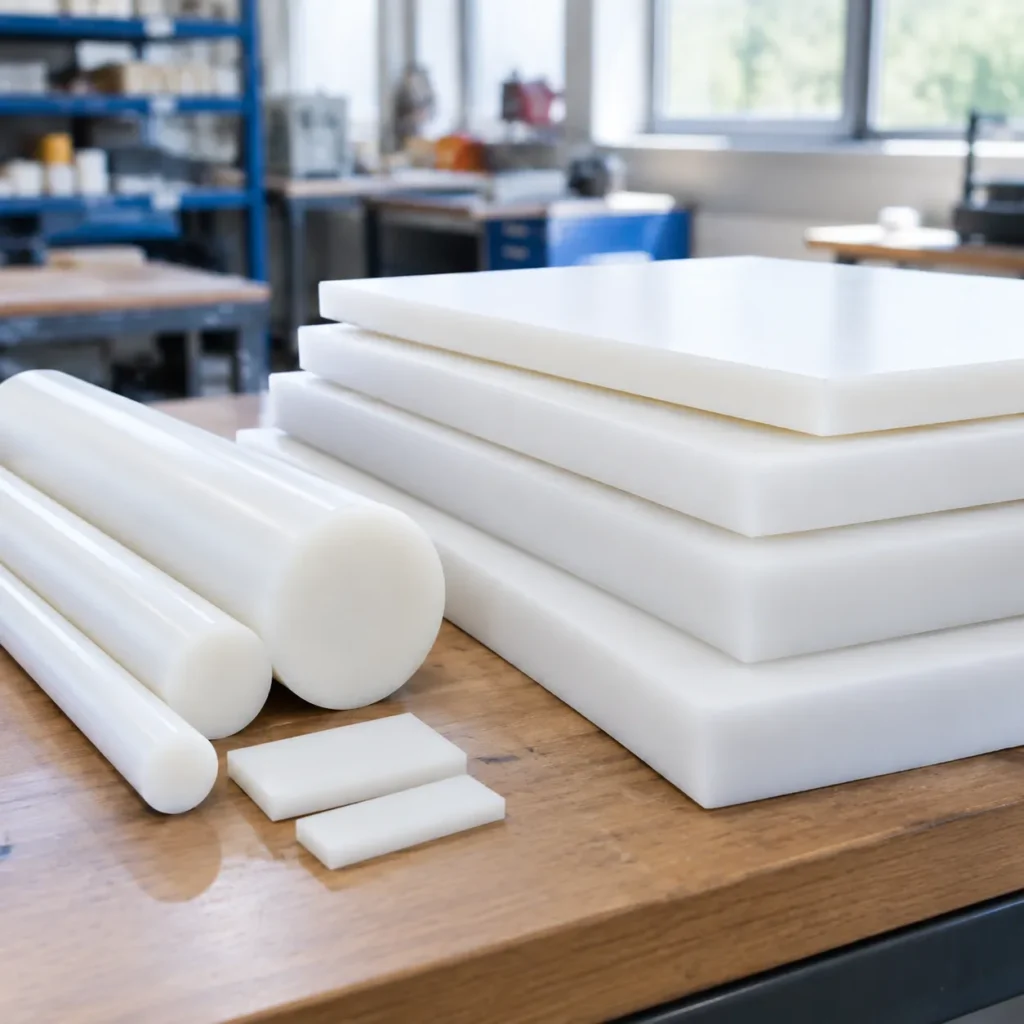
What Is a UHMWPE Plate?
A UHMWPE plate (Ultra-High-Molecular-Weight Polyethylene plate) is a premium engineering thermoplastic sheet engineered for severe operating environments where conventional plastics and metals fail. Renowned for its extreme durability, this industrial-grade polymer delivers an exceptional balance of wear resistance, non-stick properties, and unmatched impact strength across global industrial applications.
Definition and Molecular Structure
UHMWPE is a specialized subset of polyethylene characterized by extremely long, unbranched molecular chains. While standard high-density polyethylene (HDPE) has a molecular weight between 300,000 and 500,000 g/mol, UHMWPE boasts a molecular weight ranging from 3.5 to over 9 million g/mol.
- Extremely Long Molecular Chains: The massive polymer chains effectively transfer load throughout the polymer backbone, preventing stress concentrations.
- Superior Intermolecular Bonding: Long chains overlap and intertwine tightly, eliminating brittle failure points and maximizing energy absorption.
- Low Coefficient of Friction: The microscopic chain alignment creates a self-lubricating, non-stick surface that drastically reduces surface drag and mechanical wear.
Manufacturing Methods: Compression Molding and Extrusion
Because of its extremely high molecular mass, UHMWPE does not melt into a liquid state like standard thermoplastics; instead, it enters a high-viscosity rubbery state. As a result, standard injection molding cannot be used. We rely on two primary industrial processing methods to fabricate high-performance UHMWPE plates:
- Sinter Compression Molding:
- The virgin resin powder is placed into heavy steel molds, heated to sintering temperature (typically 200°C to 220°C), and consolidated under intense hydraulic pressure (exceeding 10 MPa).
- Key Advantage: Produces large, stress-free plates with maximum density, uniform thickness (up to 200 mm or more), and optimal mechanical integrity.
- Ram Extrusion:
- UHMWPE powder is continuously compacted and moved forward through a heated profile die using an oscillating hydraulic ram.
- Key Advantage: Highly cost-efficient for continuous lengths, standard sheet profiles, and high-volume wear strip applications.
Key Specifications and Properties of UHMWPE Plates
When we look at engineering plastics, an ultra-high-molecular-weight polyethylene sheet delivers an exceptional balance of mechanical integrity and longevity. We engineer our UHMWPE plate products to withstand extreme working environments that destroy conventional materials. Learn more about why ultra-high-molecular-weight polyethylene stands out in engineering plastics to understand its complete performance profile.
Mechanical Strength and High Impact Resistance
UHMWPE plates provide supreme toughness derived from extremely long polymer chains (3 to 9 million g/mol).
- No-Break Impact Rating: Absorbs high shock loads repeatedly without cracking or shattering.
- Cryogenic Resilience: Maintains full impact strength in severe sub-zero operating environments down to -200°C (-328°F).
- Deformation Resistance: Dissipates kinetic energy efficiently, preventing denting and structural stress fractures under cyclic load.
Abrasion Resistance and Low Coefficient of Friction
UHMWPE drastically outperforms carbon steel and bronze in high-wear abrasive sliding applications.
- Superior Wear Resistance: Outlasts carbon steel by up to 10:1 in abrasive slurry handling.
- Self-Lubricating Surface: Features a static and dynamic coefficient of friction between 0.10 and 0.15.
- Non-Stick Surface: Eliminates bulk material hang-ups, arching, and caking when used as sliding plates and liners.
Chemical, Corrosion, and Moisture Resistance
- Zero Water Absorption: A moisture absorption rate of less than 0.01% prevents swelling, freezing, and dimensional distortion.
- Corrosion Proof: Completely immune to rust, saltwater corrosion, and galvanic degradation.
- Chemical Inertness: Highly resistant to concentrated acids, alkalis, aggressive detergents, and organic solvents across a wide pH range.
Standard Dimensions, Thicknesses, and Temperature Limits
| Property / Specification | Standard Metric Value | Standard Imperial Value |
|---|---|---|
| Standard Thickness Range | 6 mm to 150 mm | 0.25 in to 6.00 in |
| Standard Sheet Dimensions | 1000 x 2000 mm / 1220 x 2440 mm | 4 x 8 ft / 4 x 10 ft |
| Continuous Working Temp | -200°C to +80°C | -328°F to +176°F |
| Density | 0.93 – 0.97 g/cm³ | 0.034 – 0.035 lb/in³ |
| Coefficient of Friction (Dry) | 0.10 – 0.15 | 0.10 – 0.15 |
| Water Absorption (24 hr) | < 0.01% | < 0.01% |
- Custom Thicknesses: Available up to 200 mm (8 in) via compression molding for specialized structural applications.
- Thermal Expansion Allowance: Linear thermal expansion averages 1.5–2.0 × 10⁻⁴ K⁻¹, requiring slotted fastening holes during fabrication.
Common Grades and Types of UHMWPE Plates
Not all operating environments demand the same formulation. We manufacture ultra-high-molecular-weight polyethylene plates in various specialized grades to match specific mechanical loads, regulatory requirements, and budget constraints. Choosing the proper material type ensures peak performance and maximum service life. For a full breakdown of material selection criteria, explore our UHMWPE sheet buying guide.
Virgin UHMWPE Plates
Virgin UHMWPE plates are produced from 100% pure, unadulterated polymer resin with zero recycled content. This grade delivers the absolute highest standard of performance across every metric:
- Maximum Impact Strength: Absorbs extreme shock loads without cracking or shattering, even in sub-zero environments.
- Superior Wear Resistance: Outlasts standard polymers and carbon steel under continuous high-abrasion conditions.
- Lowest Coefficient of Friction: Creates a non-stick, self-lubricating surface that prevents material buildup.
- Appearance: Natural, semi-translucent milky white color (custom colors available upon request).
Reprocessed and Recycled Grades
Reprocessed UHMWPE combines post-industrial virgin polymer scrap with virgin resin. It offers a cost-effective alternative for general-purpose applications that do not encounter extreme impact loads.
- Cost Efficiency: Significantly lower material cost while retaining roughly 80% to 85% of virgin wear characteristics.
- Color: Standard black or dark green.
- Typical Uses: Dust covers, non-critical guide rails, lower-load sliding plates, and utility scrapers.
Specialty Modified Grades: Anti-Static, UV-Stabilized, and Glass-Filled
When standard formulations face extreme environmental factors, specialized additives enhance core properties:
- Anti-Static / Conductive (ESD): Formulated with carbon additives to dissipate static electricity, preventing spark hazards in flammable environments (such as grain elevators and chemical plants) and protecting sensitive electronics.
- UV-Stabilized: Enhanced with UV inhibitors to prevent polymer chain degradation, brittleness, and color fading when permanently exposed to outdoor sunlight and marine environments.
- Glass-Filled / Ceramic-Filled: Blended with micro-glass beads or ceramic powders to increase compressive strength, elevate structural stiffness, and resist high-load sliding abrasion.
FDA-Compliant Food and Medical Grades
Food-grade and medical-grade UHMWPE plates meet strict regulatory standards (including FDA and USDA requirements) for direct contact with consumables and sterile applications.
- Non-Toxic & Chemically Inert: Zero leaching of hazardous substances, chemicals, or additives.
- Zero Moisture Absorption: Will not harbor bacterial growth, swell from steam washdowns, or degrade when exposed to harsh cleaning chemicals.
- Applications: Bottling lines, meat processing cutting surfaces, conveyor starwheels, chute liners for pharmaceuticals, and orthopedic implant components.
Industrial Uses and Applications of UHMWPE Plates
UHMWPE plates solve severe friction, impact, and wear challenges across demanding industrial environments. Thanks to their unmatched durability and self-lubricating properties, these plates often replace traditional metals, hardwoods, and standard plastics to reduce maintenance downtime and operating costs.
Material Handling, Chute Liners, and Conveyor Systems
In bulk material handling, UHMWPE plates serve as high-performance chute liners, hopper linings, bin gates, and sliding plates. Their exceptionally low coefficient of friction stops sticky bulk materials—such as moist clay, coal, iron ore, and grain—from caking or bridging.
- Non-Stick Flow: Eliminates build-up and promotes continuous material discharge.
- Component Longevity: When machined into wear strips, guide rails, and specialized conveyor parts, UHMWPE reduces drag and wear on belts and drive motors.
- Noise Reduction: Dampens system vibration and significantly lowers operational noise compared to steel liners.
Marine and Harbor Infrastructure Fender Pads
UHMWPE is the premier standard for marine fender facings, dock bumpers, and lock entrance protection. Harbor environments demand materials that can handle continuous moisture and violent vessel collisions without degrading.
- Zero Water Absorption: Will not swell, rot, or degrade in saltwater environments.
- Low Hull Friction: Protects ship hulls and protective coatings from abrasions during berthing operations.
- Chemical & UV Stability: Resists fuel spills, marine borer attacks, and prolonged sun exposure.
Mining and Heavy Equipment Wear Components
In mining, aggregate, and earthmoving industries, UHMWPE plates protect heavy equipment from severe gouging and abrasion. As premier engineering plastic materials, they absorb massive impact energy without cracking.
- Truck Bed Liners: Accelerates material shedding in dump trucks and prevents carryback in freezing temperatures.
- Slurry & Processing Wear Parts: Outlasts carbon steel in slurry transport chutes, cyclones, and pipe wear pads.
- Bucket Liners & Scrapers: Shields front loader buckets and dozer blades, extending primary machinery life while lowering overall tare weight.
Ballistic Protection and Lightweight Body Armor Plates
Cross-plied and pressed ultra-high-molecular-weight polyethylene provides exceptional ballistic defeat capabilities at a fraction of the weight of hardened steel or ceramic systems.
- Kinetic Energy Dispersion: Delivers extreme tensile strength that deforms, catches, and dissipates high-velocity projectiles across adjacent fiber layers.
- Multi-Hit Capability: Retains structural integrity after initial impact, minimizing backface deformation.
- Versatile Armor Solutions: Used extensively in standalone lightweight body armor inserts, ballistic helmets, vehicle armor kits, and explosive-resistant shields.
UHMWPE vs. Alternative Materials Comparison
Choosing the right material comes down to balancing impact strength, sliding properties, wear life, and total component weight. We frequently compare our UHMWPE plates against other engineering plastics, structural metals, and ballistic composites to determine the best fit for specific operating environments.
| Material Property | UHMWPE | HDPE | Steel (AR400) | PTFE (Teflon) |
|---|---|---|---|---|
| Wear & Abrasion Resistance | Extremely High | Moderate | High | Moderate to Low |
| Impact Strength | Superior (No Break) | Medium | High | Low |
| Coefficient of Friction | 0.10 – 0.22 (Self-lubricating) | 0.20 – 0.28 | 0.50 – 0.80 | 0.05 – 0.10 |
| Specific Weight | 0.93 – 0.97 g/cm³ | 0.94 – 0.96 g/cm³ | ~7.85 g/cm³ | ~2.15 – 2.20 g/cm³ |
| Chemical & Moisture Absorption | < 0.01% (Zero rot) | < 0.01% | Corrodes without coating | Inert |
UHMWPE vs. HDPE and PTFE (Teflon)
While all three belong to the high-performance polymer family, their mechanical capabilities differ significantly:
- Versus HDPE: While reviewing our HDPE plastic sheet guide highlights standard structural strengths, UHMWPE offers molecular chains up to ten times longer. This higher molecular weight translates to vastly superior impact strength, a lower coefficient of friction, and significantly greater abrasion resistance under aggressive sliding wear.
- Versus PTFE: PTFE handles higher continuous temperatures and provides an ultra-low friction surface, but it suffers from cold flow (creep) and weak mechanical wear resistance under heavy loads. UHMWPE delivers superior structural toughness, better tensile strength, and far greater resistance to abrasive gouging at a lower cost.
UHMWPE vs. Steel and Traditional Metallic Wear Plates
Replacing steel, AR400, or stainless liners with UHMWPE plates delivers immediate operational advantages:
- Weight Reduction: UHMWPE is roughly one-eighth the density of steel, reducing equipment payload, making installation safer, and lowering structural stress.
- Non-Stick Surface: Damp bulk materials stick to steel plates, causing bridging and rat-holing. The low surface energy of UHMWPE keeps sticky materials moving freely.
- Corrosion and Noise Control: UHMWPE plates are impervious to rust, acid runoff, and chemical washdowns while drastically reducing operating noise and vibration compared to metallic liners.
UHMWPE vs. Ceramic Armor Plates
In high-threat defense and personal protection systems, UHMWPE plates outperform conventional ceramic composites in specific parameters:
- Multi-Hit Durability: Ceramic plates fracture upon initial projectile impact to dissipate energy, which weakens adjacent zones. Pressed UHMWPE laminates stop rounds by catching and deforming projectiles through high-tensile energy absorption, preserving structural integrity across multiple hits.
- Weight and Buoyancy: UHMWPE armor is exceptionally light and naturally buoyant in water, providing maximum mobility for tactical operators without the brittle fracture risks associated with dropped ceramic gear.
Machining and Fabrication Best Practices for UHMWPE Plates
Fabricating ultra-high-molecular-weight polyethylene requires a different approach than working with rigid engineering plastics or metals. Because of the material’s low melting point, flexibility, and unique thermal properties, following proven machining practices ensures clean edge profiles without gumming or dimensional distortion.
Tooling, Cutting Speeds, and Chip Evacuation
UHMWPE plates machine well using standard woodworking or metalworking equipment, provided the cutting tools are razor-sharp. Dull tools generate excess friction, causing the plastic to smear rather than cut cleanly.
- Tool Geometry: Use high-speed steel (HSS) or sharp carbide-tipped tools with high positive rake angles (15° to 20°) and generous clearance angles to minimize surface rubbing.
- Speed and Feed Rates: Run at high cutting speeds paired with heavy, steady feed rates. Keeping the tool advancing continuously prevents localized heat buildup.
- Chip Management: UHMWPE produces continuous, stringy ribbons rather than fine dust. Use high-volume air blasts to blow swarf away from the cutter and prevent chips from packing flutes.
- Sawing Technique: For sizing panels, select coarse-tooth circular saw blades (2 to 4 teeth per inch) to prevent material binding, following dedicated cutting methods for UHMW sheets to maintain straight, burr-free edges.
Fastening Methods and Thermal Expansion Allowance
UHMWPE has a high coefficient of linear thermal expansion—roughly 8 to 10 times greater than carbon steel. Proper mechanical fastening must account for this dimensional movement to prevent plate buckling.
- Oversized and Slotted Holes: Drill bolt clearance holes 2 mm to 4 mm larger than the fastener shank. In long sliding plates or chute liners, use slotted holes along the primary axis of thermal movement.
- Fastener Selection: Secure plates using countersunk bolts, elevator bolts, or weld studs fitted with spanner washers. Fastener heads must sit slightly below the wear surface to avoid catching passing bulk materials.
- Expansion Gaps: When lining large surface areas with multiple panels, leave a 3 mm to 6 mm gap between adjacent plate edges to accommodate ambient temperature swings.
- Torque Control: Fasten securely without over-torquing. Excessive clamp pressure causes localized stress and creep around the bolt heads, compromising the liner’s structural integrity.
How to Select the Right UHMWPE Plate Specification
Selecting the correct UHMWPE plate specification comes down to matching material grades and dimensions directly with the mechanical stress of your operational environment. Choosing the optimal sheet ensures long-term wear resistance, prevents unnecessary downtime, and keeps your project within budget.
Assessing Wear, Impact, and Environmental Conditions
Before finalizing your material orders, we recommend evaluating several primary working conditions:
- Abrasion Severity: Determine the type of material moving against the surface. Fine, dry particles (such as grain or fly ash) demand a low coefficient of friction to prevent caking, whereas sharp, abrasive ores require maximum molecular weight for superior wear resistance.
- Impact Load: Calculate the drop height and weight of materials impacting the plate. High-impact drop zones require higher thickness to absorb mechanical shock without deforming or cracking.
- Operating Environment: Outdoor installations require UV-stabilized grades to avoid degradation from direct sunlight. If your facility handles volatile bulk goods or chemicals, anti-static or chemical-resistant formulations are essential.
- Regulatory Compliance: Food processing and pharmaceutical lines strictly require virgin, FDA-compliant plastic grades to prevent contamination.
Choosing the Right Thickness and Grade for Your Application
Selecting the right thickness depends on structural support and expected wear cycles:
- 3 mm to 10 mm: Ideal for light-duty chute liners, chain guides, and basic sliding plates where weight savings and flexibility are priorities.
- 12 mm to 25 mm: The standard choice for aggregate hoppers, truck bed liners, and high-speed conveyor wear strips.
- 30 mm to 100 mm+: Built for heavy mining impact plates, marine fender facings, and severe-duty industrial scrapers.
| Operational Requirement | Recommended Grade | Key Feature |
|---|---|---|
| General Industrial Wear | Virgin UHMWPE | High impact strength & self-lubrication |
| Cost-Sensitive Material Handling | Reprocessed / Recycled Grade | Economical wear protection for non-food use |
| Port & Marine Infrastructure | UV-Stabilized UHMWPE | Weatherproof, non-marking, salt-resistant |
| Explosive Dust / Bulk Powder | Anti-Static (ESD) Grade | Dissipates static charges safely |
| Direct Food Contact | FDA-Grade Virgin UHMWPE | Non-toxic, zero moisture absorption |
If your system requires specialized sizing, pre-drilled bolt holes, or custom machining, you can request a custom quote to match your exact fabrication blueprints.