
Types of Metal Roofing Sheets
Metal roofing sheets provide dependable structural protection across industrial, commercial, and agricultural facilities. Engineered to withstand heavy weather loads and environmental exposure, these panels deliver high mechanical strength, structural integrity, and long-term performance.
Galvanized and Galvalume Roofing Sheets
Coated steel substrates provide the foundational protection needed to prevent base metal degradation:
- Galvanized Sheets (GI): Processed with a pure zinc coating that acts as a sacrificial barrier, delivering dependable cathodic protection against moisture and rust.
- Galvalume Sheets (GL): Coated with an aluminum-zinc alloy, offering superior thermal reflectivity and long-term barrier resistance against surface corrosion.
- Core Advantages: High tensile strength, solid impact resistance, and consistent structural stability in diverse environmental conditions.
Color Coated (PPGI & PPGL) Roofing Sheets
Pre-painted galvanized (PPGI) and pre-painted galvalume (PPGL) sheets combine structural metal protection with specialized paint layers:
- Protective Coating Structure: Treated with conversion layers, primers, and durable topcoats to prevent peeling, chalking, and fading under intense sunlight.
- Versatile Finishes: Available in a wide spectrum of standard architectural colors to match technical and decorative project specifications.
- Enhanced Barrier Protection: The polymer paint layer creates an additional seal against atmospheric humidity, pollutants, and chemical contact.
Corrugated and Trapezoidal Profile Sheets
Formed structural geometries determine the water-shedding efficiency and structural span capacity of metal roofing systems:
| Profile Type | Structural Geometry | Primary Benefit | Common Application |
|---|---|---|---|
| Corrugated Sheets | Symmetrical round-wave pattern | Uniform stress distribution and ease of overlapping | Agricultural sheds, light industrial storage, curved roofs |
| Trapezoidal Sheets | Angular box-rib profile | High bending resistance across wider purlin spacings | Large manufacturing plants, logistic warehouses, low-slope roofs |
Metal Roofing Tiles and Sandwich Panels
For projects demanding specialized architectural aesthetics or integrated thermal control, advanced composite and pressed formats deliver dedicated performance:
- Pressed Metal Roofing Tiles: Replicate conventional tile appearances while leveraging the lightweight and shatterproof benefits of solid steel sheet.
- Insulated Sandwich Panels: Feature dual metal facings bonded to rigid insulation cores—such as high-efficiency polyurethane (PU) or mineral wool—delivering all-in-one structural coverage, vapor barriers, and thermal insulation.
- Integrated Performance: Eliminate the need for separate insulation sub-layers, expediting installation timelines while reducing energy dissipation in climate-controlled facilities.
Non-Metallic Roofing Sheets and Profiles
Non-metallic roofing delivers the ultimate defense against aggressive chemical vapors, heavy moisture, and corrosive coastal air. While industrial facilities often evaluate high-performance polymers for process wear—such as examining UHMWPE vs Polyurethane: which one to choose for chutes and liners—exterior building envelopes require advanced non-metallic profiles to ensure long-term structural integrity without rust.
| Material Type | Core Strength | Light Transmission | Best Application |
|---|---|---|---|
| Polycarbonate | Extreme impact resistance | High (up to 89%) | Skylights, architectural canopies |
| FRP (Fiberglass) | Chemical & corrosion immunity | Diffused (soft light) | Chemical plants, coastal warehouses |
| Multiwall Polycarbonate | Superior thermal insulation | Diffused daylight | Greenhouses, insulated facilities |
Polycarbonate Roofing Sheets
Our polycarbonate sheets provide exceptional impact resistance alongside crystal-clear daylighting. Whether utilizing a flat polycarbonate sheet or a profiled corrugated layout, these panels absorb heavy mechanical impacts from hail and falling debris without cracking.
- Impact Strength: Virtually unbreakable, standing up to extreme weather without shattering.
- UV Protection: Integrated co-extruded barrier layers prevent yellowing and embrittlement from prolonged sun exposure.
- Thermal Stability: Maintains structural form across wide operational temperature ranges.
FRP Fiberglass Roofing Sheets
Manufactured with high-purity resin and continuous glass fiber strands, our FRP sheet profiles are the benchmark for corrosive industrial roofing solutions. Fiberglass reinforced plastic handles acid vapors, industrial emissions, and constant moisture that would rapidly deteriorate conventional metal sheeting.
- Corrosion Resistance: Complete immunity to rust, rotting, and chemical degradation.
- Structural Integrity: Robust FRP profiles and pultruded components provide high flexural strength with low deadweight.
- Profile Matching: Accurately molded to lap directly with corrugated UPVC roof sheet designs and traditional metal decking profiles.
Multiwall and Corrugated Skylight Panels
Multiwall and corrugated skylight panels combine natural interior illumination with energy-saving thermal insulation. The multi-cell geometry creates insulating air pockets that lower building heating and cooling loads while delivering uniform daylight distribution.
- Thermal Efficiency: Multi-chamber walls lower heat loss and minimize solar glare inside the work area.
- Balanced Light Distribution: Diffuses direct sunlight evenly across work surfaces to eliminate harsh shadows.
- Easy System Integration: Corrugated edges drop directly into existing roofing runs, creating watertight seals with standard industrial fasteners.
Key Features and Benefits of Roofing Sheets
We engineer modern industrial roofing solutions to handle intense weather, aggressive chemicals, and structural demands without driving up installation costs. When selecting materials for heavy-duty facilities, engineers often weigh durability much like deciding on industrial polymers—such as evaluating UHMWPE vs Polyurethane: which one to choose for high-impact zones. Our roofing sheet systems provide balanced performance across three core areas: long-term surface protection, high strength-to-weight efficiency, and dependable thermal control.
| Performance Metric | Metal Roofing Profiles | FRP & Polycarbonate Sheets | Multi-Layer UPVC Sheets |
|---|---|---|---|
| Corrosion Resistance | Moderate to High (Coating dependent) | Outstanding (Chemical inert) | Exceptional (Acid/Alkali proof) |
| Weight per m² | Medium (4.5 – 6.5 kg) | Ultra-light (1.8 – 3.2 kg) | Lightweight (2.5 – 4.0 kg) |
| Thermal Insulation | Requires added insulation layer | Low conductivity | High inherent insulation |
| Impact Resistance | High tensile, dent-prone | High elasticity, shatterproof | High toughness, shock absorbing |
Superior Corrosion Resistance and Longevity
Industrial environments expose roof assemblies to sulfur dioxide, salt spray, and caustic fumes. We design our profile panels to eliminate the premature rusting and surface degradation seen in unprotected metal roofs:
- Chemical Inactivity: Options like the corrugated UPVC roof sheet and fiberglass reinforced plastic (FRP sheet) do not oxidize, flake, or corrode when exposed to harsh coastal or chemical processing plants.
- Abrasion and Wear Mitigation: Just as facilities resolve severe friction via proven UHMWPE sheet wear solutions along chutes and contact points, our specialized polymer coatings prevent surface erosion caused by wind-borne sand, debris, and hail.
- Decade-Long Durability: Protective UV layers prevent discoloration, brittleness, and micro-cracking, keeping the structural core intact over decades of continuous exposure.
Lightweight Structure with High Tensile Strength
Heavy materials increase freight expenses and require heavier substructure frames. We combine reduced structural weight with high mechanical capacity:
- Structural Load Reduction: Our lightweight panels reduce dead-load stress on structural purlins and trusses, cutting foundational steel requirements.
- High Load-Bearing Capacity: Utilizing pultruded components and reinforced ribs, these profiles resist high wind uplift and heavy snow accumulation without buckling.
- Flexibility and Impact Tolerance: Flat polycarbonate sheet and FRP profiles absorb physical stress, flex under dynamic loads, and snap back into profile without structural fracturing.
Weatherproofing and Thermal Insulation Performance
Managing indoor climate and preventing water ingress are essential to protecting inventory and reducing energy usage:
- Watertight Overlaps: Deep-profile corrugated grooves and engineered capillary breaks stop water backup during torrential rain and high winds.
- Thermal Barrier Efficiency: Unlike bare steel panels that transfer solar heat directly indoors, materials like multiwall polycarbonate sheets and composite PVC roof tiles reduce thermal transfer, lowering indoor cooling expenses.
- Acoustic Damping: Multi-layer construction suppresses noise from heavy rain and hail, providing a safer, quieter working environment across manufacturing floors and storage warehouses.
Application Scenarios for Roofing Sheets
We engineer performance roofing panels to solve specific structural, environmental, and thermal challenges across diverse sectors. From corrosive chemical zones to high-traffic commercial buildings, our profiles ensure reliable long-term service life.
Industrial Warehouses and Manufacturing Plants
Heavy industry demands robust materials capable of enduring chemical fumes, severe weather, and dynamic structural loads. We provide tailored industrial roofing solutions that prevent degradation and reduce maintenance downtime:
- Chemical and Acid Plants: High-grade corrugated UPVC roof sheet and fiberglass reinforced plastic panels resist corrosive vapors, acid mist, and oxidation that quickly destroy conventional metal roofs.
- Logistics Hubs and Workshops: Heavy-duty FRP sheet installations withstand mechanical vibrations and wide structural spans. Review our sheet thickness guide for industrial applications to specify the correct gauge for high-load factory layouts.
- Daylighting Integration: High-clarity panels integrated into plant ceilings maximize natural light, lowering daytime electricity costs across expansive shop floors.
Commercial and Civil Residential Buildings
Modern architectural roofing balances clean visual appeal with weather resistance and interior climate control:
- Residential Developments: Our PVC roof tile selections deliver classic profiles with superior waterproof performance, eliminating rust issues common in humid coastal regions.
- Canopies and Walkways: High-impact flat polycarbonate sheet and corrugated polycarbonate sheets provide shatterproof overhead protection with reliable UV-blocking properties.
- Thermal Regulation: Multi-layer panel profiles reduce heat transfer through the building envelope, lowering cooling demand during peak summer temperatures.
Agricultural Sheds and Greenhouses
Agricultural environments generate high humidity, organic waste gases, and strict lighting requirements that dictate specialized material selection:
- Livestock and Poultry Sheds: Ammonia fumes and damp air corrode bare metal within years. Non-corrosive polypropylene PP corrugated sheet and UPVC profiles withstand these caustic indoor environments without surface pitting.
- Commercial Greenhouses: Controlled-diffusion daylighting panels ensure balanced light spread for optimal crop development while preventing foliage burn.
- Structural Framing: Moisture-resistant FRP profiles and pultruded components provide rigid, lightweight support structures that perform reliably inside humid cultivation facilities.
Essential Roofing Accessories and Components
A durable roof relies on more than just primary panels. In comprehensive industrial roofing solutions, matching accessories and trims seal building envelopes, prevent moisture infiltration, and accommodate thermal movement. We engineer our roofing components to integrate seamlessly with metal panels, corrugated UPVC roof sheet installations, and translucent daylighting systems.
Ridge Caps and Roof Flashings
Ridge caps and custom flashings shield the most vulnerable transition points on any roof structure:
- Ridge Caps: Form-fitted to match corrugated, trapezoidal, or standing-seam profiles, sealing the roof apex against driving wind and rain.
- Apron and Parapet Flashings: Create watertight seals where roof planes meet vertical walls, headwalls, or parapet structures.
- Valley and Eave Trims: Direct heavy water runoff toward drainage channels while blocking pest entry.
| Component | Standard Materials | Key Function |
|---|---|---|
| Ridge Cap | Color-coated steel, FRP profiles, UPVC | Seals the roof peak against moisture and wind uplift |
| Barge Board / Rake Trim | Galvanized steel, aluminum | Protects roof sheet edges along the gable ends |
| Counter Flashing | Pre-painted metal, flexible polymers | Seals wall-to-roof joints and expansion gaps |
For dynamic joints and wear-prone transitions requiring heavy-duty seals or sliding pads, material selection is critical. When specifying low-friction slide bearings versus flexible expansion seals, engineers often weigh UHMWPE vs Polyurethane: which one to choose? UHMWPE delivers superior self-lubricating properties for smooth thermal expansion, whereas polyurethane offers high elastomeric elasticity for shock absorption and vibration dampening.
Gutters and Drainage Downspouts
Uncontrolled water runoff compromises structural foundations, siding, and interior assets. We supply high-capacity drainage systems tailored to extreme weather and high-volume rainfall:
- Box Gutters and Valley Channels: Fabricated from heavy-gauge galvanized steel or corrosion-proof fiberglass reinforced plastic to resist standing water and debris accumulation.
- Seamless Downspouts: Optimize flow velocity, quickly channeling discharge away from building perimeters.
- Corrosion Resistance: Specially coated to withstand acid rain, industrial pollutants, and marine environments.
In high-output manufacturing plants, keeping interior workspaces completely dry safeguards equipment and sensitive conveyor line accessories from costly moisture-related disruptions.
Fasteners and Waterproof Screws
Fastener integrity determines the wind uplift rating and long-term leak resistance of the entire roof assembly. We provide specialized mechanical fixings engineered for specific structural substrates:
- Self-Drilling Screws: Feature hardened drill points for rapid fastening into heavy steel purlins, timber battens, or lightweight pultruded components without pre-drilling.
- Bonded EPDM Washers: Weather-resistant vulcanized EPDM gaskets distribute clamping pressure evenly, forming a durable, watertight seal around every penetration.
- Engineered Fasteners for Plastics: Oversized pilot holes and specialized neoprene saddle washers accommodate natural thermal expansion when fixing polycarbonate sheets and flat polycarbonate sheet sections, preventing stress fractures.
- Protective Coatings: Coated with Class 3 or Class 4 anti-corrosion barriers to ensure fastener service life matches the longevity of the roofing panels.
Custom Fabrication and Processing Services
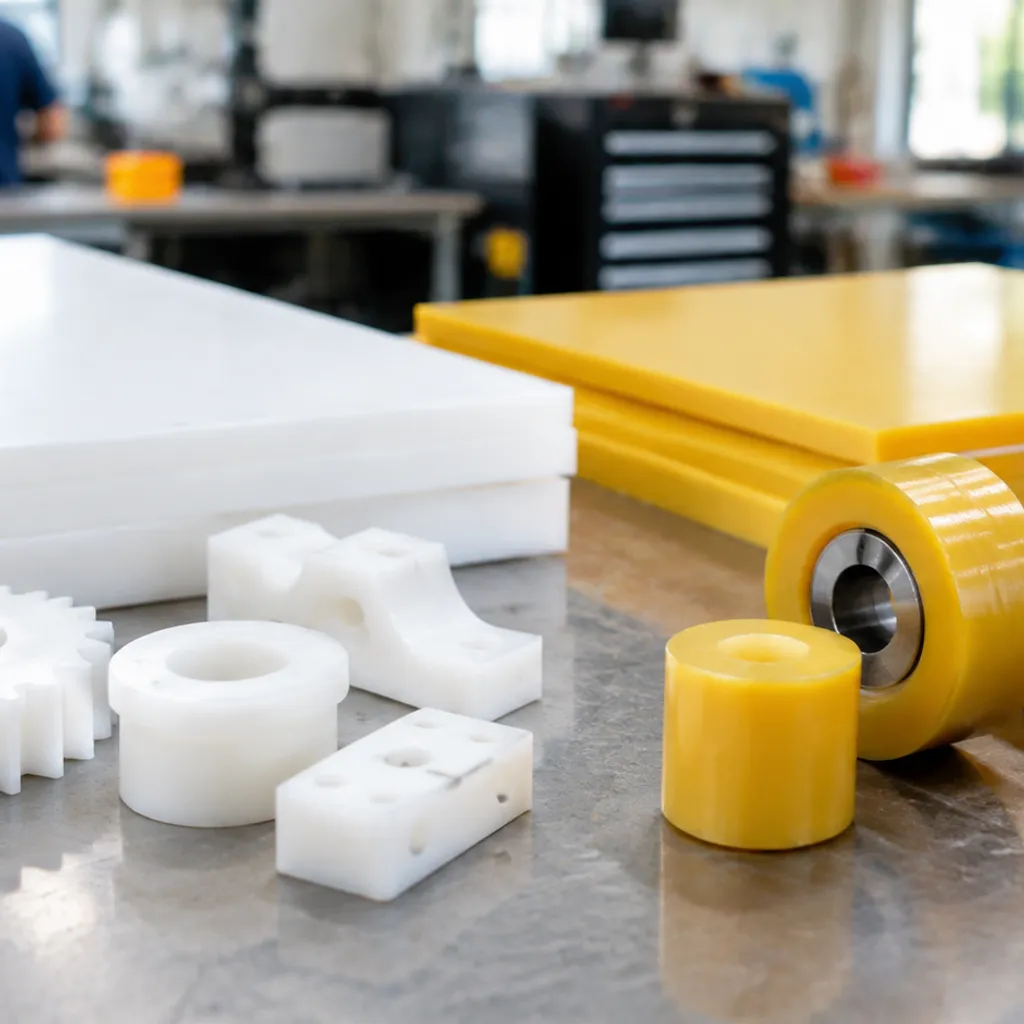
We deliver comprehensive fabrication capabilities to adapt structural materials to your exact project specifications. Whether you are outfitting large-scale facilities with modern industrial roofing solutions or configuring high-wear chute and eaves transitions, our workshop handles everything in-house. When matching tough wear components and seal strips to structural panels—specifically weighing UHMWPE vs Polyurethane: which one to choose—our team shapes and finishes each material to deliver peak service life and rapid on-site assembly.
Slitting, Cutting, and Punching
We eliminate site modification delays by delivering pre-cut, ready-to-install profiles with exact mechanical tolerances.
- Precision CNC Slitting & Shearing: Clean, burr-free edges across metal panels, flat polycarbonate sheet stock, and rigid polymer layers.
- Automated Punching: Factory-slotted fixing holes, weep channels, and connection points arranged precisely to accommodate thermal expansion.
- Clean-Edge Geometry: Smooth cutting that prevents micro-cracking across brittle or reinforced substrates.
For specialized industrial assemblies that demand custom-machined wear pads or brackets alongside roof flashings, our advanced plastic parts processing ensures micron-accurate dimensions across every production run.
Roll Forming and Corrugating
Our continuous forming lines shape durable profiles designed to maximize load capacity, run-off speed, and panel rigidity.
- Structural Corrugation: High-precision tooling for sinusoidal waves, box profiles, and trapezoidal patterns on composite materials and metal sheets.
- Composite Profiling: Reliable continuous forming for corrugated UPVC roof sheet designs and multi-layer polymer panels.
- Component Integration: When resolving wear dilemmas like UHMWPE vs Polyurethane: which one to choose for impact chutes, guide rails, or skirting adjacent to drainage systems, our UHMWPE sheet buying guide outlines how we form and machine low-friction sliding surfaces versus high-rebound elastomeric seals.
Custom Dimensions and Surface Coatings
Every industrial environment presents unique chemical, weather, and structural demands. We tailor dimensions and protective surface treatments to guarantee field longevity.
| Processing Option | Technical Capabilities | Key Advantages |
|---|---|---|
| Custom Lengths & Gauges | Continuous lengths up to 11.8 meters; custom sheet thicknesses | Eliminates end-lap joints and minimizes leak paths |
| Protective Barrier Coatings | UV-blocking co-extrusion, anti-corrosion sealants, chemical barriers | Stops color fading, chalking, and aggressive chemical degradation |
| Reinforced Profiles | Engineered FRP profiles, pultruded components, and fiberglass reinforced plastic | Superior strength-to-weight ratio in corrosive industrial settings |
We manage the entire customization process from raw stock profiling to final surface coating, ensuring your materials arrive on-site fully prepared for immediate installation.
How to Choose and Buy Roofing Sheets
Selecting the right roofing system demands a balance between structural demand, environmental exposure, and overall project budget. We engineer and supply comprehensive industrial roofing solutions designed to withstand harsh weather, chemical vapors, and heavy mechanical loads. Making the right purchase comes down to evaluating core material properties, structural geometry, and cost variables upfront.
Selecting the Right Material and Thickness
Material performance dictates structural longevity. While standard metal panels handle general commercial framing, demanding industrial environments often require advanced composite profiles, polycarbonate sheets, or high-grade engineering plastic materials to combat chemical corrosion and severe wear.
When addressing specialized heavy-industry facilities—such as mineral processing sheds or conveyor galleries where abrasion meets chemical runoff—engineers often debate between specialized polymers like UHMWPE vs Polyurethane: Which One to Choose? For sliding abrasion and zero moisture absorption, a durable UHMWPE sheet barrier is the standard choice, whereas polyurethane excels in high-rebound impact zones.
| Material Type | Standard Thickness Range | Primary Application | Key Advantage |
|---|---|---|---|
| Galvalume / PPGI | 0.40 mm – 0.80 mm | Warehouses, workshops | High tensile strength, cost efficiency |
| Polycarbonate Sheets | 1.2 mm – 3.0 mm | Skylights, architectural canopies | Outstanding light transmission, impact resistance |
| FRP Sheet | 1.5 mm – 4.0 mm | Chemical plants, agricultural sheds | Acid/alkali resistance, zero corrosion |
| Corrugated UPVC | 1.5 mm – 3.0 mm | Coastal and heavy chemical zones | Chemical inertness, thermal insulation |
- Standard Light-Duty Enclosures: Opt for 0.4 mm to 0.5 mm metal profiles or 1.5 mm composite panels.
- Heavy Industrial & Severe Weather Zones: Specify 0.6 mm to 0.8 mm metal or 2.5 mm+ heavy-duty composite sheets.
Matching Profiles to Roof Slope and Climate
Roof pitch and localized weather dictate the optimal panel geometry:
- Low-Slope Roofs (Below 1:10): Standing seam or high-rib trapezoidal profiles prevent water pooling and ensure rapid drainage during torrential rains.
- Steep-Slope Roofs (Above 1:5): Standard corrugated and low-rib profiles provide clean aesthetics and sufficient drainage capacity.
- High Wind and Snow Load Zones: Deep-rib designs increase section modulus and structural load-bearing capacity without adding unnecessary panel deadweight.
- Intense UV and Coastal Climates: Non-metallic options like fiberglass reinforced plastic and specialized resin-coated profiles resist salt fog degradation and prevent thermal expansion cracks.
Factors Influencing Roofing Sheet Prices
Purchasing decisions must account for both initial material costs and full life-cycle value:
- Substrate Chemistry and Base Metal Thickness (BMT): Thicker structural cores require more raw material and carry a higher base cost.
- Surface Treatments and Coatings: Premium paint systems (such as PVDF or SMP), heavy zinc coatings (Z275/AZ150), and co-extruded UV-protective layers increase longevity and baseline pricing.
- Profile Complexity: Roll-forming deeper trapezoidal ribs or double-standing seams involves higher production precision than simple corrugated patterns.
- Order Volume and Custom Dimensions: Standard production lengths optimize cutting waste, while custom cut-to-length orders reduce on-site labor and material scrap.
Why Choose Our Roofing Sheet Solutions
We deliver dependable, heavy-duty industrial roofing solutions designed to withstand harsh weather, chemical exposure, and intense mechanical loads. By combining advanced polymer processing with automated production facilities, we supply high-performance materials tailored to exact project specifications across commercial, agricultural, and industrial sectors.
Factory-Direct Pricing and High Production Capacity
Eliminating middlemen allows us to offer transparent, factory-direct rates on every order. Our continuous manufacturing lines handle large-volume demands without compromising delivery schedules, whether you need standard corrugated UPVC roof sheet options, flat polycarbonate sheet profiles, or custom FRP sheet panels.
| Operational Metric | Standard Capability | Project Benefit |
|---|---|---|
| Production Scale | Continuous high-volume extrusion | Short lead times for major builds |
| Material Diversity | Polycarbonate, UPVC, fiberglass reinforced plastic | Single-source supplier efficiency |
| Procurement Model | Direct-from-source distribution | Maximum cost savings on bulk orders |
- Volume Stability: Predictable output to keep commercial building timelines on track.
- Material Customization: Standardized or custom pultruded components and corrugated designs.
- Competitive Sourcing: Direct procurement reduces procurement overhead on every square meter.
Strict Quality Inspection and International Certifications
Quality control drives every stage of our manufacturing process. Each production batch undergoes rigorous stress testing to guarantee structural stability, weather resistance, and load-bearing performance before release.
- Dimensional Precision: Continuous thickness, profile, and edge-tolerance verification.
- Physical Strength Testing: Real-time impact, tensile, and flexural load evaluations.
- Environmental Resistance: Thorough UV resistance, colorfastness, and corrosion stability checks.
- Standards Compliance: Fully aligned with international manufacturing and safety protocols.
Global Export Packaging and Reliable Delivery
Safe transit is critical for long-span panels and profiled sheets. We engineer export-ready packaging that protects against impact, moisture, and transit abrasion, ensuring every order arrives ready for immediate job-site installation.
- Protective Interleaving: Surface-protective films prevent scratching and surface wear during loading.
- Reinforced Crating: Heavy-duty steel-strapped bundles and wooden pallets designed for containerized ocean freight.
- Efficient Logistics: Coordinated global freight forwarding to optimize delivery timelines and container space utilization.
To get exact lead times and volume pricing for your upcoming installation, submit your project specifications to request a quote directly from our engineering team. For custom profiling needs or regional project support, reach out directly through our contact page to discuss your technical parameters.
Related Sources
- https://www.wbdg.org/guides-specifications/building-envelope-design-guide/roof-systems/metallic-roof-systems
- https://sheffieldmetals.com/learning-center/galvalume-vs-galvanized-metal-roofing/
- https://metalconstruction.org/product-types/insulated-metal-panels/
- https://sheffieldmetals.com/learning-center/types-of-metal-roof-profiles-panels/