
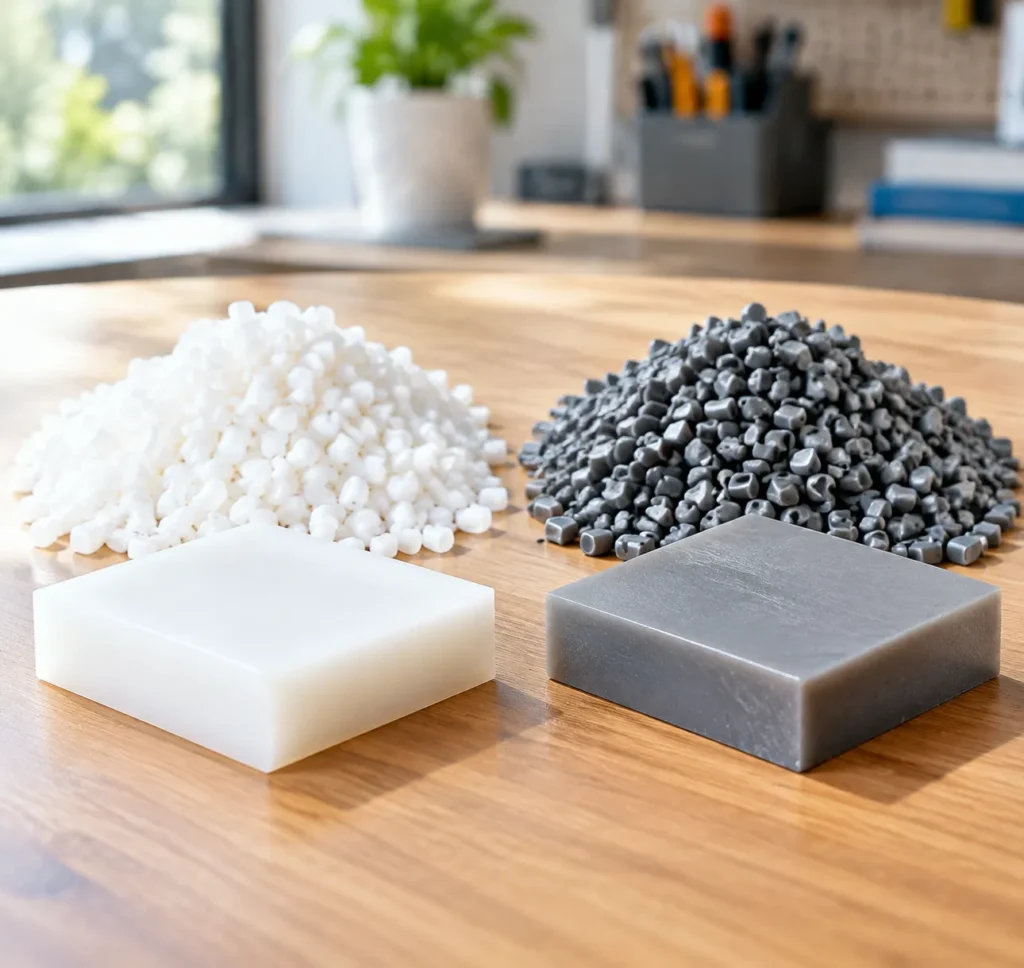
Are you struggling to choose between UHMWPE and Nylon for your next project?
Picking the wrong plastic can quickly lead to premature wear, dimensional swelling, or costly part failure under heavy loads.
Both are top-tier engineering polymers, but they behave completely differently when pushed to their limits.
In this breakdown of UHMWPE vs Nylon: A Detailed Comparison, you’ll discover the critical differences in tensile strength, impact resistance, wear and friction, and moisture absorption.
If you want to know exactly which material fits your application—and your budget—this guide is for you.
Let’s dive right in.
Overview of UHMWPE and Nylon
Engineering plastics play a critical role in modern industrial manufacturing, replacing metals across high-wear, high-load, and corrosive environments. When selecting a high-performance thermoplastic, UHMWPE (Ultra-High Molecular Weight Polyethylene) and Nylon (Polyamide) are two of the most widely evaluated materials.
Both polymers deliver exceptional durability, but their structural behaviors diverge significantly:
UHMWPE excels in extreme abrasion resistance, impact damping, and low-friction sliding performance.
Nylon provides superior mechanical stiffness, high tensile strength, and dependable load-bearing capacity under thermal stress.
Understanding their fundamental chemistries ensures the right material choice for demanding operational conditions.
What is UHMWPE?
UHMWPE (Ultra-High Molecular Weight Polyethylene) is a semi-crystalline engineering thermoplastic characterized by extremely long molecular chains, typically with molecular weights ranging from 3.5 to 7.5 million g/mol. This elongated chain structure directly accounts for its extreme toughness and wear resistance.
Key characteristics include:
Extremely low coefficient of friction: Delivers a self-lubricating surface comparable to PTFE.
Zero moisture absorption: Does not swell or degrade when exposed to water, slurries, or humid environments.
Superior impact strength: Resists cracking and mechanical failure even under cryogenic temperatures.
Broad chemical inertness: Immune to attack from aggressive acids, alkalis, and organic solvents.
In industrial setups, UHMWPE is the standard material for sliding elements, conveyor wear strips, chute liners, and components subject to aggressive mechanical sliding wear.
What is Nylon?
Nylon is a synthetic thermoplastic belonging to the polyamide (PA) family, most commonly produced in grades like PA6 and PA66. Unlike polyethylenes, nylon contains polar amide groups throughout its polymer backbone, which create strong intermolecular hydrogen bonds.
Key characteristics include:
High tensile strength and flexural modulus: Delivers the structural rigidity needed to replace brass, bronze, and aluminum.
Thermal endurance: Maintains dimensional stability and mechanical load capacity at significantly higher operating temperatures than polyethylenes.
Dynamic fatigue resistance: Endures cyclic stresses, vibration, and continuous mechanical pressure without deformation.
Hygroscopic behavior: Absorbs ambient moisture, which increases impact toughness but can alter finished dimensional tolerances.
Nylon is engineered primarily for precision mechanical components, including industrial gears, bushings, rollers, and structural housings requiring continuous load-bearing performance.
Mechanical Properties: UHMWPE vs. Nylon
Evaluating UHMWPE vs. Nylon requires understanding how each material handles stress, loads, and friction. Both plastics are industry workhorses, but they serve completely different mechanical roles. Nylon functions as a rigid, load-bearing structural polymer, while ultra-high molecular weight polyethylene (UHMWPE) excels in energy dampening and low-friction sliding.
| Property | UHMWPE | Nylon (Polyamide) |
|---|---|---|
| Tensile Strength | Moderate | High |
| Flexural Modulus (Stiffness) | Low to Moderate | High |
| Impact Strength | Extremely High (Non-break) | High (Tough, but notch-sensitive) |
| Coefficient of Friction | Extremely Low (Self-lubricating) | Moderate to Low |
| Abrasion Resistance | Superior in sliding/slurry wear | High in dry mechanical contact |
Tensile Strength and Structural Rigidity
When parts need to support continuous mechanical loads without bending, nylon is the clear winner.
- Higher Tensile Strength: Polyamide delivers significantly higher tensile strength than UHMWPE, preventing elongation under continuous pull forces.
- Superior Flexural Modulus: Nylon maintains its structural shape under load, making it the proper choice for precision gears, structural brackets, and threaded fasteners.
- Creep Behavior: Under static pressure, UHMWPE is prone to deformation and cold flow. We restrict UHMWPE to dynamic sliding components rather than static, load-bearing structures.
Impact Resistance and Toughness
UHMWPE leads industrial plastics in impact resistance and shock dissipation.
- Energy Absorption: The extremely long polymer chains in UHMWPE absorb massive kinetic shocks without cracking or shattering.
- Extreme Temperatures: UHMWPE preserves its ductile toughness even down to cryogenic ranges, whereas standard nylon becomes brittle as temperatures drop.
- Dampening Capabilities: For heavy-impact chutes, bumpers, and dock fenders, ultra-high molecular weight polyethylene stands out as the premier shock-absorbing material. Nylon offers good toughness, but sharp, repetitive hammer blows can cause localized micro-fractures over time.
Wear, Abrasion Resistance, and Friction
Choosing between these two materials for dynamic contact comes down to friction levels and the operating environment.
- Coefficient of Friction: UHMWPE features a self-lubricating, non-stick surface with a friction coefficient rivaling PTFE. Nylon has higher friction, which generates surface heat during rapid sliding.
- Abrasive Sliding Wear: In high-grit, bulk material, or slurry conditions, UHMWPE consistently outperforms nylon and even hardened steels.
- Dry Metal-on-Plastic Contact: Nylon performs exceptionally well against unlubricated mating metals where rigidity keeps parts meshing smoothly.
For severe sliding applications, monitoring surface stress is essential. Reviewing UHMWPE sheet wear issues and prevention ensures your sliding liners, guide rails, and wear strips achieve their maximum operating lifespan.
Environmental and Thermal Performance
Choosing between ultra high molecular weight polyethylene and polyamide often comes down to how a component handles heat, fluids, and environmental exposure. Both materials solve tough engineering challenges, but their physical structures respond very differently to ambient conditions.
Operating Temperature Resistance
Thermal limits dictate where each polymer can work safely under load:
- UHMWPE: Performs exceptionally well in extreme cold and cryogenic conditions. It maintains flexibility and high impact strength without turning brittle. However, it has a lower continuous operating temperature ceiling, softening when exposed to sustained thermal loads.
- Nylon: Handles elevated temperatures with much higher heat deflection thresholds. If your system runs warm or faces continuous frictional heat, polyamide keeps its shape and mechanical stiffness far longer than polyethylene.
Moisture Absorption and Dimensional Stability
Moisture uptake is the sharpest dividing line between these two thermoplastics:
- UHMWPE: Completely hydrophobic with virtually zero moisture absorption. Parts do not swell, warp, or wash out in wet, submerged, or wash-down environments, delivering consistent dimensional stability.
- Nylon: Hygroscopic by nature, meaning it absorbs water directly from ambient humidity and liquids. While moisture increases nylon’s impact flexibility, it causes swelling that can throw off tight machining tolerances. In precision rotating hardware, like a nylon variable diameter wheel, thermal and humidity shifts must be accounted for during the initial design phase.
Chemical and UV Resistance
Chemical exposure quickly reveals the right polymer for your operating environment:
- Chemical Resistance: UHMWPE provides near-total chemical inertness, resisting aggressive acids, alkalis, and solvents. Nylon resists hydrocarbons, oils, and fuels well, but it degrades when exposed to strong mineral acids and harsh oxidizing agents.
- Outdoor UV Exposure: Standard grades of both materials degrade under continuous direct sunlight. Outdoor industrial installations require UV-stabilized formulations or carbon-black additives to prevent embrittlement and surface chalking over time.
Manufacturing and Machining Considerations
When evaluating UHMWPE vs Nylon: A Detailed Comparison on the shop floor, fabrication behavior plays a major role in total production time. Both stock shapes work well on standard CNC equipment, but their workability profiles demand different tooling setups.
Machinability and Workability
When we cut, mill, and turn these materials, their physical structures behave very differently:
- Nylon (Polyamide): Machines cleanly and holds tighter tolerances. It acts much like a soft metal during turning and milling, producing crisp edges with minimal burring. However, cutting heat can cause stress buildup, and its hygroscopic nature requires care if water-based coolants affect final part dimensions.
- UHMWPE (Ultra-High Molecular Weight Polyethylene): Has a lower melting point and high ductility. It tends to generate stringy chips and burrs if tools are dull. To prevent thermal expansion and part deflection, we use razor-sharp tooling, high feed rates, and adequate chip evacuation.
- Fastening and Bonding: Nylon accepts commercial adhesives and solvent bonding relatively well. UHMWPE features an inert, non-stick surface, making mechanical fastening the standard method for assembly.
For complex components with strict dimensional tolerances, understanding the broader behavior of engineering plastic materials ensures you select the correct machining parameters before running production.
Material Cost and Economic Feasibility
Economic feasibility comes down to raw material expense, machining speed, and service life:
- Raw Stock Investment: Standard grades of UHMWPE typically carry a lower upfront raw material cost per volume compared to specialty cast or extruded nylon formulations.
- Tooling and Cycle Times: Nylon allows for faster cycle times and cleaner finishing, which can lower machining labor on intricate parts. UHMWPE may require secondary deburring steps, but it causes practically zero abrasive tool wear.
- Operational Value: In high-friction sliding systems, UHMWPE reduces downtime and replacement frequency. For rigid mechanical drives, nylon provides structural integrity that prevents costly mechanical failures.
Selecting the right option balances upfront part fabrication against long-term replacement cycles in your equipment.
Typical Applications: UHMWPE vs. Nylon
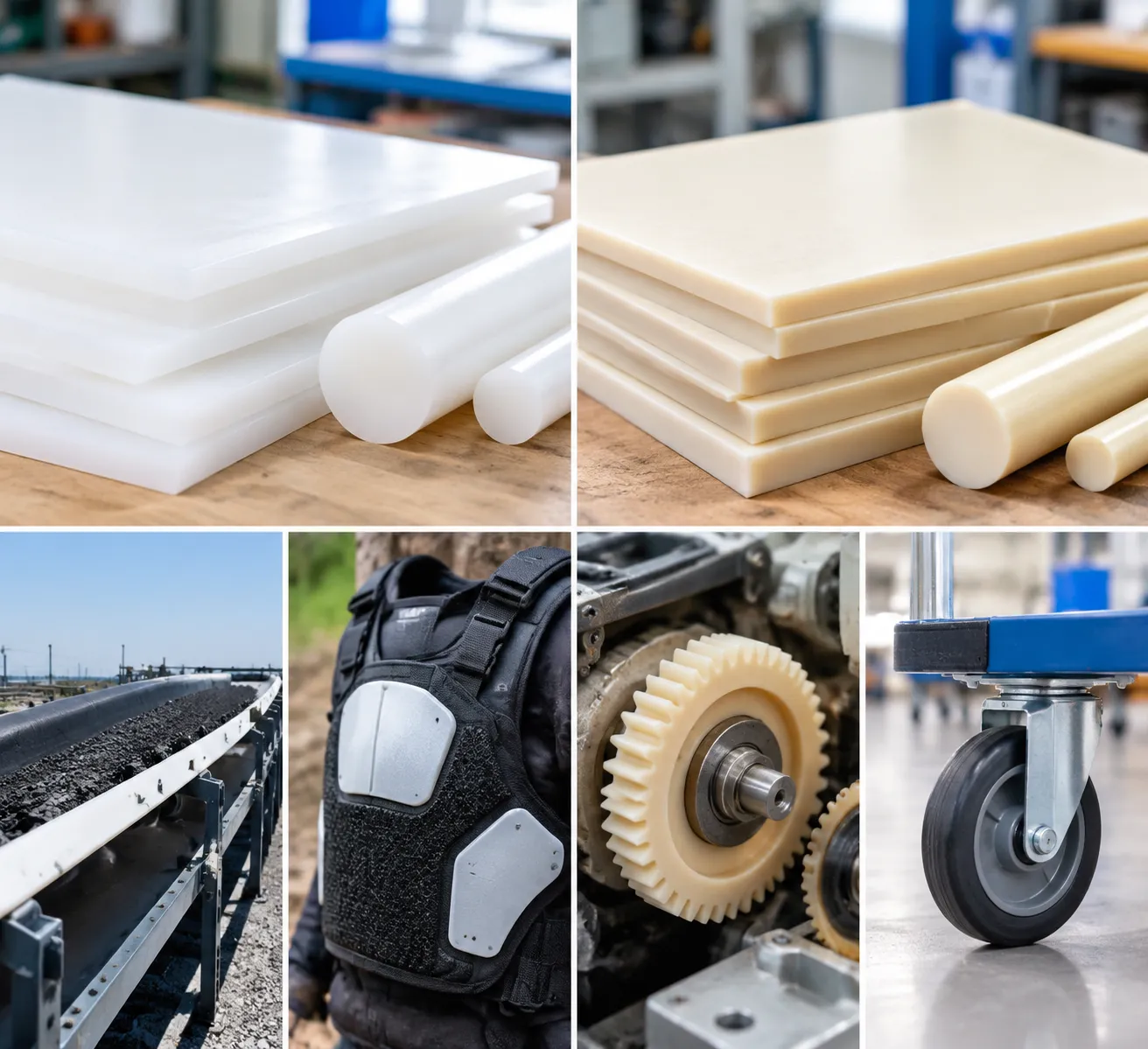
Choosing between UHMWPE and nylon comes down to your operating environment and mechanical load requirements. We see both thermoplastics widely deployed across industrial machinery, but their distinct physical properties dictate where each material delivers the best performance and service life.
Common Industrial Applications for UHMWPE
Ultra-high molecular weight polyethylene excels in environments characterized by continuous abrasion, severe impact, and high moisture levels. Because it repels water and provides an extremely low coefficient of friction, it keeps production lines moving smoothly without seizing or clogging.
Typical industrial uses include:
Chute and Hopper Liners: Prevents bulk powders, coal, gravel, and sticky materials from caking or bridging on transport surfaces.
Conveyor Components: Wear strips, chain guides, and star wheels that lower drive friction and cut down line noise.
Marine Fenders and Dock Facings: Absorbs heavy vessel impacts in saltwater environments without rotting, cracking, or absorbing water.
Guide Rails and Scraper Blades: Extends continuous run-time in wet, highly abrasive packaging and processing lines.
When planning bulk handling systems or heavy liner replacements, our UHMWPE board complete buyer’s guide for industrial use helps match the right sheet grade to your specific abrasion conditions.
Common Engineering Applications for Nylon
Nylon stands out when a part must bear heavy structural loads, resist mechanical creep, and operate at higher temperatures. Its high tensile strength and rigid matrix make it ideal for replacing metal components in demanding mechanical assemblies.
Typical engineering uses include:
Gears and Sprockets: Transmits torque quietly while absorbing shock loads and reducing tooth wear.
High-Load Bushings and Bearings: Carries sustained pressures in rotating or oscillating equipment where softer plastics deform.
Heavy-Duty Sliders and Wear Pads: High-integrity nylon slider components support heavy machinery carriages and boom slides under dry sliding conditions.
Elevated-Temperature Structural Parts: Valve components, housings, and brackets installed near motors, pumps, or industrial heat sources.
How to Choose Between UHMWPE and Nylon
Choosing between ultra high molecular weight polyethylene and polyamide comes down to your operating environment, physical stress, and moisture exposure. We supply both materials for demanding industrial setups, and matching the right resin to your operating conditions prevents costly equipment downtime.
When to Choose UHMWPE
Pick UHMWPE when you need the slickest surface possible and total resistance to water and corrosive chemicals. It outperforms nearly every other engineering thermoplastic in severe sliding wear and high-impact conditions. For project planning and stock selection, review our UHMWPE sheet buying guide to evaluate specific grades.
- Wet and Corrosive Environments: It exhibits zero moisture absorption, meaning parts will never swell, soften, or lose dimensional stability around water, washdowns, or harsh acids.
- Severe Sliding Abrasion: Perfect for chute liners, conveyor wear strips, guide rails, and hopper beds where bulk materials flow continuously.
- Low-Friction Demands: Delivers an exceptionally low coefficient of friction for smooth sliding without external lubrication.
- Sub-Zero Operating Conditions: Retains its impact toughness even in freezing or cryogenic systems where other plastics turn brittle and crack.
When to Choose Nylon
Select nylon when your assembly demands structural rigidity, mechanical strength, and high heat tolerance. While it does not match the water resistance of polyolefins, its mechanical backbone makes it the industry standard for high-stress mechanical components.
- Heavy Load-Bearing Applications: Nylon delivers superior tensile strength and a higher flexural modulus, resisting deformation under constant mechanical force.
- Precision Mechanical Parts: Ideal for machining structural gears, sprockets, threaded fasteners, and high-load bushings.
- Elevated Operating Temperatures: Handles continuous operating heat far better than polyethylene, maintaining its shape in hot engine bays or high-temperature machinery.
- Dry Friction with Static Loads: Excels in dry assemblies where structural stiffness must accompany routine mechanical wear.
Key Factors: Load, Moisture, and Temperature
To pinpoint the right material for your run, evaluate your target parameters against this core decision matrix:
| Operating Factor | UHMWPE | Nylon (Polyamide) | Winning Material |
|---|---|---|---|
| Mechanical Load | Lower structural stiffness; susceptible to creep under continuous high stress. | High tensile strength and rigid flexural modulus under heavy loads. | Nylon |
| Moisture Absorption | Zero water uptake (0.01%); holds strict tolerances in wet environments. | Hygroscopic (absorbs up to 8% water); swells and alters part fit. | UHMWPE |
| Operating Temperature | Continuous limit near 80°C (180°F); softens under high thermal loads. | Handles continuous temps up to 105°C–120°C (220°F–250°F). | Nylon |
| Wear & Friction | Lowest coefficient of friction; unmatched sliding abrasion resistance. | Excellent wear resistance against metal, but generates more frictional heat. | UHMWPE |
- Load: If your components need to support heavy dynamic weight without bending, choose nylon.
- Moisture: If your application involves submerged components, outdoor humidity, or food-grade washdowns, our UHMWPE sheet options ensure zero swelling and consistent dimensions.
- Temperature: If ambient heat regularly surpasses 80°C, nylon provides the necessary thermal threshold to prevent structural failure.