
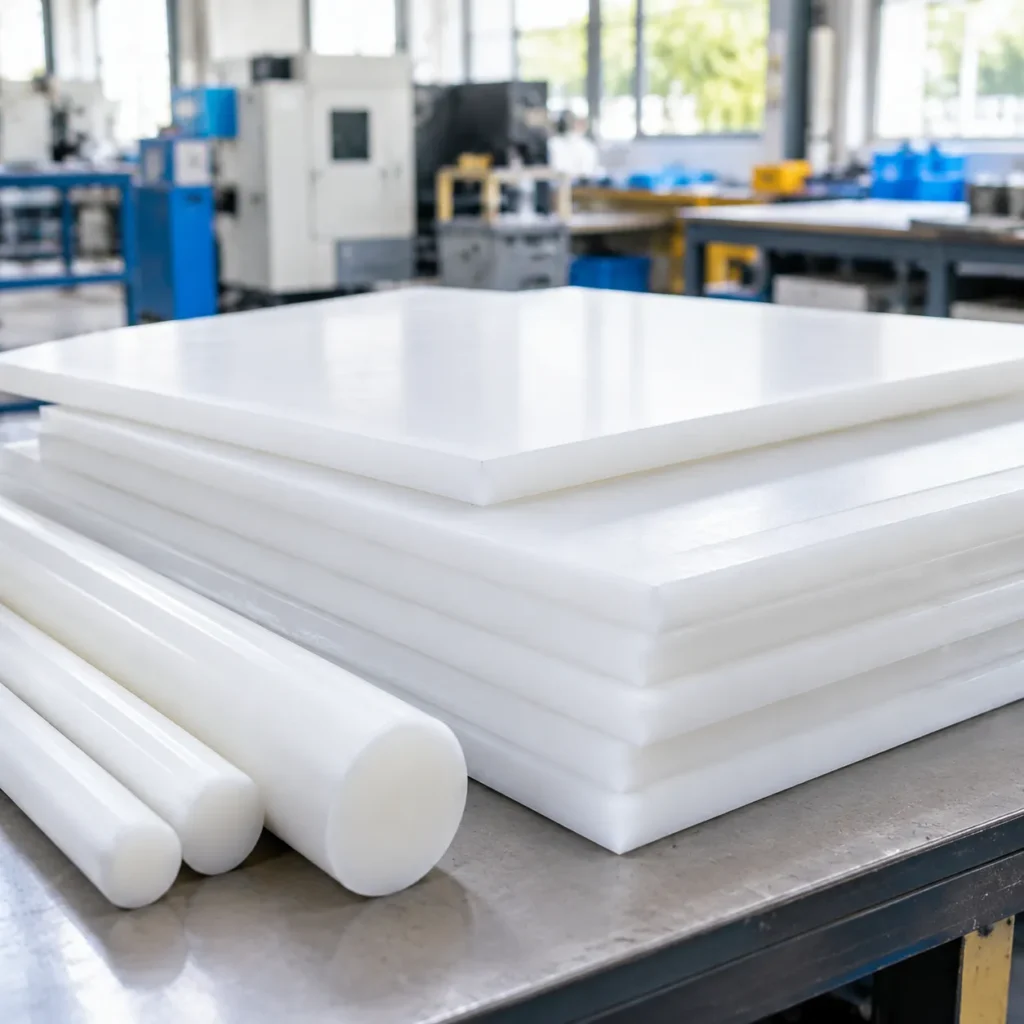
Understanding UHMWPE Sheet Wear Resistance
Ultra-High-Molecular-Weight Polyethylene (UHMWPE) is the industry benchmark for high-wear industrial applications. Engineered with long molecular chains, this advanced thermoplastic delivers exceptional performance in demanding environments like material handling chutes, hoppers, silos, and conveyor systems where mechanical friction and sliding abrasion degrade lesser materials.
Key Wear Resistance Properties of UHMWPE
UHMWPE sheets outperform standard thermoplastics and metals through a unique balance of physical and mechanical characteristics:
- Superior Abrasion Resistance: The long-chain molecular structure provides unmatched resistance to continuous sliding abrasion, significantly reducing material loss over time.
- Extremely Low Coefficient of Friction: With self-lubricating, non-stick properties, UHMWPE minimizes drag, prevents material build-up, and ensures consistent bulk flow.
- High Impact Strength: High energy absorption prevents cracking, gouging, and surface degradation under dynamic impact loads, even in sub-zero environments.
- Zero Moisture Absorption & Chemical Inertness: Impervious to water, corrosive slurries, and aggressive industrial chemicals, maintaining dimensional stability and structural integrity.
Factors Influencing UHMWPE Durability and Friction
While UHMWPE provides industrial-grade wear life, its long-term durability depends on several critical operational parameters:
| Factor | Impact on Performance |
|---|---|
| Abrasive Media Profile | Sharpness, hardness, and particle size of the processed material directly affect the surface wear rate. |
| Sliding Velocity & Pressure | High continuous speeds combined with heavy surface loads generate frictional heat that can accelerate surface deformation. |
| Operating Temperature | Exposure to temperatures beyond recommended thermal limits softens the polymer matrix, lowering wear resistance. |
| Installation Alignment | Uneven mounting, improper fastener depth, or lack of thermal expansion allowances create localized stress concentrations and premature wear. |
Common UHMWPE Sheet Wear and Failure Issues
Even with exceptional toughness and a low coefficient of friction, industrial liners face harsh conditions that can lead to premature failure. In heavy-duty bulk handling, we regularly see several distinct wear patterns develop when operating parameters exceed material limits.
Rapid Surface Abrasion and Erosion
Continuous sliding contact with abrasive bulk materials—such as sand, gravel, coal, and minerals—gradually strips away the polymer surface.
- Scoring and Grooving: Hard, sharp-edged particles cut micro-channels along the flow direction.
- Slurry Erosion: High-velocity liquid-solid mixtures accelerate the wear rate, washing away the protective surface layer.
- Uniform Thinning: Over time, sliding friction reduces the overall sheet thickness, eventually exposing the sub-structure if left unchecked.
Impact Gouging, Cracking, and Chipping
Heavy lump materials dropping from significant heights generate high-energy dynamic loads that test the material’s impact strength.
- Surface Gouging: Large, angular rocks tear chunks directly out of the liner surface.
- Micro-Cracking & Fatigue: Repeated cyclic impacts create subsurface stress cracks that propagate over time.
- Edge Chipping: Unprotected sheet edges and joint seams fracture when struck directly by incoming material streams.
Thermal Expansion, Warping, and Softening
UHMWPE has a relatively high thermal expansion coefficient compared to steel. Uncontrolled heat alters the mechanical stability of the liner.
- Bowing and Warping: Inadequate expansion gaps cause sheets to buckle upward between fasteners when ambient or process temperatures rise.
- Thermal Softening: Continuous service near upper thermal thresholds reduces surface hardness, drastically accelerating abrasive wear.
- Friction-Induced Melting: Dry-run conditions at high speeds generate localized surface hot spots, leading to localized plastic deformation.
Material Hang-Up and Surface Adhesion Difficulties
A primary reason for installing UHMWPE is its non-stick, self-lubricating surface. When wear compromises this surface, bulk flow issues quickly follow.
- Roughness Increase: Deep abrasions and gouges trap fine particles, destroying the low-friction sliding plane.
- Caking and Bridging: Sticky or moist materials begin clinging to roughened sections, causing costly chute liner failure and hopper bridging.
- Ratcheting Drag: Material accumulation increases mechanical drag, putting extra stress on conveyor drives and structural fastenings.
Root Causes of UHMWPE Sheet Wear Problems
While UHMWPE is known for its low coefficient of friction and high abrasion resistance, operating conditions can still cause unexpected liner degradation. When premature wear occurs, it typically traces back to specific operational and mechanical factors rather than basic material limits.
Incorrect Material Grade or Inadequate Thickness
Selecting the wrong grade for a specific wear environment is one of the most common causes of premature wear. Using standard-grade sheets in high-friction sliding zones or abrasive slurry systems leads to an accelerated wear rate. Key material-selection pitfalls include:
- Sub-optimal Molecular Weight: Using lower molecular weight grades where severe sliding abrasion requires higher polymer chain density.
- Underspecified Sheet Thickness: Choosing thin liners to reduce upfront costs, which shortens service life and leads to premature base metal exposure.
- Unmodified Resins in High-Impact Zones: Relying on standard virgin material where specialized additives or reinforced compounds are needed to handle aggressive particle flow.
Improper Installation and Fastening Methods
Even the highest-grade UHMWPE sheet will fail quickly if it is not installed correctly. Mechanical issues during installation create localized stress points that disrupt material flow and damage the liner surface:
- Protruding Fasteners: Inadequately countersunk bolts catch sliding materials, causing gouging, fastener shearing, and liner detachment.
- Lack of Expansion Allowances: Fastening sheets too tightly without slotted holes prevents natural thermal movement, resulting in severe warping and bowing.
- Uneven Substructures: Gaps between the backing steel and the UHMWPE sheet create unsupported voids that crack or deform under impact.
Extreme Operating Temperatures and Environmental Stress
Thermal and environmental conditions directly affect the mechanical properties and impact strength of engineering plastics:
- Thermal Softening: Exceeding continuous operating temperature limits lowers surface hardness, accelerating sliding wear and deformation.
- Frictional Heat Buildup: High sliding speeds without adequate cooling cause localized thermal expansion, surface melting, and degradation.
- UV Degradation: Prolonged outdoor exposure without UV stabilizers can lead to surface embrittlement and micro-cracking over time.
Excessive Particle Load and Severe Abrasive Angles
The trajectory and nature of the bulk material strongly dictate the type of wear on chute liners and hopper liners:
- Perpendicular Impact Angles: UHMWPE delivers peak performance in sliding abrasion. Direct, high-drop impacts near 90 degrees can exceed energy absorption capacity, leading to gouging and fatigue.
- Sharp, High-Hardness Media: Continuous handling of jagged aggregates or metallic ores at high speeds cuts into the polymer matrix, increasing the overall wear rate.
Practical Solutions to UHMWPE Sheet Wear Issues
Resolving wear problems requires a proactive engineering approach. By adjusting dimensions, accommodating thermal behavior, and refining material flow, you can prevent premature chute liner failure, lower your ongoing wear rate, and drastically extend equipment service life.
Calculating and Upgrading Ideal Sheet Thickness
Undersized liners are a leading cause of early replacement. Upgrading your liner thickness provides the necessary wear margin to absorb continuous impact without exposing underlying steel structures.
- Match Drop Height and Particle Mass: High-impact drop zones require a minimum thickness increase (such as upgrading from 10 mm to 20 mm or thicker) to absorb kinetic energy and prevent severe surface deformation.
- Factor in Expected Wear Rate: Calculate annual material throughput to establish a replacement schedule before structural wear reaches the fastener heads.
- Strategic Zoned Thickness: Use thicker panels at primary impact points while maintaining standard thickness along downstream sliding paths to optimize budget and weight.
Thermal Management and Expansion Gap Provision
Because UHMWPE has a higher rate of thermal expansion than steel, rigid fastening without room for movement leads directly to warping and bowing. Proper installation geometry prevents surface buckling.
- Slotted Mounting Holes: Machine oversized or slotted bolt holes so panels can expand and contract smoothly across operating temperature swings.
- Panel Spacing Gaps: Leave calculated clearance gaps between adjacent sheet edges to accommodate lateral expansion without panel overlap.
- Avoid Over-Torquing: Fasten bolts securely without crushing the polymer, preserving natural thermal movement across the sub-frame.
Optimizing Impact Angles and Flow Trajectories
UHMWPE delivers maximum abrasion resistance in sliding wear conditions rather than under direct, perpendicular impact.
- Reduce Direct Impact Angles: Re-engineer transfer points, baffles, or deflector plates so material strikes the surface at shallow sliding angles (ideally below 30° to 45°).
- Utilize Dead-Boxes or Rock Shelves: Create rock-on-rock impact zones ahead of the liner to absorb high drop energy before bulk media transitions onto the hopper liners.
- Leverage the Low Coefficient of Friction: Smooth transitions allow materials to glide freely, preventing hang-ups while reducing abrasive friction against the liner surface.
Selecting the Optimal UHMWPE Grade for Wear Resistance
Choosing the right material formulation is the most effective way to eliminate premature wear, reduce surface deformation, and lower the overall wear rate in demanding material handling environments. We manufacture and supply specialized grades tailored to specific sliding, impact, and thermal challenges.
Virgin vs. Reprocessed UHMWPE Sheets
- Virgin UHMWPE: Delivers maximum impact strength, highest abrasion resistance, and superior purity. It is the premier choice for heavy-duty bulk handling, extreme drop impacts, and severe sliding wear.
- Reprocessed (Eco) Grade: Blends virgin polymer with post-industrial clean regrind. It offers a cost-effective solution for moderate sliding applications and basic guide rails where extreme impact strength is not critical.
Ceramic- and Glass-Filled UHMWPE for High Abrasion
- Ceramic-Filled UHMWPE: Formulated with micro-ceramic additives to drastically improve surface hardness and resist gouging from sharp, fine, and aggressive bulk materials.
- Glass-Filled Formulations: Enhance mechanical stiffness and structural rigidity, preventing sheet creep and surface grooving under continuous compressive pressure.
High-Temperature and Cross-Linked UHMWPE
- Cross-Linked UHMWPE: Chemical modification creates molecular cross-links, significantly boosting resistance to mechanical wear and deformation under aggressive friction.
- High-Temperature Stabilized Sheets: Engineered with specialized additives to raise continuous service temperature limits, preventing thermal expansion, warping, and premature softening in hot processing operations.
Self-Lubricating and Oil-Filled UHMWPE
- Enhanced Slip Additives: Impregnated with solid or liquid lubricants throughout the polymer matrix, providing an ultra-low coefficient of friction.
- Continuous Dry Lubrication: Eliminates surface stick-slip, prevents bulk material hang-up in hopper liners, and minimizes sliding drag without requiring external grease or oils.
Installation and Fastening Best Practices to Prevent Wear
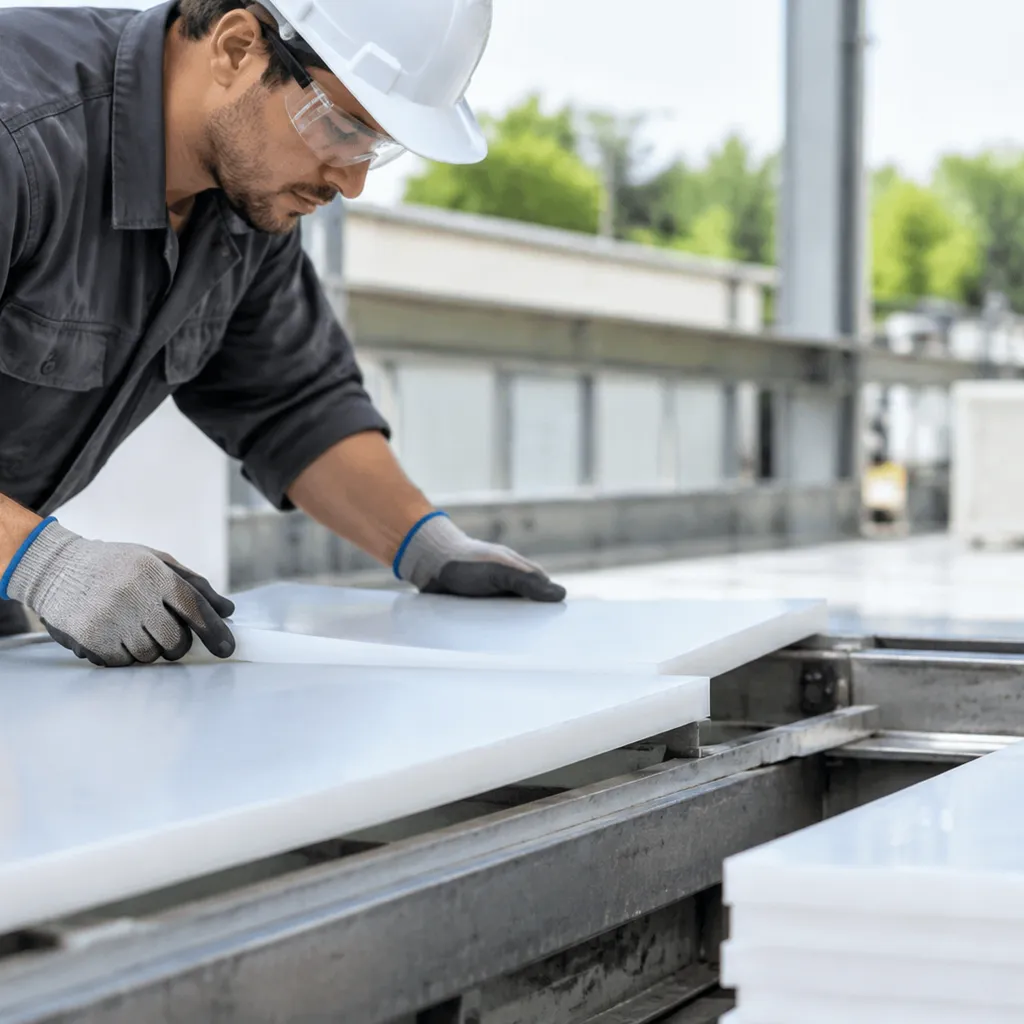
Correct installation directly determines the service life of wear components. Even high-grade liners will suffer premature chute liner failure if mechanical mounting does not account for material dynamics. We utilize specialized installation protocols to guarantee our sheets deliver maximum abrasion resistance and stable, long-term performance.
Proper Fastener Selection and Countersinking
Fastener integrity is critical to avoiding impact damage and surface shearing:
- Countersunk Fastening: Always countersink bolt heads 2 mm to 3 mm below the wear surface. Flush or protruding bolts catch bulk material, rapidly increasing the localized wear rate and damaging machinery.
- Fastener Types: Use weld studs, elevator bolts, or specialized mechanical anchors depending on the backing structure.
- Fastening Patterns: Secure sheets from the center outward to eliminate trapped surface tension. Maintain consistent spacing—typically 200 mm to 300 mm centers—adjusted for material load and drop velocity.
Allowing for Thermal Expansion and Contraction
Because plastics expand and contract significantly more than steel sub-structures, managing thermal expansion prevents warping and bowing across high-friction zones:
- Slotted Mounting Holes: Pre-drill oversized or slotted mounting holes to permit natural linear movement as ambient temperatures fluctuate.
- Expansion Gaps: Always leave calibrated expansion gaps (typically 3 mm to 5 mm per meter) between adjacent sheets in hopper liners and transfer chutes to prevent buckling under continuous friction.
- Torque Control: Avoid over-tightening fasteners. Tighten securely against the steel backing while allowing the polymer sheet to float along its designated expansion paths.
Leading Edge Protection and Sealing Techniques
Material migration behind the liner is a frequent cause of catastrophic liner detachment. Implementing strict edge protection maintains uninterrupted flow paths:
- Chamfered Edges: Bevel leading sheet edges at a 30° to 45° angle to deflect falling bulk material down the flow stream rather than catching the seam.
- Overlap (Shingle) Layout: Install sheets in an overlapping, step-down pattern relative to the flow direction so falling materials naturally bridge across panel joints.
- Steel Deflector Strips: Place sacrificial steel retainers or wear caps over the top leading row in severe drop zones to shield the plastic boundary from direct aggregate impact.
Maintenance and Care Tips to Extend UHMWPE Lifespan
Even the most durable engineering plastics require routine upkeep to deliver their maximum operational life. Implementing systematic maintenance protocols prevents unexpected chute liner failure, controls operating costs, and keeps bulk materials flowing smoothly without unplanned downtime.
Regular Inspection and Wear Pattern Monitoring
Routine wear assessments help identify surface fatigue before liner degradation damages underlying steel structures:
- Measure Residual Thickness: Use ultrasonic thickness gauges or depth calipers at standard service intervals to track the overall wear rate in high-velocity zones.
- Inspect Fasteners: Check countersunk bolts and weld studs to ensure they remain below the wear face. Exposed hardware disrupts sliding surfaces and accelerates local erosion.
- Track Flow Channels: Uneven grooves or gouges indicate localized material channeling. Rotating or swapping high-wear modular panels prolongs the total lifespan of the liner assembly.
- Check Expansion Seams: Ensure expansion gaps remain clear of compacted fines to prevent warping and bowing during ambient temperature spikes.
Preventative Cleaning and Chemical Exposure Control
UHMWPE features near-zero moisture absorption and an exceptionally low coefficient of friction, making routine cleaning simple and fast:
- High-Pressure Washdowns: Flush chutes and hopper liners with high-pressure water to remove compacted fines from seams and edges.
- Avoid Open Flame Cleaning: Never use direct heat or open torches to clear frozen or stuck bulk materials, as localized heat destroys the polymer’s crystalline structure.
- Monitor Chemical Contact: While UHMWPE resists most acids, alkalis, and solvents, limit direct exposure to strong oxidizing agents and aromatic hydrocarbons that cause surface softening and stress cracking.
Preventing Mechanical Overload and Proper Storage
Proper handling and load management protect the polymer matrix from premature failure:
- Control Drop Heights: Regulate feed drop heights and install rock boxes or deflector plates to dissipate heavy lump impact energy before it hits the sheet.
- Store Flat and Supported: Keep spare UHMWPE sheets stored completely flat on level wooden pallets. Uneven vertical storage causes permanent surface deformation and bowing over time.
- UV Protection: Store standard uninstalled sheets indoors or under protective covers to prevent polymer degradation from sustained UV and sunlight exposure prior to installation.
Pingback: UHMWPE Sheet Cracking Prevention and Repair Guide - UHMWPE Sheet Manufacturer & Custom Plastic Machining -Jincheng
Pingback: Metal and Non Metallic Roofing Sheets for Durable Roofs - UHMWPE Sheet Manufacturer & Custom Plastic Machining -Jincheng
Pingback: How to Choose UHMWPE vs HDPE for Strength and Wear - UHMWPE Sheet Manufacturer & Custom Plastic Machining -Jincheng
Pingback: UHMWPE Colored Sheet Benefits and Color Options - UHMWPE Sheet Manufacturer & Custom Plastic Machining -Jincheng
Pingback: HMWPE Textured Sheet Features Uses and Benefits - UHMWPE Sheet Manufacturer & Custom Plastic Machining -Jincheng