
UHMW sheets (Ultra High Molecular Weight Polyethylene sheets) are widely used in machinery manufacturing, conveyor systems, mining liners, food processing equipment, and many other industrial applications due to their excellent wear resistance, impact strength, and low friction coefficient.
In practical use, UHMW sheets often need to be cut into specific sizes or custom shapes according to project requirements. So how should UHMW sheets be cut? What are the common cutting methods? And what are the differences between various tools and equipment? This article provides a detailed overview.
1. Professional Cutting Equipment: High Efficiency and High Precision
In industrial production or large-scale processing environments, professional cutting equipment is typically used. Although these machines require higher investment, they offer high efficiency, excellent precision, and stable dimensional accuracy. They are ideal for bulk production and projects with strict tolerance requirements.
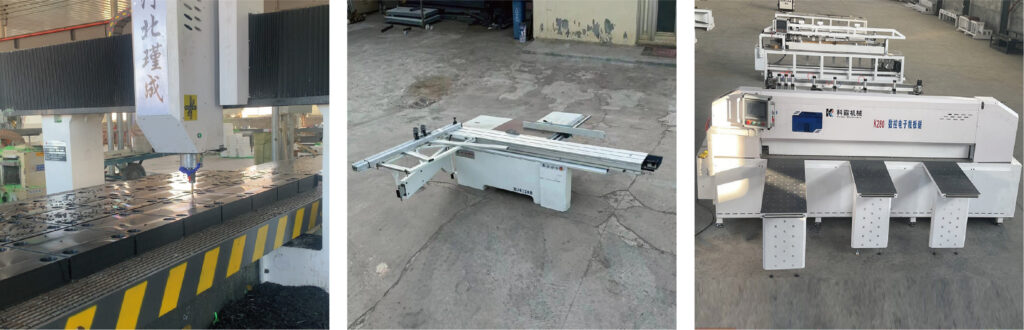
CNC Machining Equipment
CNC (Computer Numerical Control) machines are among the most advanced processing solutions. Through programmed control, they can perform precise straight cuts, curved cuts, and complex custom shapes.
Advantages include:
- High dimensional accuracy with minimal tolerance deviation
- Excellent repeatability for batch production
- Capability for drilling, chamfering, engraving, and other processes
- Ideal for large-volume manufacturing
For high-end equipment components or projects requiring tight tolerances, CNC machining is the best option.
CNC Panel Saw / Automatic Cutting Machine
CNC panel saws are commonly used for cutting large sheets into standard sizes. They are suitable for processing full-size boards and maintaining clean, straight edges. These machines are efficient and practical for standard size production.
Sliding Table Saw (Woodworking Panel Saw)
Since UHMW sheets can be machined similarly to wood, sliding table saws are also commonly used. Their advantages include:
- Fast cutting speed
- Relatively simple operation
- Lower cost compared to CNC machines
However, precision is slightly lower than CNC systems. They are more suitable for straight cuts and regular sizing work.
Overall, professional equipment offers high investment, high efficiency, and high precision, making it suitable for long-term, large-scale production.
2. Non-Professional Equipment: Flexible and Cost-Effective Solutions
For small orders, temporary projects, or on-site installation work, large industrial machines may not be available. In these cases, non-professional tools can be used. These require lower investment but offer lower efficiency and precision.
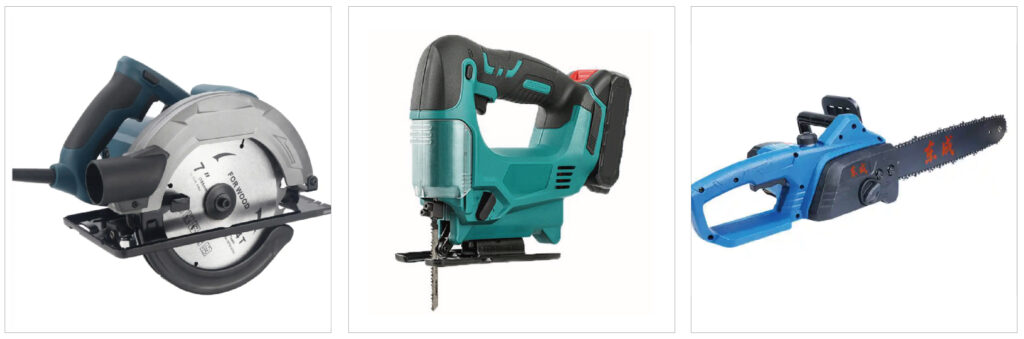
Circular Saw
A circular saw is a common and practical tool for straight cuts. It is portable and suitable for on-site operations. To achieve smoother cutting edges, it is recommended to use carbide-tipped blades with a higher tooth count.
Jigsaw (Electric Curve Saw)
A jigsaw is suitable for simple curved cutting or hole cutting. It offers flexibility but less stability, which may result in rougher edges. It is appropriate for projects where high precision is not required.
Band Saw
A band saw provides relatively stable cutting performance for straight lines and simple curves. It is an economical option for small to medium production quantities.
The characteristics of non-professional tools include:
- Low equipment investment
- High flexibility
- Suitable for small batches or temporary processing
- Lower precision and efficiency
These tools are practical solutions when budget or working conditions are limited.
3. Manual Tools: DIY and Small-Scale Applications
For personal DIY projects or small-size cutting tasks, traditional manual tools can also be used, such as:
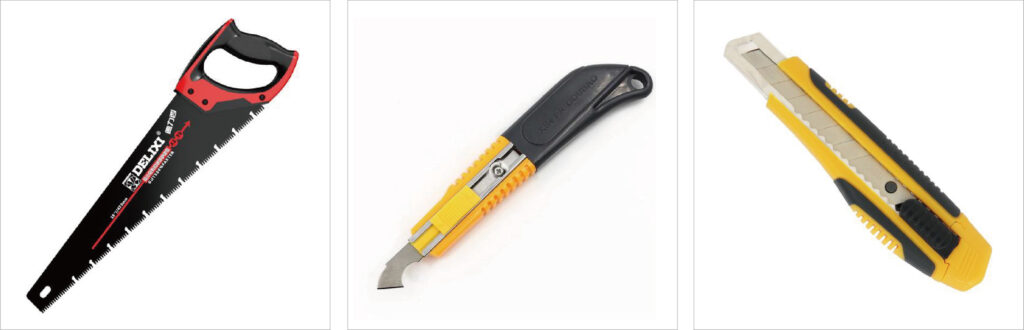
- Hand saw
- Hook knife
- Utility knife
- Other wood-cutting hand tools
Because UHMW sheets have some flexibility, thin sheets can sometimes be scored multiple times and then snapped. However, manual cutting is labor-intensive and inefficient, making it unsuitable for thick sheets or large areas.
For hobbyists or small custom modifications, manual cutting can still be a practical and low-cost solution.
4. How to Choose the Right Cutting Method
Selecting the appropriate cutting method depends on several factors:
- Processing quantity
Large volumes require professional equipment; small quantities can use portable tools. - Precision requirements
High-precision projects should use CNC machines. - Budget considerations
Limited budgets may favor non-professional equipment. - Working environment
On-site construction is better suited to portable tools.
In summary, professional equipment is ideal for long-term, stable production, while non-professional tools and manual methods are suitable for temporary or small-scale applications.
Conclusion
There are multiple ways to cut UHMW sheets, ranging from advanced CNC machining to portable electric tools and traditional manual equipment. Each method has its own advantages and disadvantages in terms of efficiency, precision, cost, and flexibility.
In practice, the cutting method should be selected based on processing requirements, budget, and application scenarios to ensure both quality and cost control.
For bulk processing or custom fabrication needs, it is recommended to work with a manufacturer equipped with professional machinery to ensure precise dimensions, stable quality, and reliable delivery time.
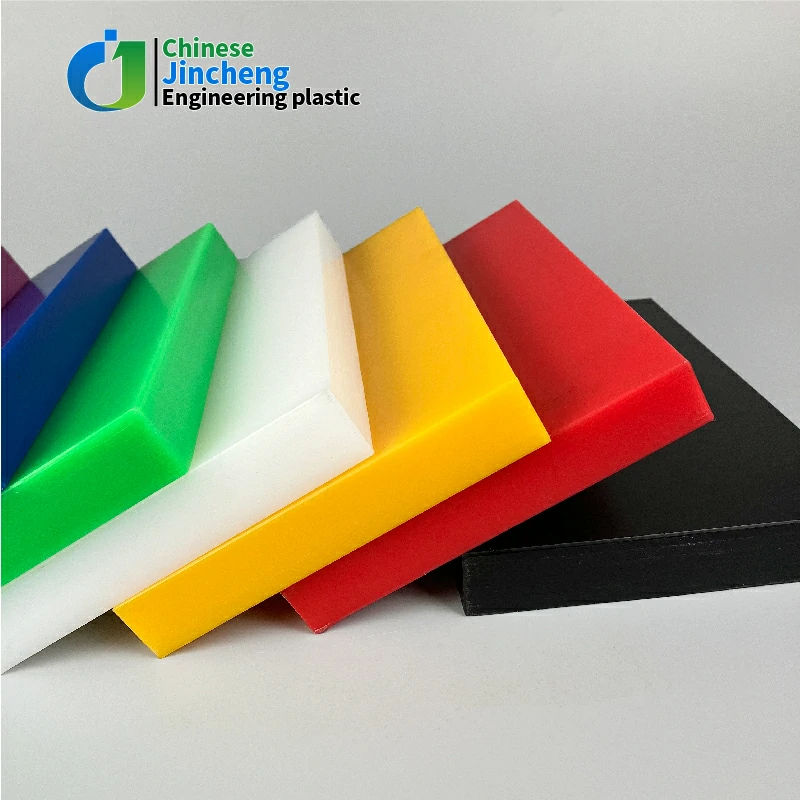
This is a professional manufacturer of UHMWPE sheets, which can be cut into various sizes. The price is reasonable and the supply is stable, making it a good choice.