
Why Chain Guide Rails Wear Out Fast and How to Fix It
Introduction
Chain guide rails (also known as conveyor guide rails or wear strips) play a critical role in reducing friction and guiding chains in conveyor systems. However, many users face a common problem: guide rails wearing out too quickly, leading to frequent replacement and increased maintenance costs.
So why does this happen? And more importantly, how can you fix it?
In this article, we will explore the main causes of rapid wear and provide practical solutions to extend the service life of your chain guide rails.
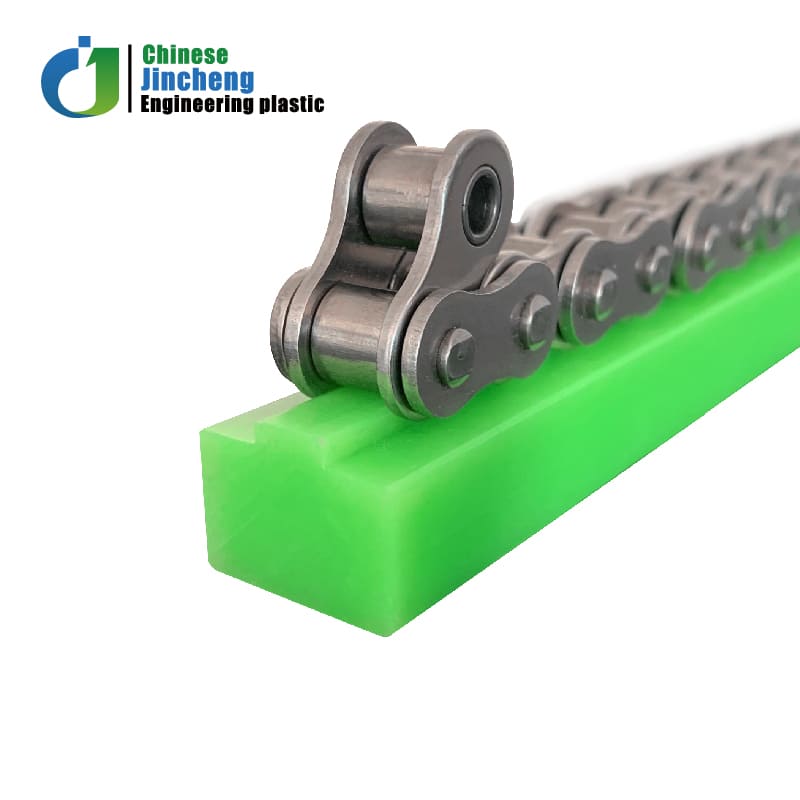
What Causes Chain Guide Rails to Wear Out Quickly?
Understanding the root cause is the first step to solving the problem.
1. Wrong Material Selection
One of the most common reasons is choosing the wrong material.
For example:
- Using HDPE in high-friction environments
- Using low-quality recycled plastics
These materials wear out much faster under continuous operation.
👉 Solution:
Use UHMWPE wear strips, which offer much higher wear resistance and longer service life.
2. High Friction Between Chain and Guide Rail
Excessive friction leads to faster material loss and heat buildup.
This can happen due to:
- Poor material choice
- Rough surface finish
- Lack of lubrication
👉 Solution:
- Choose low friction materials like UHMWPE or PTFE
- Ensure smooth surface finishing
- Optimize chain alignment
3. Improper Installation
Incorrect installation can cause uneven contact and localized wear.
Common issues include:
- Misalignment of guide rails
- Uneven mounting surfaces
- Loose fixing
👉 Solution:
- Ensure proper alignment during installation
- Use stable mounting brackets
- Regularly inspect and tighten components
4. Overloading the Conveyor System
If the conveyor system carries loads beyond its design capacity, it increases pressure on the guide rails.
👉 Solution:
- Reduce load where possible
- Use high-strength materials like Nylon for heavy-duty applications
- Upgrade system design if necessary
5. Poor Working Environment
Environmental factors can also accelerate wear:
- Dust and debris increase abrasion
- Moisture affects certain materials (like Nylon)
- Chemicals degrade plastic materials
👉 Solution:
- Choose chemical-resistant materials like UHMWPE or PTFE
- Keep the system clean
- Use protective covers if needed
6. Low-Quality Manufacturing
Guide rails made from poor-quality materials or with inconsistent processing will fail faster.
👉 Solution:
- Work with reliable suppliers
- Choose virgin material over recycled material
- Check product specifications and certifications